Machine Learning is a branch of Artificial Intelligence that focuses on giving computers the ability to learn from data, identify patterns, and improve performance over time without being explicitly programmed for every single task.
In traditional programming, we give the computer step-by-step instructions. In machine learning, the computer learns the rules by looking at examples. For example, instead of telling a shop’s system all the possible ways to identify repeat customers, we can give it data about thousands of past purchases. The system will then learn to recognize which customers are likely to return on its own.
Today, machine learning is behind many everyday technologies:
- Predictive text and autocorrect on smartphones
- Voice assistants like Siri, Alexa, and Google Assistant
- Product recommendations on Amazon and Flipkart
- Netflix and YouTube personalised suggestions
- Facial recognition in security systems
- Fraud detection in banking
- Medical image analysis in healthcare
Relationship Between Machine Learning and Artificial Intelligence
Artificial Intelligence is the science of making machines perform tasks that normally require human thinking, such as solving problems, understanding language, or making decisions. Machine Learning is one of the main ways to make this possible. It helps AI systems improve by learning from data instead of relying only on fixed rules.
For example, an AI system for medical diagnosis could use machine learning to study thousands of patient records. Over time, it would learn to recognise patterns in symptoms and test results, which could help doctors make better predictions. In this way, machine learning works like a “training method” for AI, providing data, learning from examples, and adapting to new situations.
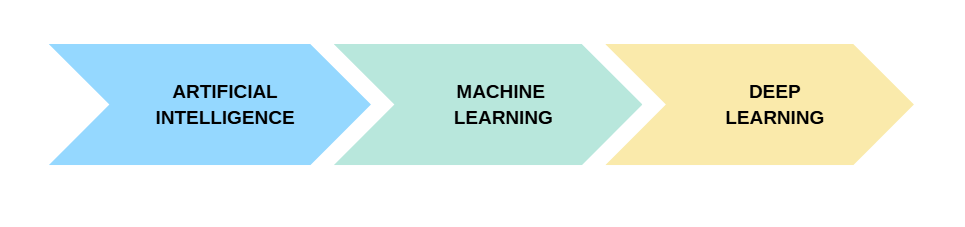
Machine Learning is a specialised branch of AI that focuses on algorithms capable of learning from data. Within machine learning, there is Deep Learning, which uses many layers of artificial neural networks to understand very complex patterns, such as recognising objects in images or translating languages.
Hierarchy:
Examples:
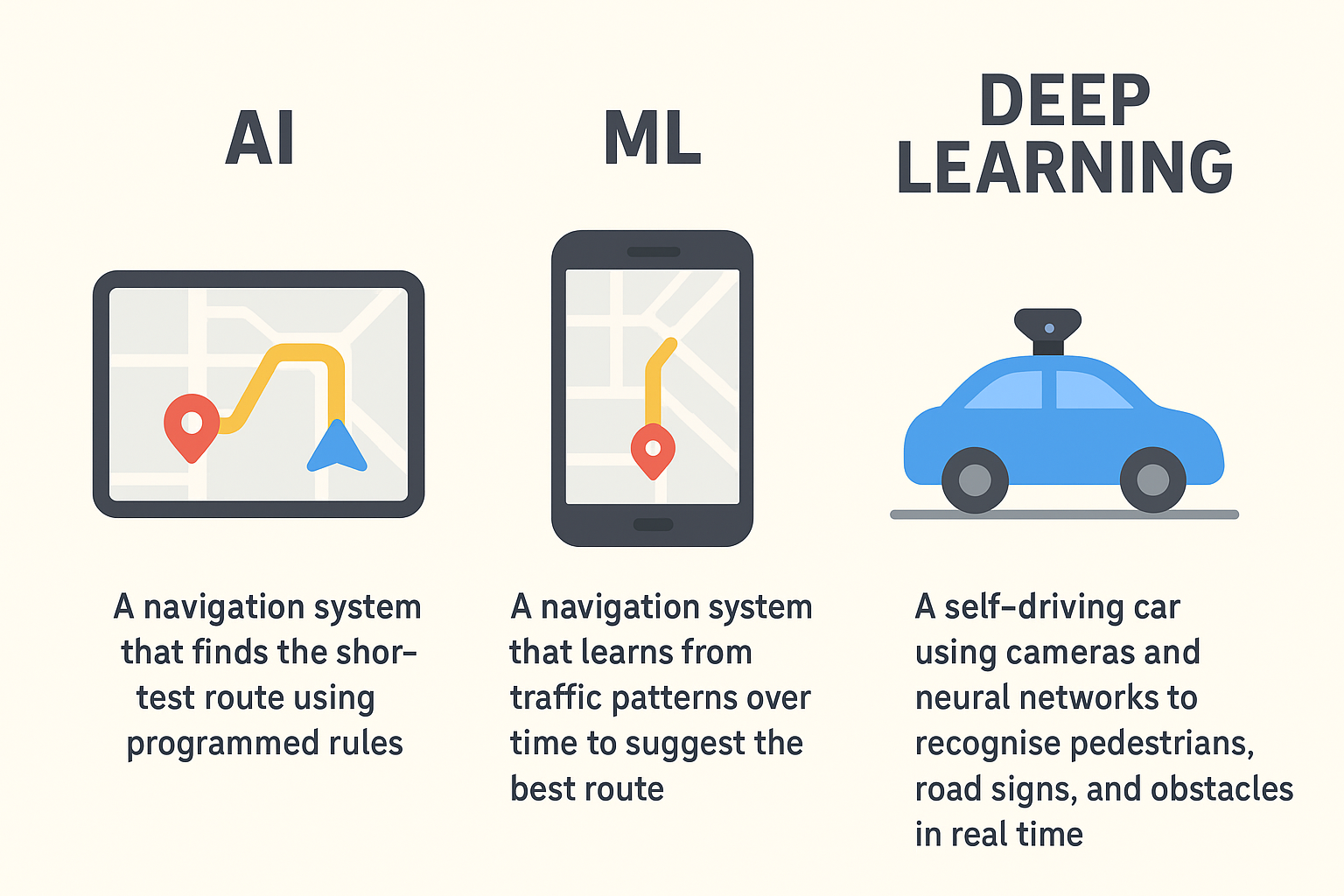
- AI: A navigation system that finds the shortest route using programmed rules.
- ML: A navigation system that learns from traffic patterns over time to suggest the best route.
- Deep Learning: A self-driving car using cameras and neural networks to recognise pedestrians, road signs, and obstacles in real time.
Did You Know?
| Domino’s uses machine learning and deep learning to predict what toppings you’ll want based on your order history and location. You can read more about it here. |
Brief History of Machine Learning
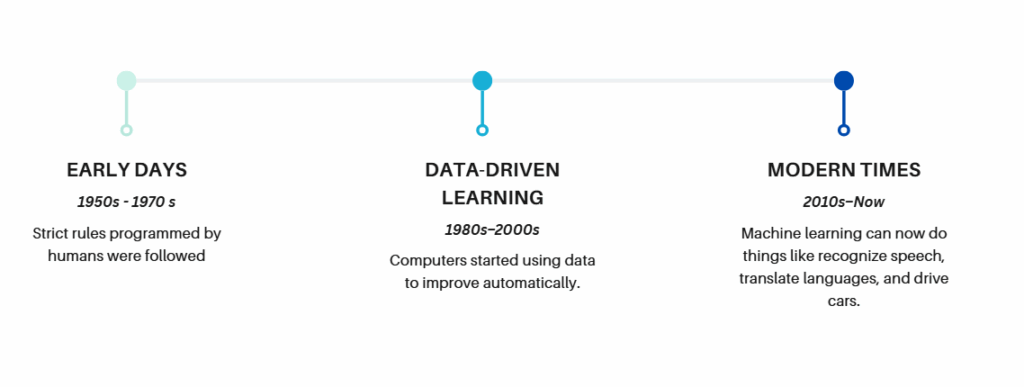
- Early Days (1950s–1970s): Computers followed strict rules written by humans. If a shop owner wanted to give discounts to repeat customers, the system would only work if their names were already stored exactly as written.
- Data-Driven Learning (1980s–2000s): Computers started using data to improve automatically. For example, a shop system could learn to recognize repeat customers even if they used a different payment method or gave a slightly different name.
- Modern Times (2010s–Now): With deep learning and huge amounts of data, machine learning can now do things like recognize speech, translate languages, and drive cars.
How Machine Learning Works
Machine learning may sound complex, but the idea can be explained in a few steps:
- Data Collection – Gathering relevant information for the task. Example: Collecting thousands of loan application records for a bank’s risk analysis model.
- Feeding Data to an Algorithm – Passing the data into a program designed to detect relationships and patterns.Example: Feeding a facial recognition system with images of authorised personnel.
- Training to Find Patterns – The algorithm analyses examples repeatedly and adjusts its parameters to improve accuracy. Example: Learning to distinguish between genuine and fraudulent transactions based on spending habits.
- Predictions or Decisions – Once trained, the model can apply what it learned to new data. Example: Predicting whether a new loan applicant is high-risk or low-risk based on past data patterns.
Another simple example: If your laptop is told “it is dark” and increases the brightness, a traditional system only works with those exact words. A machine learning system would learn that “This room is dark” or “I cannot see in this darkness” means the same thing and still increase brightness.
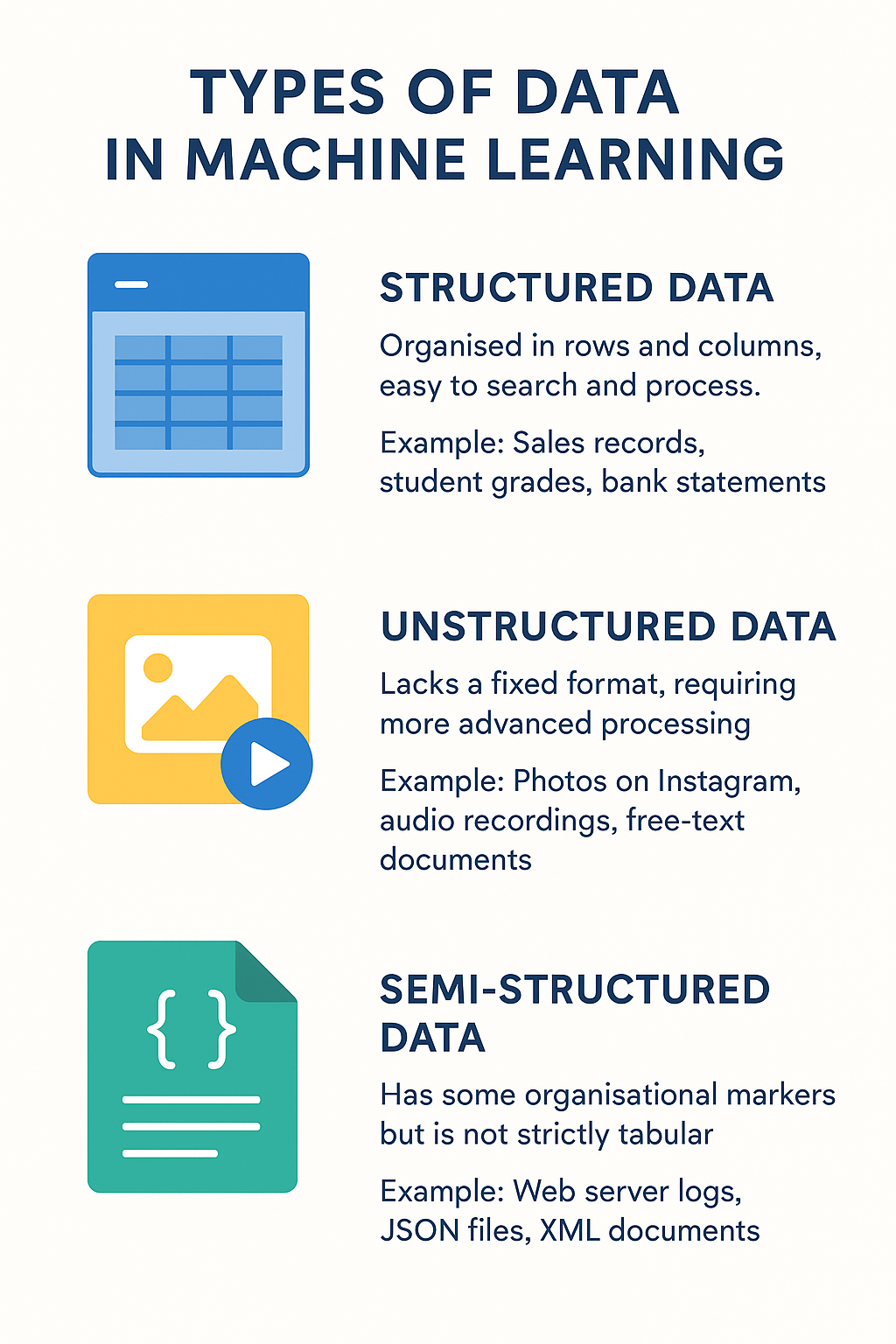
Types of Data in Machine Learning
Data is the fuel for any machine learning model. It can be categorized as:
Importance of Data Quality
In machine learning, the saying “Garbage in, garbage out” is critically true. The quality of the input data directly determines the accuracy of the model’s output.
Qualities of Good Data:
- Accuracy: Data should be correct and free from errors.
- Completeness: No missing critical information.
- Consistency: Same formatting and representation across the dataset.
- Relevance: Data must relate directly to the problem at hand.
Example: If a weather prediction model is trained with incomplete or outdated temperature readings, the forecast will be unreliable regardless of how advanced the algorithm is.
Fun AI Facts
| In 2012, Google’s neural network at Google X lab learned to recognize cats from 10 million YouTube video frames without being told what a cat was. It reached over 70% accuracy, a big leap for computer vision, all inspired by the internet’s love for cat videos! Read more about it here. |
Real-World Applications of Machine Learning
To see the impact of machine learning in practice, consider these examples:
- Healthcare: Analysing X-rays to detect diseases early.
- E-commerce: Suggesting products based on previous purchases.
- Finance: Detecting unusual credit card transactions to prevent fraud.
- Education: Adaptive learning platforms that personalise lessons for each student.
- Transportation: Ride-sharing apps predicting demand and setting optimal prices.
- Agriculture: Predicting crop yields based on weather and soil data.
Machine learning is a powerful branch of AI that is making technology smarter and more helpful every day. By learning from data, it can recognize patterns, make predictions, and improve over time.