Deep learning has moved from research labs into the devices and apps we use every day. It quietly powers many of the tools that make life easier, smarter, and more fun. When you unlock your phone with your face, ask Siri to play music, get grammar suggestions while writing, or even generate an artwork with a few words, deep learning is at work behind the scenes.
At its core, deep learning is about teaching machines to learn from large amounts of data, identify patterns, and make decisions in a way that feels natural to us. This ability has led to breakthroughs in image recognition, text generation, voice understanding, and even creative fields like art and music.
Deep Learning with Images
Image Recognition
Every time you unlock your phone with Face ID, deep learning models are at work. These models break down your face into key points (like distance between eyes, shape of nose, etc.) and compare them with stored data to verify your identity.
Another example is Google Photos, which can automatically group pictures of the same person or detect objects like “dog” or “car” with amazing accuracy.
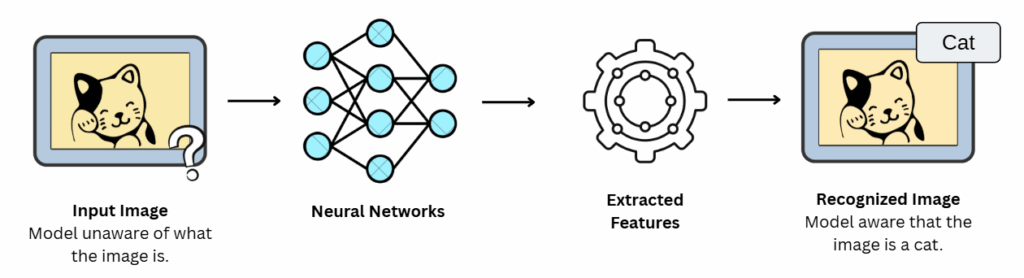
Image Generation
Tools like DALL·E and Stable Diffusion can create entirely new pictures from text prompts. For example, if you type “a painting of a cat sitting on Mars”, the system generates a unique artwork. This is possible because the deep learning model has learned relationships between words and visual patterns from millions of images.
Deep Learning with Text
Text Generation & Chatbots
One of the most popular uses is ChatGPT itself. Trained on large collections of text, it can write essays, answer questions, summarise articles, or even help you with creative writing. Another example is Grammarly, which uses deep learning to suggest grammar corrections, style improvements, and better vocabulary while you write.

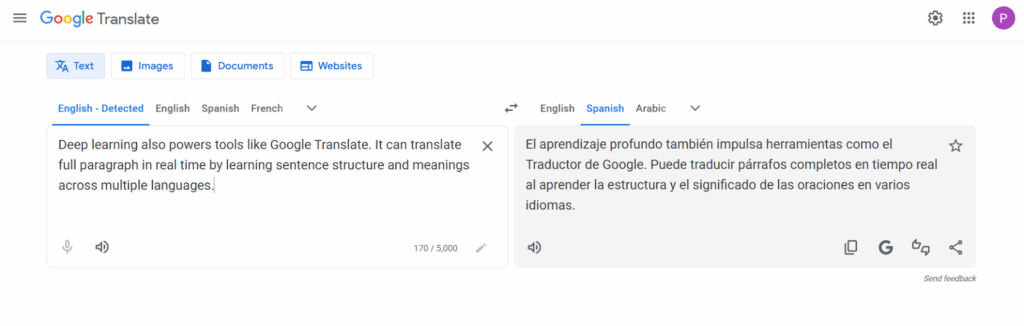
Machine Translation
Deep learning also powers tools like Google Translate. It can translate full paragraphs in real time by learning sentence structures and meanings across multiple languages.
Deep Learning with Voice
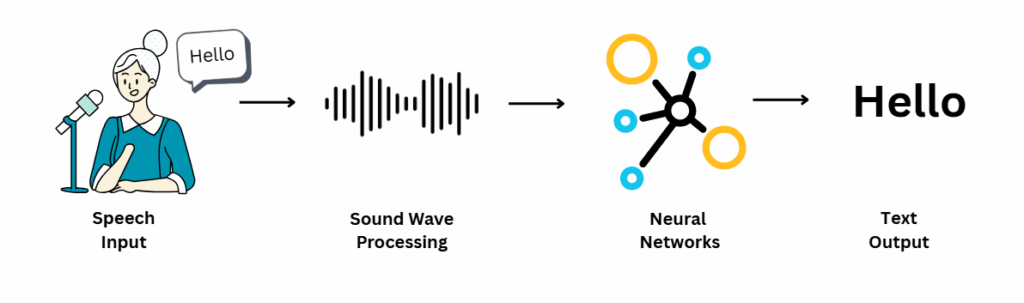
Voice Recognition
Assistants like Siri, Alexa, and Google Assistant use deep learning to convert your voice into text, understand your request, and respond accordingly. For example, when you say “Hey Alexa, play music”, the system identifies the words and triggers the correct action.
Speech-to-Text Tools
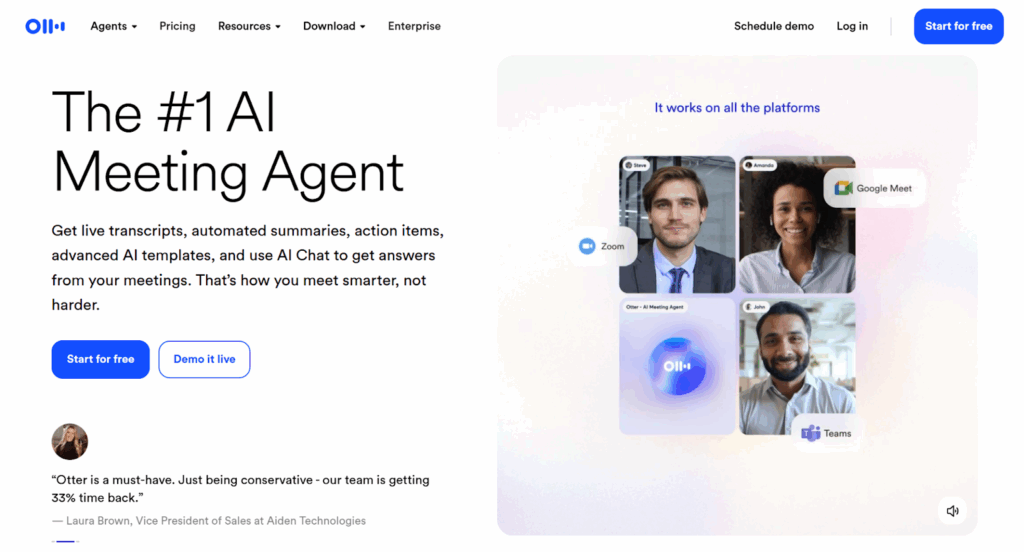
Apps like Otter.ai can take long conversations or meetings and turn them into written notes. This is useful for students, journalists, or professionals.
Deep Learning in Creativity
Beyond recognition and conversation, deep learning is now creating art, music, and stories.
- Art: DALL·E and MidJourney generate digital paintings from prompts.
- Music: OpenAI’s MuseNet can compose music in different styles.
- Writing: ChatGPT can help brainstorm ideas, draft blog posts, or write poetry.
Example: You could ask an AI music generator to “create a jazz tune with piano and drums”, and within seconds, it produces an original composition.
Deep learning is not just about complex algorithms it is already making life easier, smarter, and more creative. From unlocking phones with Face ID, to chatting with AI assistants, to creating music and art, deep learning is everywhere around us.