Prompt engineering isn’t just about giving instructions, it is about how you guide AI step by step. You can’t create strong prompts just by knowing their parts; you also need to practice using the right methods. Before diving into advanced strategies, it’s important to build a solid foundation in the basics. These foundational methods serve as the training wheels that help you shape clearer, more reliable responses from AI. In this article, we’ll explore the core prompting techniques that every beginner must know: zero-shot, one-shot, few-shot, role prompting, and chain-of-thought prompting.
Zero-Shot Prompting
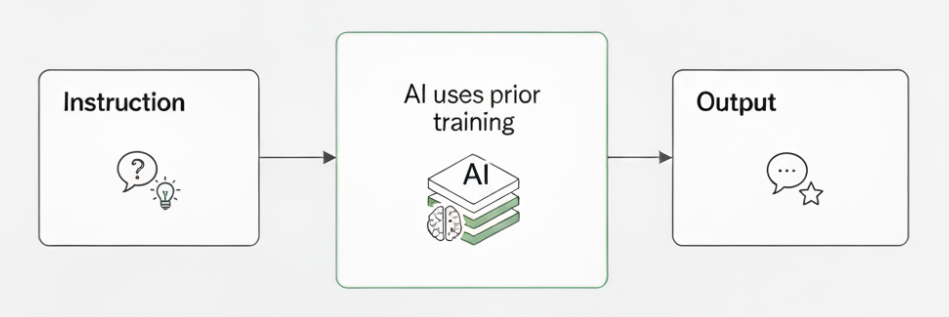
Zero-shot prompting is when you ask the AI to do something without showing it any examples first. You’re relying on the AI’s general knowledge to understand and complete the task.
Example: “Summarize the story of Cinderella in 3 sentences.”
Here, we don’t provide a sample summary, we just directly ask AI expecting it to know what the answer is.
Where it works best:
- Everyday tasks (summaries, explanations, translations).
- When the instructions are clear and not open to many interpretations.
- Quick answers without much setup.
One-Shot Prompting
Sometimes just telling the AI what to do isn’t enough. If you give only an instruction, the AI might guess the format or tone you want and get it wrong. This is where one-shot prompting helps.
In one-shot prompting, you show the AI one example of the task done correctly before asking it to handle a new case. That single example acts like a “hint” or “demo,” giving the AI a pattern to follow.
Example: Analyse the sentiment in the sentence, “The service was excellent.” For example: Input: “The food was cold.” Has negative sentiment.
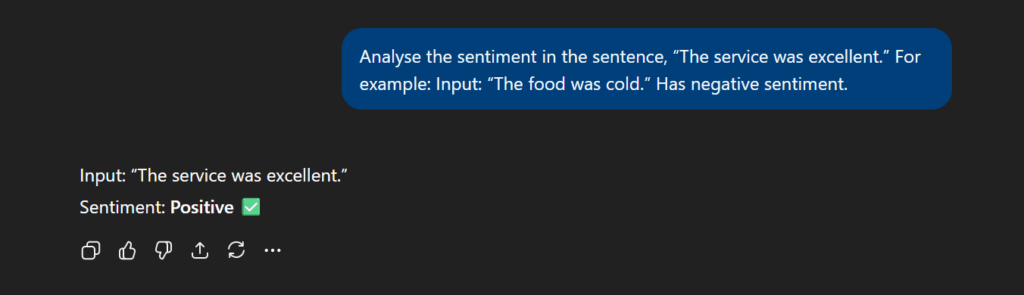
The example teaches the AI to classify text into “Positive”, “Negative” or Neutral Sentiment.
Where it works best:
- Tasks with a fixed structure (sentiment analysis, labeling, tone detection).
- When you want consistent formatting in responses.
Few-Shot Prompting
Sometimes one example isn’t enough to show the AI what you want. If the task is tricky, subjective, or has multiple possible styles, you can give the AI several examples to make the pattern crystal clear. This is called few-shot prompting.
“Few” can mean 2, 3, or more examples depending on how much guidance the AI needs. With each example, the model learns the style, structure, and rules more reliably.
Think of it like teaching a child. If you only show them one way to solve a problem, they might generalize incorrectly. But if you show two or three different cases, they understand the broader pattern and can handle new inputs better.

Example:
Answer a short riddle “I’m always in front of you but can never be seen.”
Example 3: I fly without wings, I cry without eyes.
A cloud
Example 1: What has hands but cannot clap?
A clock
Example 2: The more you take away, the bigger I get.
A hole
The multiple examples guide the AI to recognize the style of the task: short riddles with a clear answer. This ensures it follows the same pattern when generating a new one.
Where it works best:
- When the task is more complex or subjective.
- Training the AI on your preferred style or categories.
- Writing tasks (blog outlines, ad copy, interview questions) where format matters.
Role Prompting
Role prompting means telling the AI to “act as” a specific person or professional. By giving it a role, you shape the way it responds in tone, expertise, and detail. This helps the output feel more specialized or aligned with what you need.
Example: “You are a travel guide. Suggest a 3-day trip itinerary for Rome with local food recommendations.”
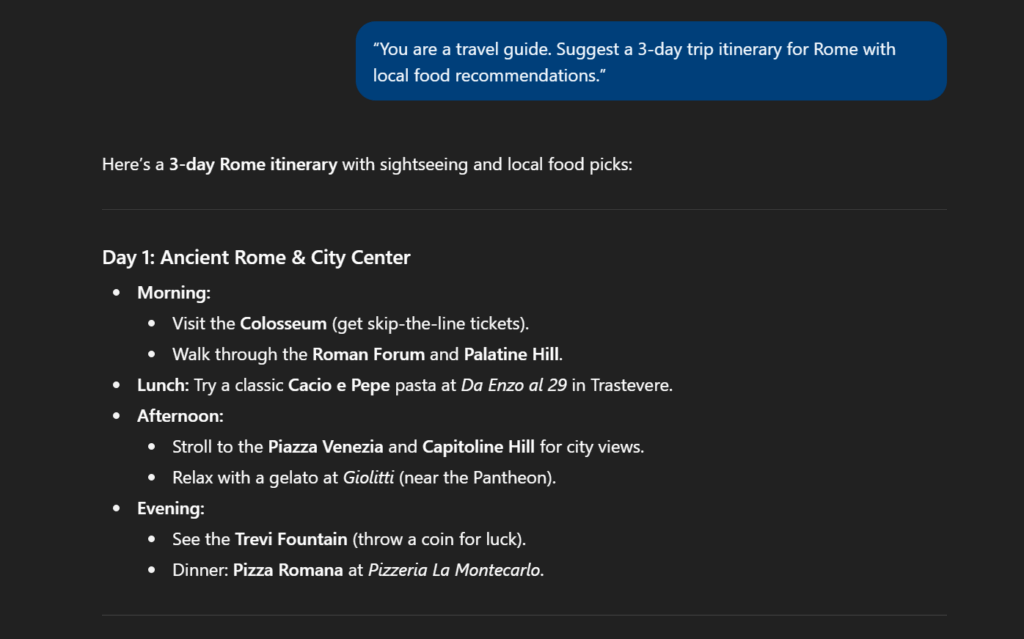
Instead of a generic answer, the AI now gives detailed, travel-expert style guidance.
Where it works best:
- Professional scenarios (lawyer, teacher, marketer, coach).
- When you want the AI’s answers to match a specific perspective or tone.
- Creative writing (ask it to act like a detective, historian, storyteller, etc.).
Chain-of-Thought Prompting
Chain-of-thought prompting is about asking the AI to show its reasoning before giving the final answer. Instead of jumping straight to a response, the AI breaks down the problem step by step. This makes the answer clearer and usually more accurate.
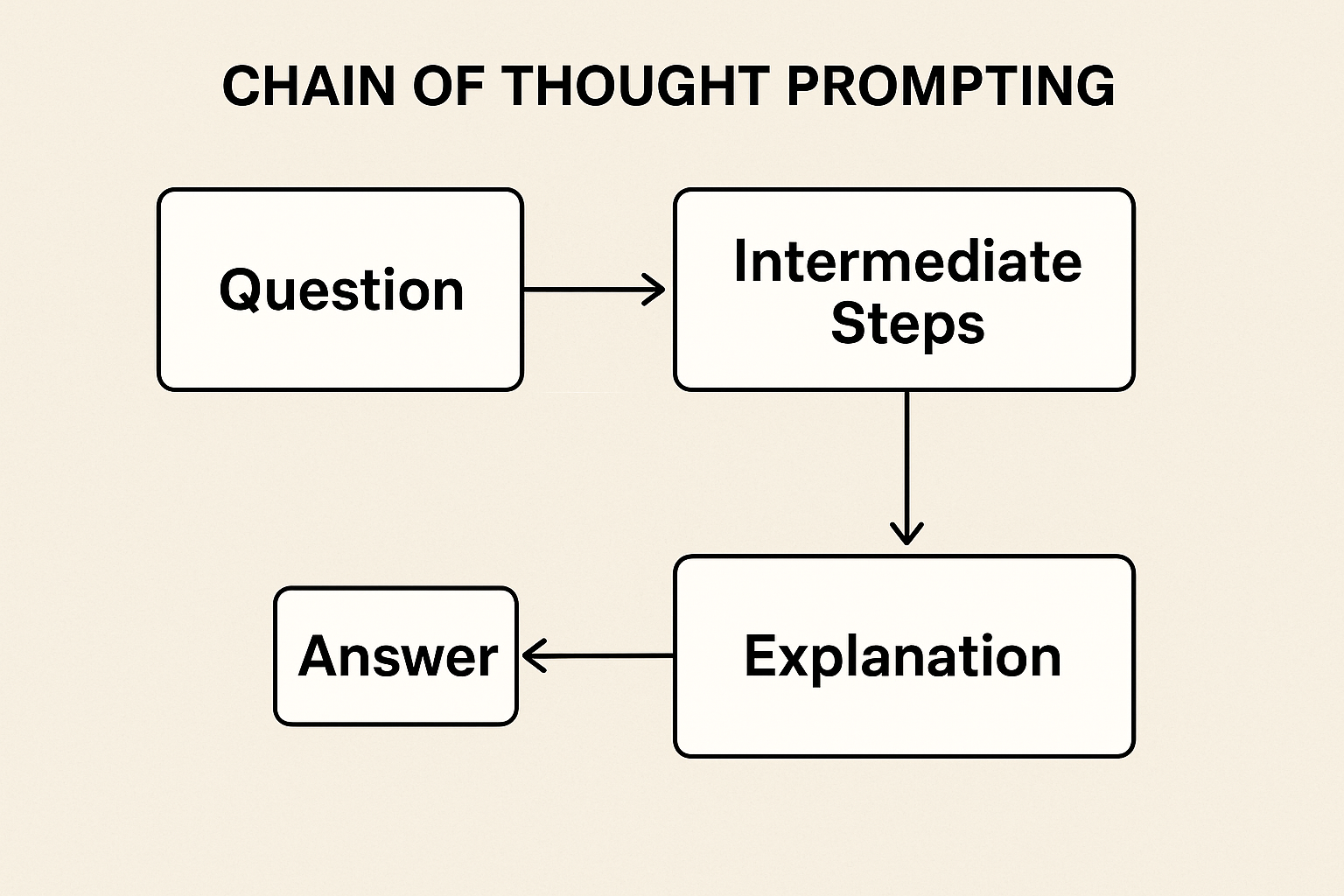
Example: “A car travels 60 km in 1 hour. How long will it take to travel 180 km? Show your reasoning before giving the final answer.”
The AI might answer:
City A and City B are 280 km apart, so halfway is 140 km each. Train from City A: Speed = 60 km/h, Time = 140 ÷ 60 = 2 hours 20 minutes. Train from City B: Speed = 80 km/h, Time = 140 ÷ 80 = 1 hour 45 minutes. Since Train B leaves an hour later, both trains reach halfway at the same time.
Final Answer: They meet at 5:20 PM.
By writing out the reasoning, the answer is clearer and less likely to be wrong.
Where it works best:
- Math, logic, or step-by-step problem solving.
- When you want transparency in the answer.
- Reducing errors in multi-step reasoning.
Mastering the basics of prompt engineering is like learning the alphabet before writing full sentences. Zero-shot, one-shot, few-shot, role prompting, and chain-of-thought prompting each give you a different way to guide the AI.

By practicing these methods, you build a strong foundation that prepares you for more advanced strategies later. The key is to experiment, compare results, and notice how small changes in your prompts can completely transform the AI’s response. With these techniques, you’ll not only write better prompts but also gain the confidence to make AI work as a powerful assistant in any field.