Even the smartest AI can get stuck. Sometimes it gives answers that don’t make sense, misses key details, or struggles with multi-step tasks. That’s where advanced prompting techniques come in. They help you guide the AI’s reasoning, improve accuracy, and handle complex problems with ease.
With these techniques, you can structure conversations over multiple turns, encourage the AI to debate and think more deeply, chain prompts together for multi-step workflows, and even use external tools for real-time information. In short, advanced prompts turn AI from a basic helper into a powerful assistant capable of handling bigger, more detailed challenges.
For instance, asking AI to plan a week-long project or summarize multiple research papers can produce uneven results with simple prompts. Advanced prompting ensures the output is clear, consistent, and actionable, saving time and improving quality.
Let’s explore these techniques and see how they make AI smarter, steadier, and more useful.
Self-Consistency & Debate Prompting
AI doesn’t always think in a straight line, it can jump between ideas or settle too quickly on one. Self-consistency prompting helps fix this by asking the model to generate multiple reasoning paths before deciding which one makes the most sense. Instead of giving one quick answer, the AI “thinks out loud,” compares its options, and then selects the most logical result.
Debate prompting works similarly but adds a twist: the AI takes both sides of a question before reaching a conclusion. This encourages balanced reasoning and reduces bias.
For example, if you ask,
“Which is better for focus: coffee or green tea?”
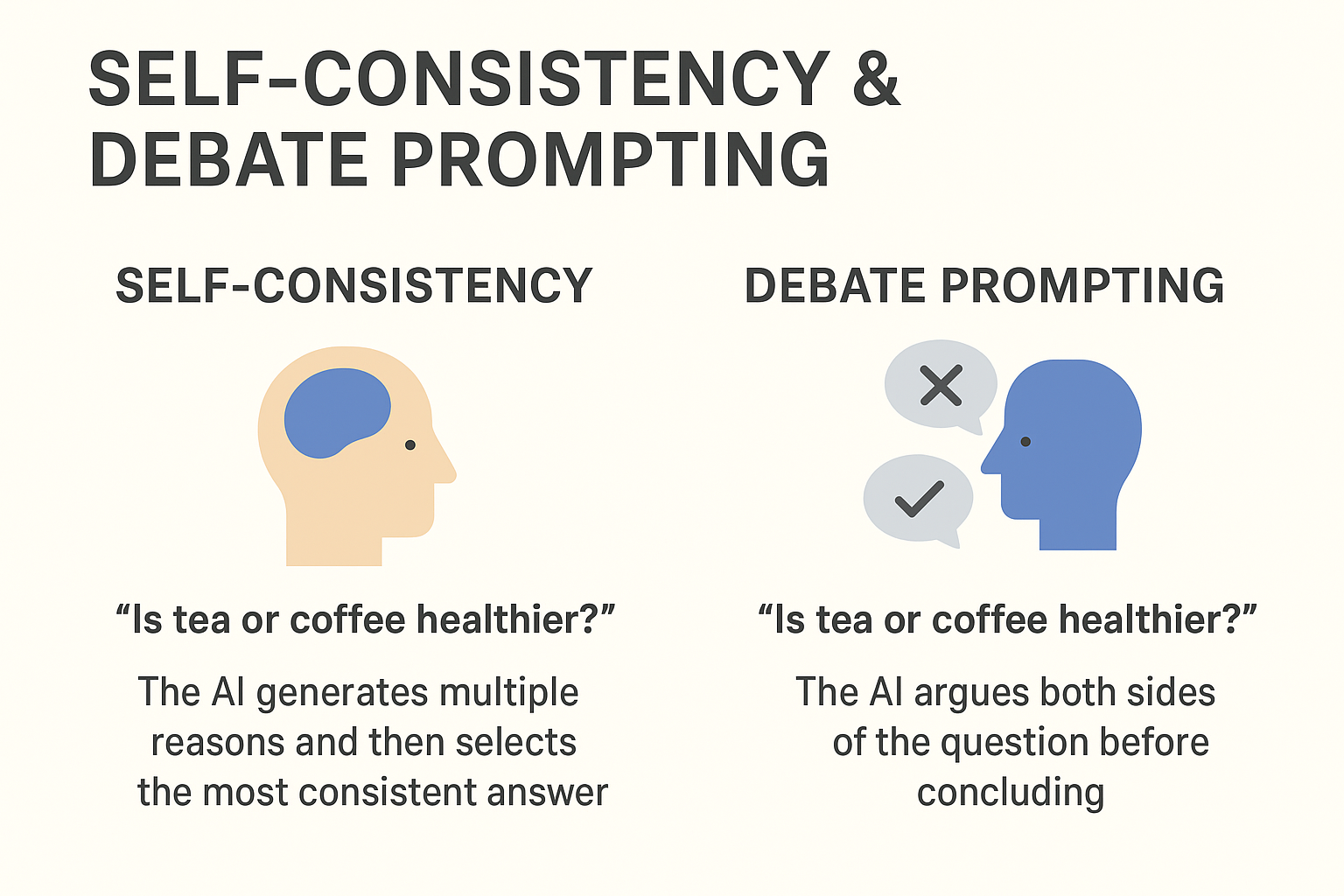
The AI might first argue that coffee boosts alertness due to caffeine, then explain that green tea promotes calm focus through L-theanine. Finally, it may conclude that the better choice depends on your energy needs and sensitivity to caffeine.
These methods help AI reason more clearly and avoid contradictions. They’re especially useful for research, comparison writing, and problem-solving tasks that require logical balance and reflection.
As you start using techniques that improve reasoning, another question arises, how do you keep the AI focused during longer, evolving tasks? That’s where the next method comes in.
Multi-Turn Dialogue Structuring
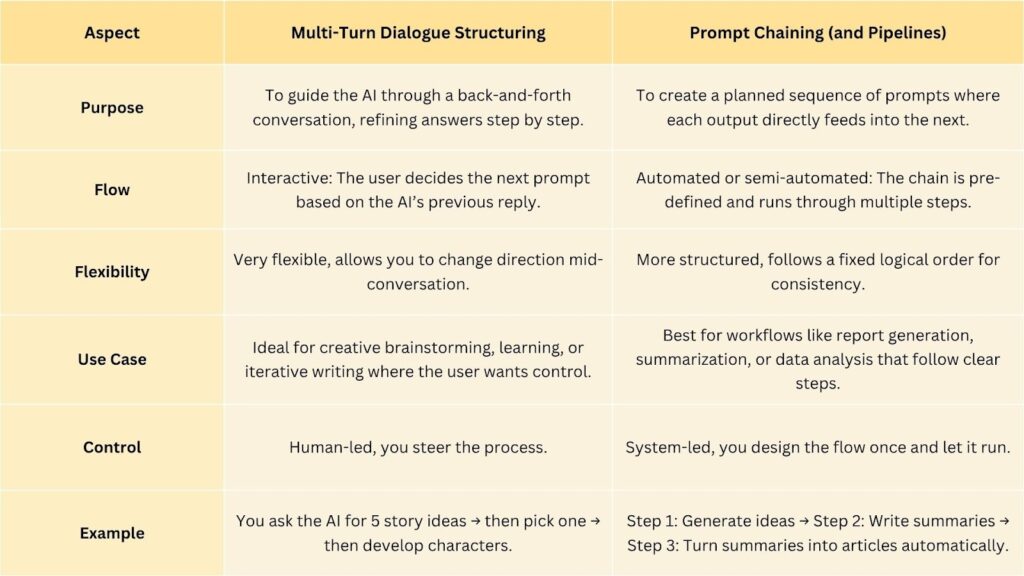
While self-consistency improves reasoning within one response, multi-turn dialogue structuring strengthens how the AI handles ongoing conversations. Instead of trying to do everything in one giant prompt, you guide the model step by step, allowing it to build on its previous answers.
Suppose you’re designing a mobile app. You could begin by asking,
“Suggest five creative app ideas for health tracking.”
Next, follow up with,
“Pick the best one and describe its main features.”
Then finish with,
“Write a short marketing tagline for this app.”
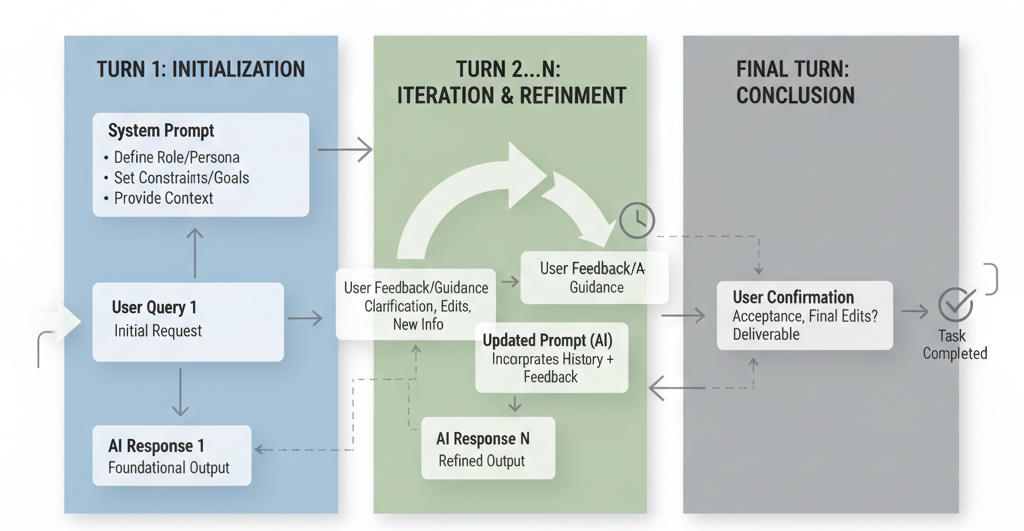
Image Source: Gemini
Because each step connects to the last, the AI stays consistent and the final output feels intentional and coherent.
This technique makes long, complex projects like report writing, code development, or story planning much easier to manage. Once you start using multi-turn dialogue, you can go a step further by linking these turns into automated, connected workflows.
Prompt Chaining & Pipelines
Prompt chaining takes the idea of multi-turn dialogue and formalizes it. Instead of sending prompts one by one, you design a sequence where each response feeds directly into the next. This creates a structured workflow that helps the AI move logically from raw ideas to polished outputs.
For example, imagine building a marketing campaign:
- Generate five catchy product names.
- Choose the best one and write a slogan.
- Turn that slogan into a short product description.
- Use the description to create three social media posts.
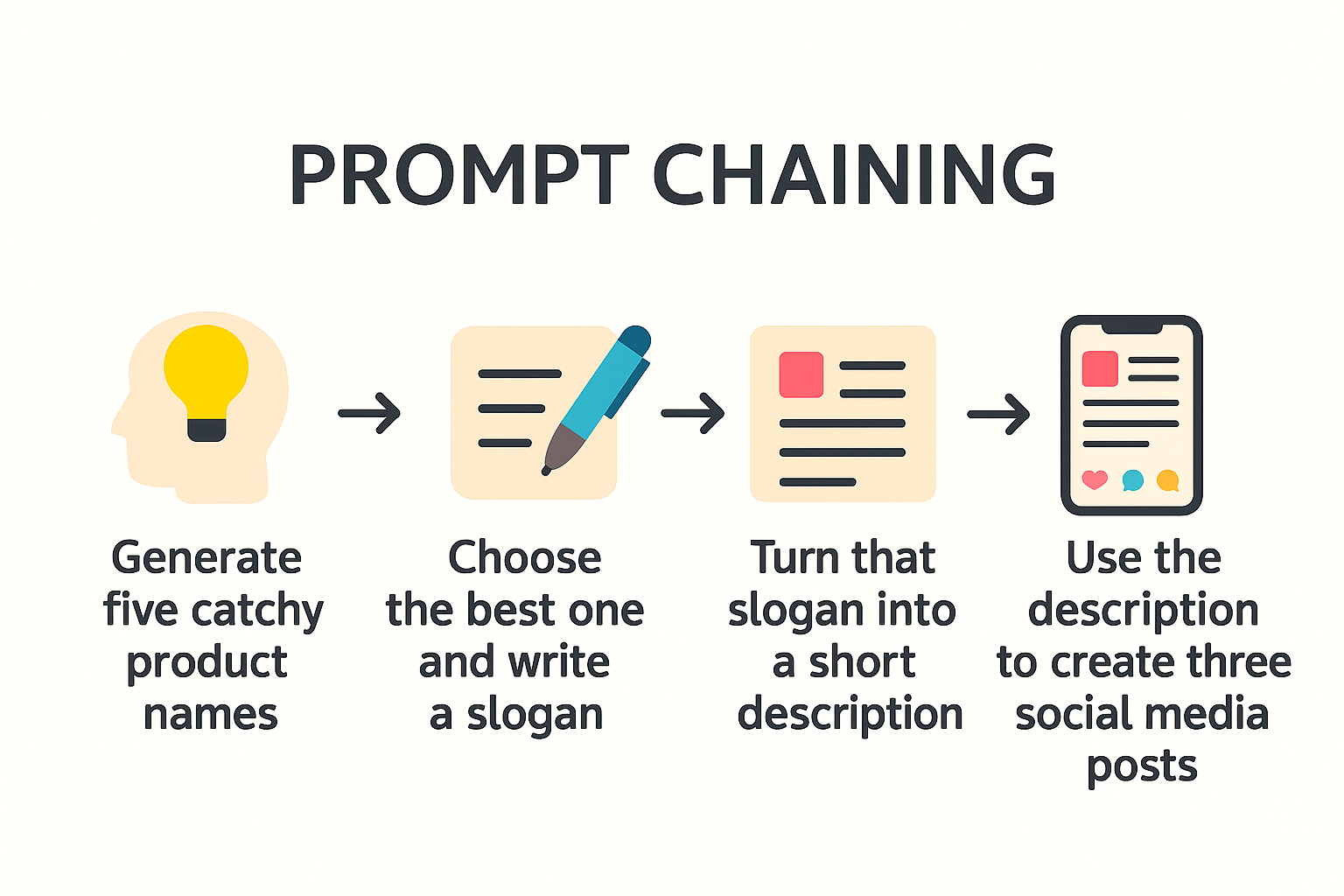
By linking these steps together, you’ve built a prompt chain, a mini production line powered by AI. Pipelines work the same way but can mix in different models or systems to handle each stage more efficiently.
This approach is powerful for creative, research, and technical tasks where the end result depends on a series of well-organized steps. And sometimes, even the best prompt chain needs extra help like live data or updated information. That’s when AI really shines with external tools.
Using External Tools
AI models have vast knowledge, but they don’t automatically know what’s happening right now. To fill that gap, we can connect them with external tools such as APIs, document databases, or retrieval systems. These tools allow AI to pull in real-time information or reference external knowledge before generating a response.
For instance:
- Using a weather API to plan outdoor events.
- Searching a company database using embeddings to summarize recent reports.
- Employing retrieval-augmented generation (RAG) so AI fetches facts from reliable documents before answering.
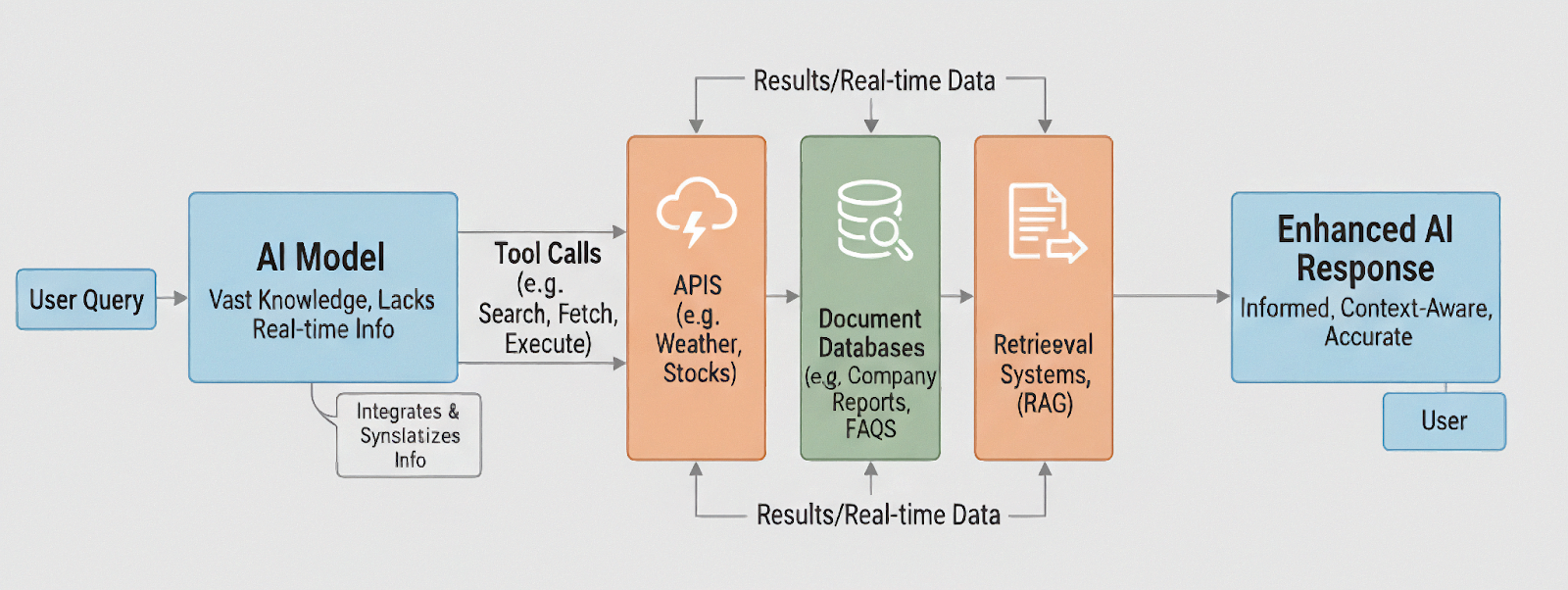
When paired with advanced prompting, these integrations turn AI into a real assistant. One that’s informed, context-aware, and accurate.
Once you combine all these techniques, the results can be surprisingly powerful. Imagine you’re planning a week-long international trip. You start by using debate prompting to compare destinations like Japan and Italy. Then, through multi-turn dialogue, you ask for daily itineraries, must-try restaurants, and hidden attractions. Next, you chain these responses into a detailed itinerary. Finally, by connecting to external APIs, the AI updates your plan based on live flight schedules and weather forecasts.
The outcome is a complete, personalized travel plan, crafted step by step through advanced prompting.
Did you know?
Some of the world’s most advanced AI models actually use self-consistency and debate prompting internally to check their own answers! This means the AI doesn’t just respond once, it quietly generates multiple possibilities, compares them, and picks the most reliable or logical one before you even see the result.
Advanced prompting techniques open the door to deeper, more reliable interactions with AI. They help the model reason better, stay consistent across conversations, and use live or external data when needed.
Whether you’re researching, coding, or creating, these methods turn AI into a thought partner rather than just a tool. By mastering them, you can handle bigger projects, get smarter results, and truly take your prompt engineering skills to the next level.