Have you ever wondered how AI models like ChatGPT can hold a conversation that feels almost human? Or how Google Gemini, Siri, and Alexa respond in ways that sound friendly, natural, and even a little witty at times? When you type a message, ask for directions, or tell your phone to play your favorite song, the device isn’t just hearing your words, it is understanding what you mean.
This seamless interaction between humans and machines is made possible by Natural Language Processing (NLP), a core area of Artificial Intelligence (AI). NLP enables computers to understand, interpret, and generate human language, transforming simple text or speech into meaningful communication.
The Language Barrier Between Humans and Machines

Computers, at their core, understand only binary code which is endless sequences of 0s and 1s. Yet, we communicate using languages like English, Hindi, Spanish, and French, full of nuances, tone, sentiment and context. Bridging this gap has always been one of AI’s greatest challenges.
Earlier AI models could mimic human language, but the results were often stiff or robotic. Think of early chatbots that repeated phrases awkwardly or misunderstood simple sentences. Today, however, it’s becoming increasingly difficult to tell whether you’re speaking to a human or an AI system, all thanks to advancements in Natural Language Processing (NLP) and Machine Learning (ML).
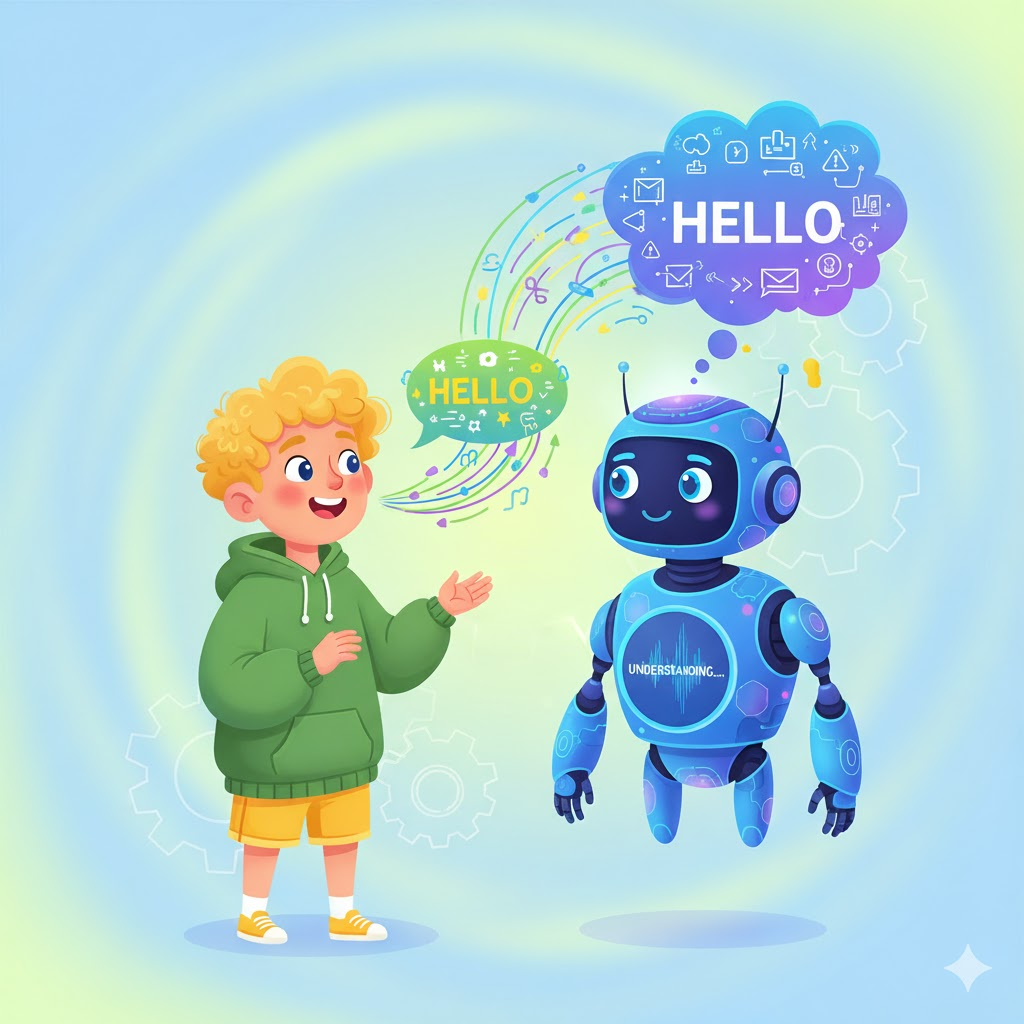
What is Natural Language Processing (NLP)?
Natural Language Processing is a field of Artificial Intelligence that focuses on enabling computers to understand, interpret, and generate human language in a way that feels natural. In simple words, it teaches machines to listen, read, and talk back like us.
Natural Language Processing combines linguistics (how languages work) and computer science (how machines process information). This combination allows systems to understand text, detect emotions, summarize content, or even translate between languages. For example, when you ask Alexa to play your favorite song or when Google Translate converts a Hindi paragraph into English instantly, that is natural language processing at work.
How NLP Works
Under the hood, NLP uses complex algorithms and machine learning techniques to process language in several stages. Let’s break it down simply:
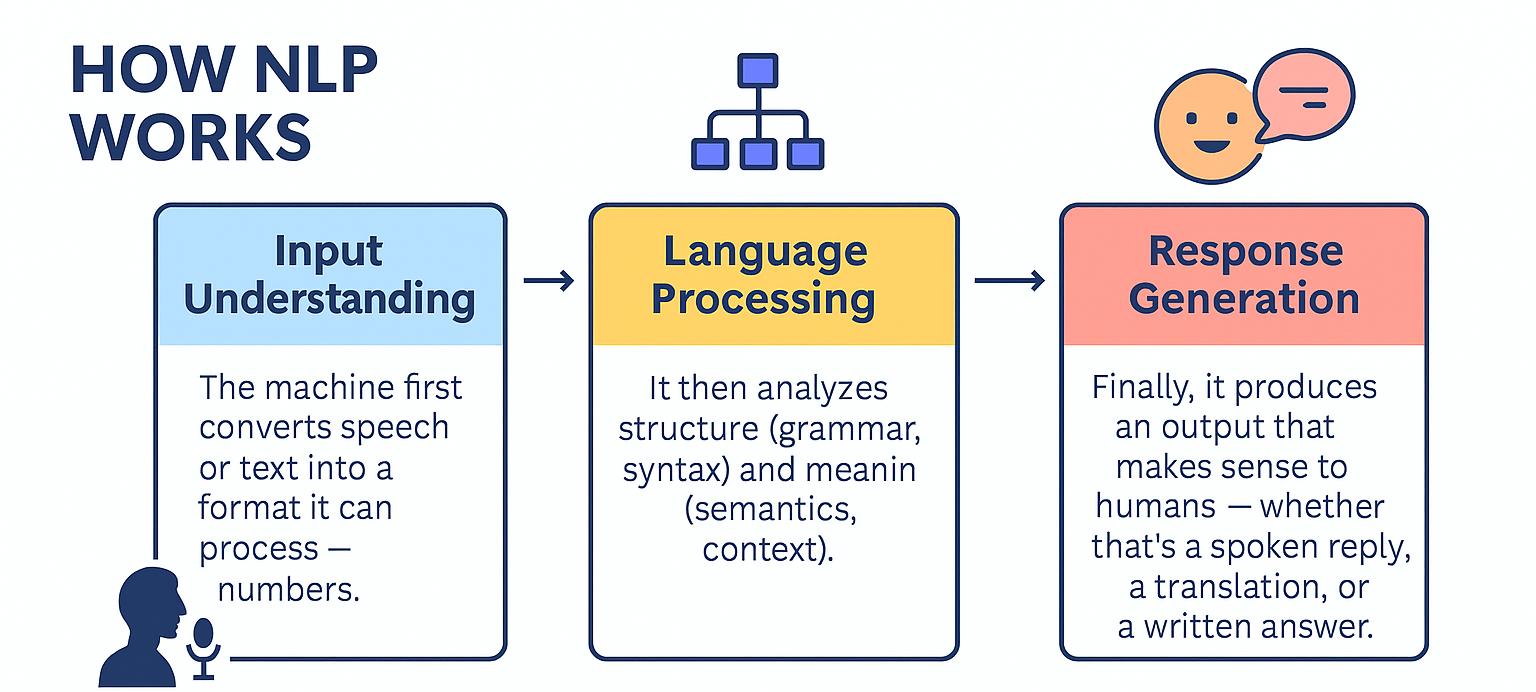
Input Understanding
When you speak or type something into a computer, the first thing the system does is convert your language into a format it can process, numbers. For voice input, speech recognition tools turn spoken words into text. For written input, text is broken down into smaller parts for easier analysis. This transformation helps the system begin to “see” the language not as words, but as structured data.
Language Processing
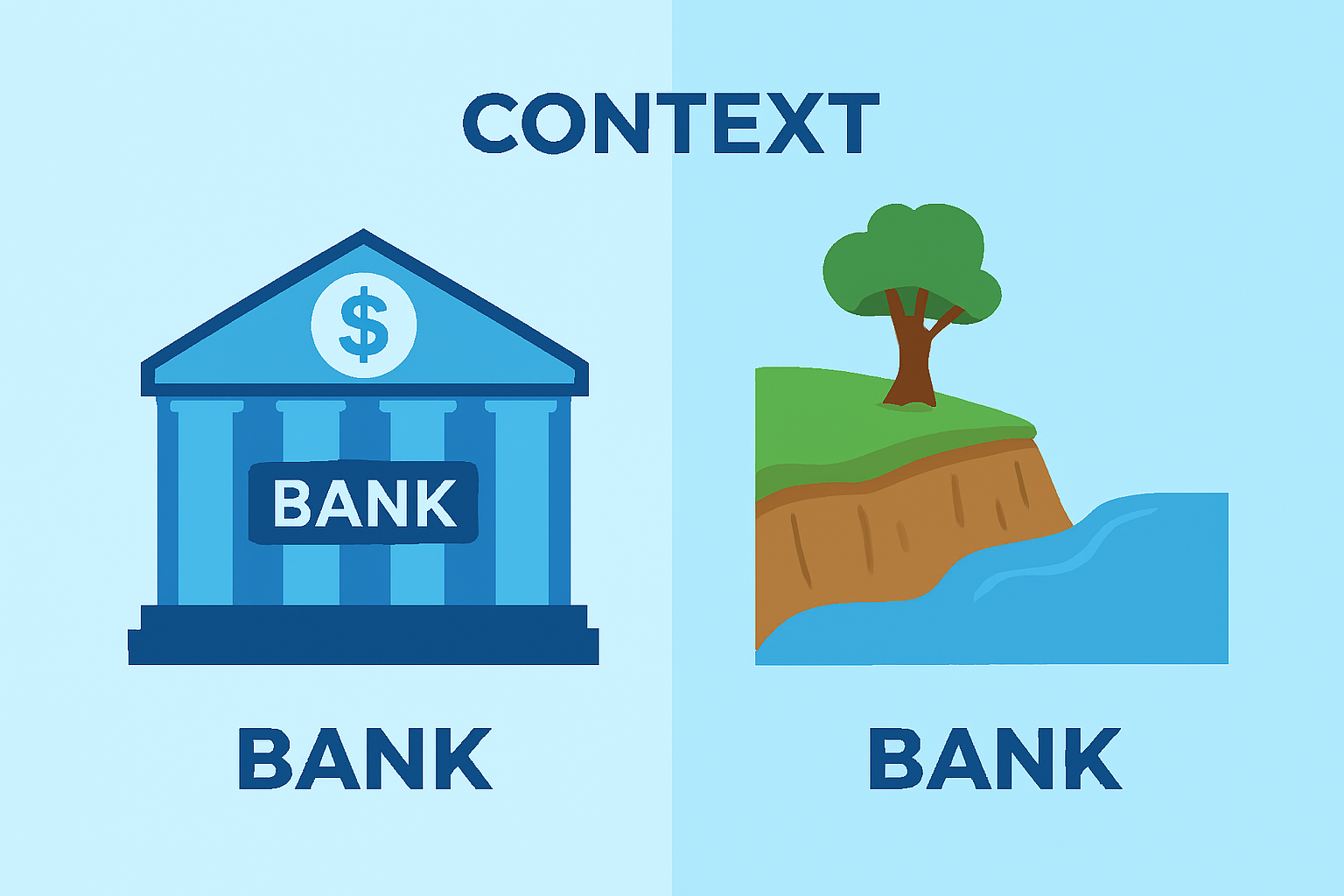
Once the data is ready, the system dives into the structure and meaning of what you said. It uses rules from linguistics and machine learning models to analyze grammar (syntax), word relationships, and meaning (semantics). It also looks at context, which is one of the most challenging parts, understanding that “bank” can mean a financial institution or a river’s edge depending on how it’s used. The more context-aware a model is, the more naturally it can understand and respond.
Response Generation
After analyzing the input, the machine formulates a suitable response. This could mean answering a question, translating text into another language, summarizing a long passage, or even generating creative writing. The response is then converted back into human language as text on your screen or speech through your device. This step combines reasoning, prediction, and fluency to produce an output that feels both accurate and conversational.
To make all of this possible, NLP relies on a range of techniques such as tokenization (breaking text into smaller units like words or phrases), sentiment analysis (detecting emotions), named entity recognition (identifying people, places, and organizations), and part-of-speech tagging (understanding the grammatical role of each word). These techniques are applied to perform tasks like translation, summarization, information extraction, and text generation all of which contribute to how machines “understand” us.
Applications of Natural Language Processing
Natural Language Processing (NLP) has become a driving force behind many of the technologies we use daily, often without realizing it. From the way we communicate online to how businesses serve customers, NLP is transforming human–machine interaction across industries. Some of its most impactful applications include:
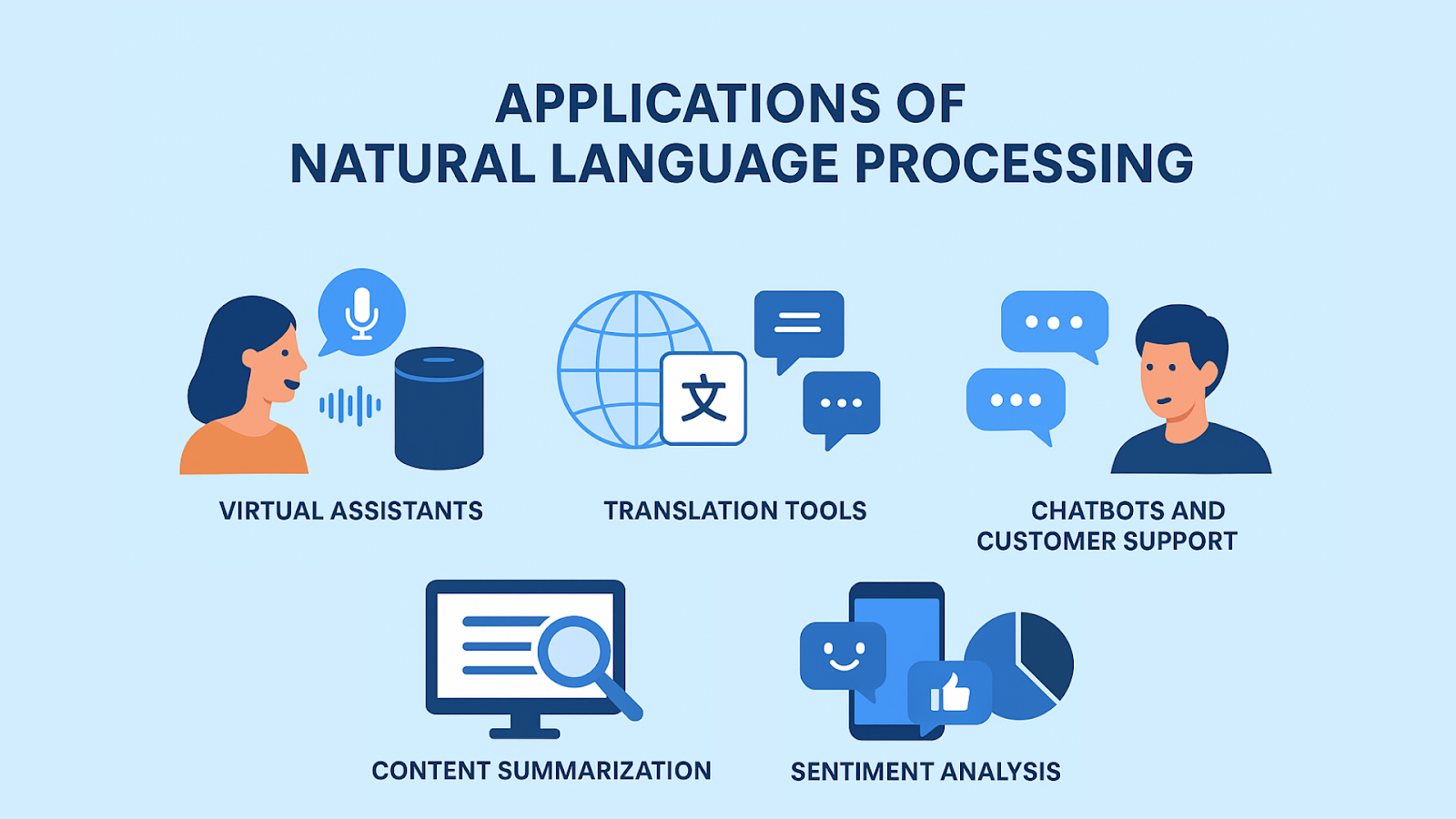
- Virtual Assistants: Voice-based assistants such as Siri, Alexa, and Google Assistant rely heavily on NLP to understand spoken commands and provide meaningful responses. When a user says, “Remind me to call mom at 6,” the system breaks down the sentence, identifies the action, object, and time, and sets a reminder accordingly. These assistants are continuously improving through contextual learning, allowing them to understand accents, informal speech, and even humor with increasing accuracy.
- Translation Tools: NLP powers tools like Google Translate and Microsoft Translator, enabling instant language translation across hundreds of languages. These systems analyze grammar, sentence structure, and context to produce more accurate translations than ever before. For instance, earlier translators often produced literal and awkward results, but today’s NLP-driven engines provide smoother, more natural sentences that preserve meaning and tone. This has made global communication and cross-cultural collaboration far more accessible.
- Chatbots and Customer Support: Many businesses now employ NLP-based chatbots to manage customer interactions around the clock. These systems can interpret customer queries, detect intent, and deliver helpful responses almost instantly. For example, banking chatbots can help users check account balances, transfer money, or resolve complaints without human assistance. In addition, NLP allows chatbots to improve over time by learning from past conversations, making them more efficient and personalized.
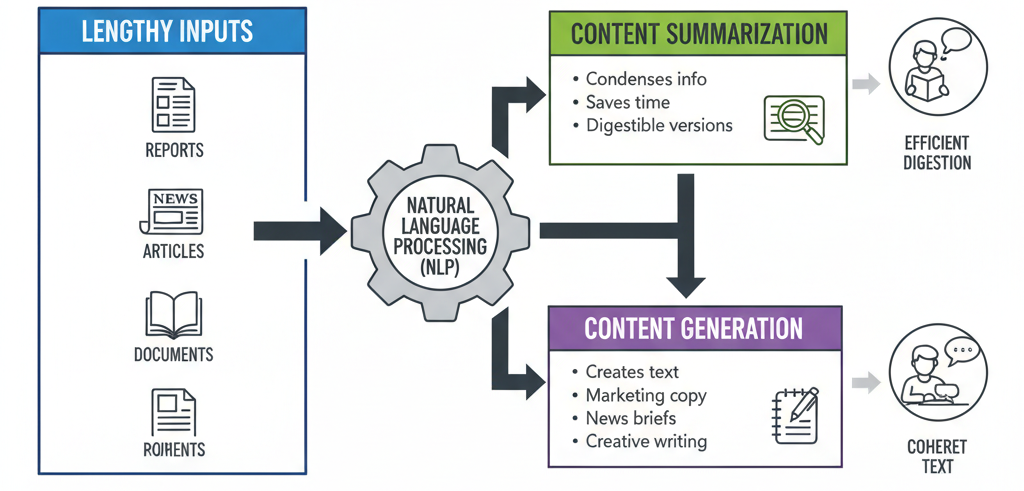
- Content Summarization and Generation: News outlets, research platforms, and educational tools use NLP to automatically summarize lengthy reports, articles, or documents into concise and readable versions. This saves time and helps people digest information more efficiently. On the other hand, NLP is also used to generate written content from marketing copy and news briefs to creative writing. This shows how machines can now produce coherent and context-aware text.
- Sentiment Analysis
NLP plays a vital role in understanding human emotions through written or spoken language. Companies use sentiment analysis to track customer opinions, monitor brand reputation, and analyze social media conversations. For example, during product launches or political campaigns, NLP tools can assess whether public reactions are positive, negative, or neutral. This insight helps organizations adapt strategies in real time and respond to public sentiment effectively.
Beyond these, Natural Language Processing is also being used in healthcare for analyzing patient reports, in education for personalized tutoring, and in entertainment for generating movie scripts or analyzing audience reactions. From daily communication to complex decision-making, NLP is quietly shaping the way humans and technology connect.
Challenges of Natural Language Processing
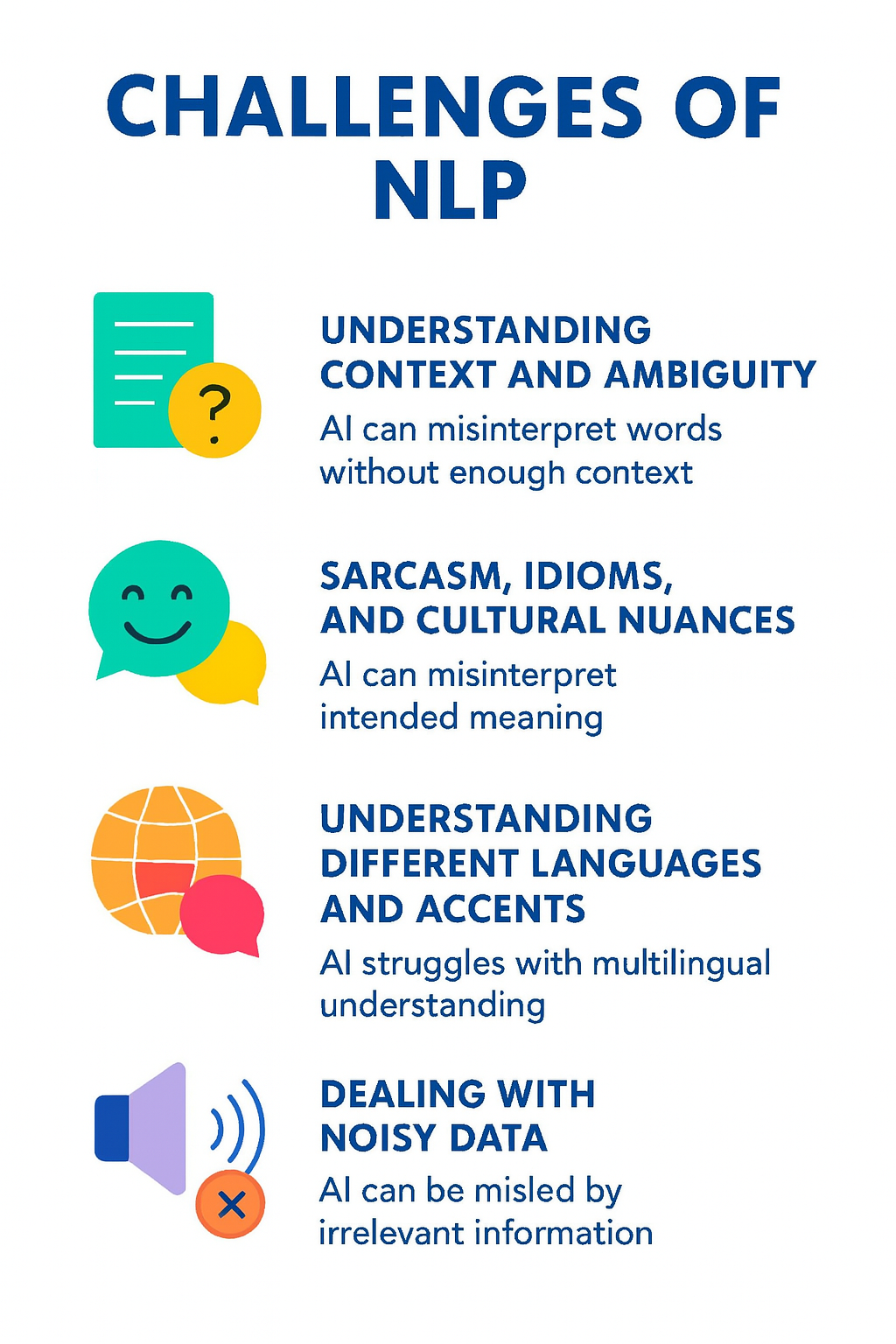
Despite its impressive progress, Natural Language Processing still faces big challenges. Human language is full of ambiguity, cultural references, and sarcasm, things that even advanced models sometimes misinterpret.
Regional languages and dialects add another layer of complexity, especially in multilingual countries like India.
Did you know?
In 2016, Microsoft’s AI chatbot Tay learned offensive language from Twitter users in less than 24 hours. This highlighted a major NLP challenge: AI can unintentionally learn and replicate human biases from real-world data.
However, the future looks promising. With advances in deep learning, large language models, and ethical AI research, NLP is moving closer to a world where machines truly understand not just what we say, but what we mean.
From binary code to fluent conversation, we’ve come a long way. Natural Language Processing has given machines a voice and, in a way, taught them to listen. The more it evolves, the more human–AI interaction will feel like second nature. Perhaps one day, we won’t just talk to machines, we’ll talk with them.