Imagine walking into work and finding that one of your teammates is not human. It answers emails, manages projects, brainstorms ideas, and even learns from mistakes, all without being told exactly what to do. This isn’t science fiction anymore; it is the reality being shaped by Agentic AI.
Fun Fact
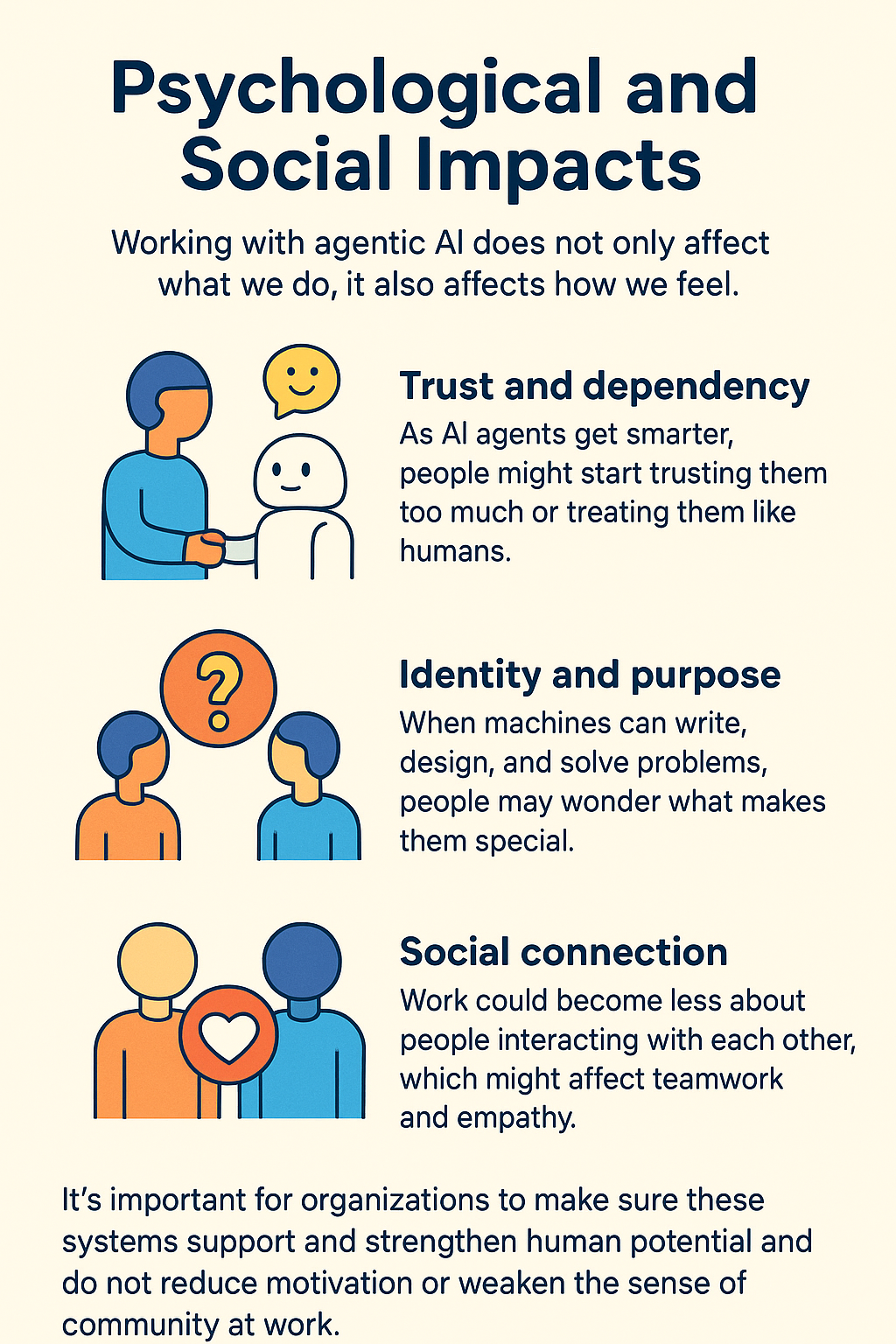
Many users feel emotionally attached to AI assistants, treating them like teammates or even friends.
Unlike traditional AI systems that wait for prompts or instructions, agentic AI can act with purpose. It plans, decides, and collaborates, becoming less of a tool and more of a partner. From marketing to medicine, these autonomous systems are beginning to change what “work” even means.
As agents take on real responsibilities, they’re not just transforming industries, they are reshaping the relationship between humans, machines, and society itself.
Redefining Work in the Age of Intelligent Agents
For most of human history, technology has replaced physical effort, machines took over muscle. With Agentic AI, technology is now replacing parts of our mental effort in areas such as analysis, planning, and problem-solving.
Instead of just following instructions, these systems can independently:
- Research and summarize information
- Generate creative outputs (code, designs, stories)
- Coordinate complex tasks across multiple tools
- Learn from feedback to improve performance
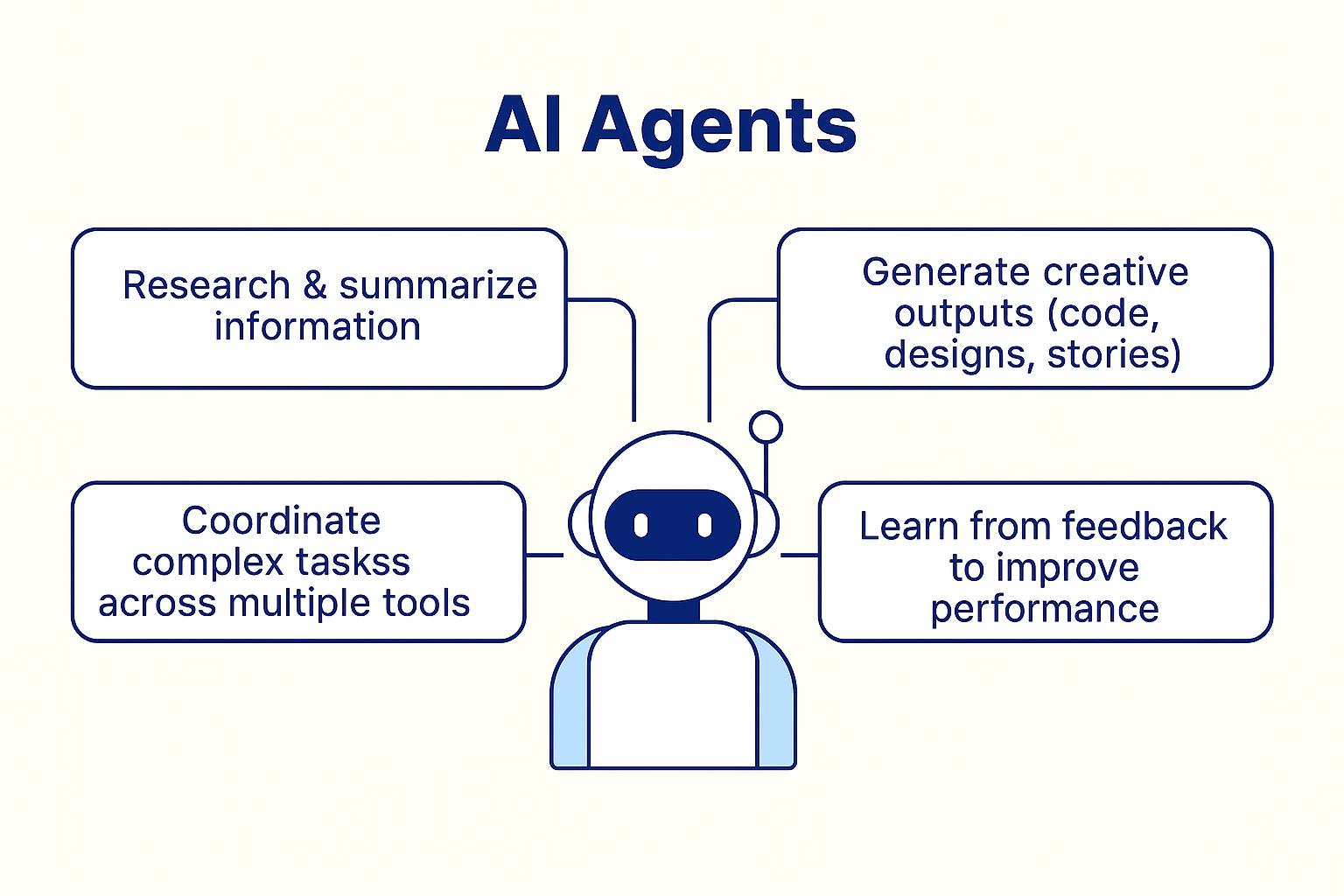
As a result, the definition of work itself is shifting from performing tasks to guiding intelligent systems.
Example: A marketing team may no longer write every social post manually. Instead, an AI agent drafts, tests, and schedules content autonomously while humans focus on creativity, brand vision, and strategy.
The Rise of AI Coworkers
The concept of the “AI coworker” is becoming real. These agents work alongside humans in teams, not replacing them outright, but improving what they can do.
Examples of AI Coworkers:
- Software development: Tools like Devin, the autonomous AI engineer, can handle bug fixes, run tests, and deploy code.
- Customer support: AI agents respond to routine tickets, freeing human agents for complex or emotional interactions.
- Design and content creation: Creative agents brainstorm, prototype, and even edit videos collaboratively with humans.
In this hybrid model, humans act as mentors, supervisors, or creative partners. The agent is not just a tool but a collaborator.
Autonomous Workforces and AI-Driven Enterprises
Beyond individual coworkers, some organizations are experimenting with entire teams of AI agents managing workflows autonomously.
Imagine a company where:
- A project management agent assigns tasks.
- A research agent gathers insights.
- A finance agent optimizes budgets.
- A sales agent handles client communication.
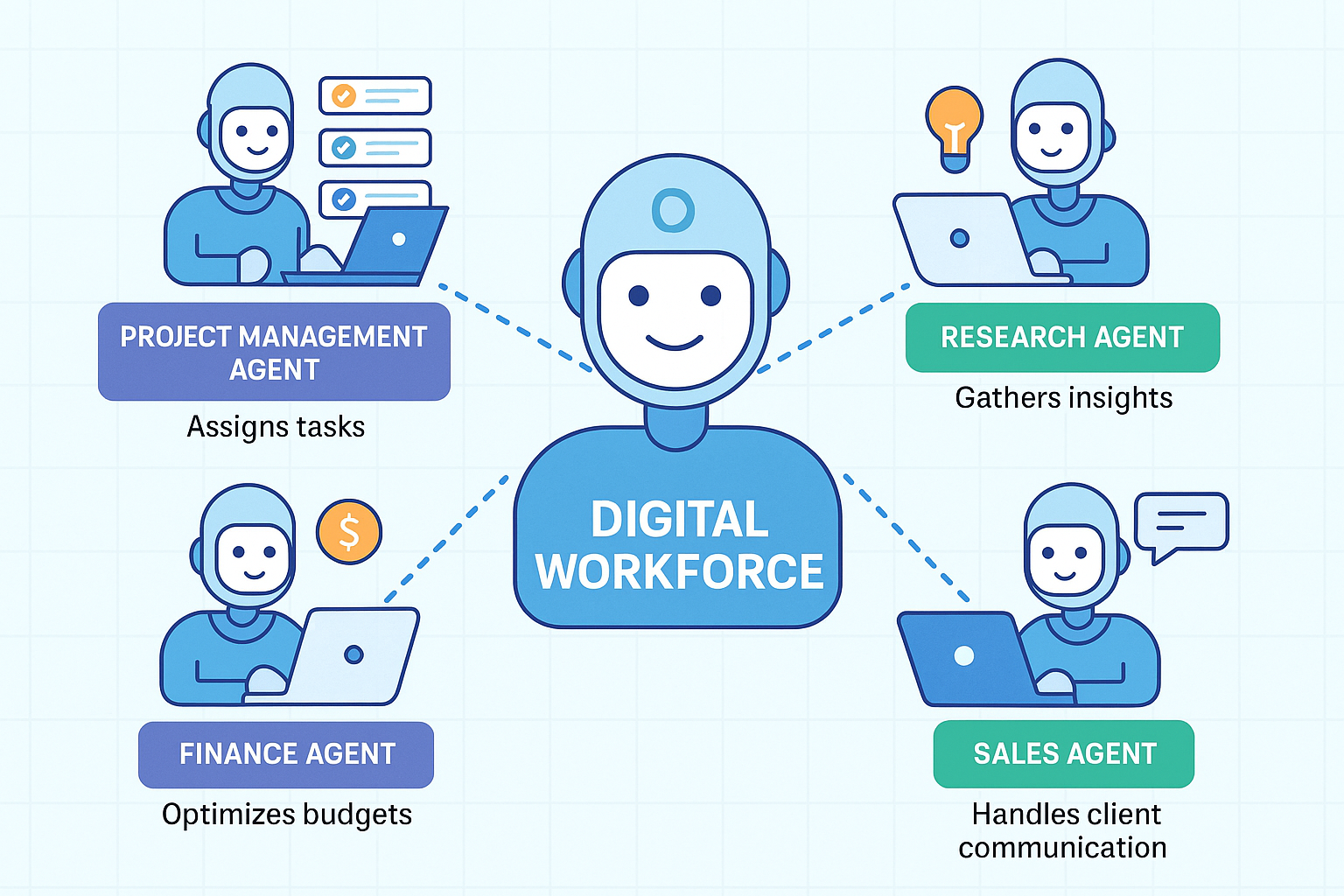
These systems can coordinate with each other effectively forming a digital workforce.
Startups using frameworks like CrewAI, AutoGPT, or OpenDevina are already building multi-agent organizations that operate semi-independently. This could revolutionize how businesses scale, allowing small human teams to manage large networks of digital workers.
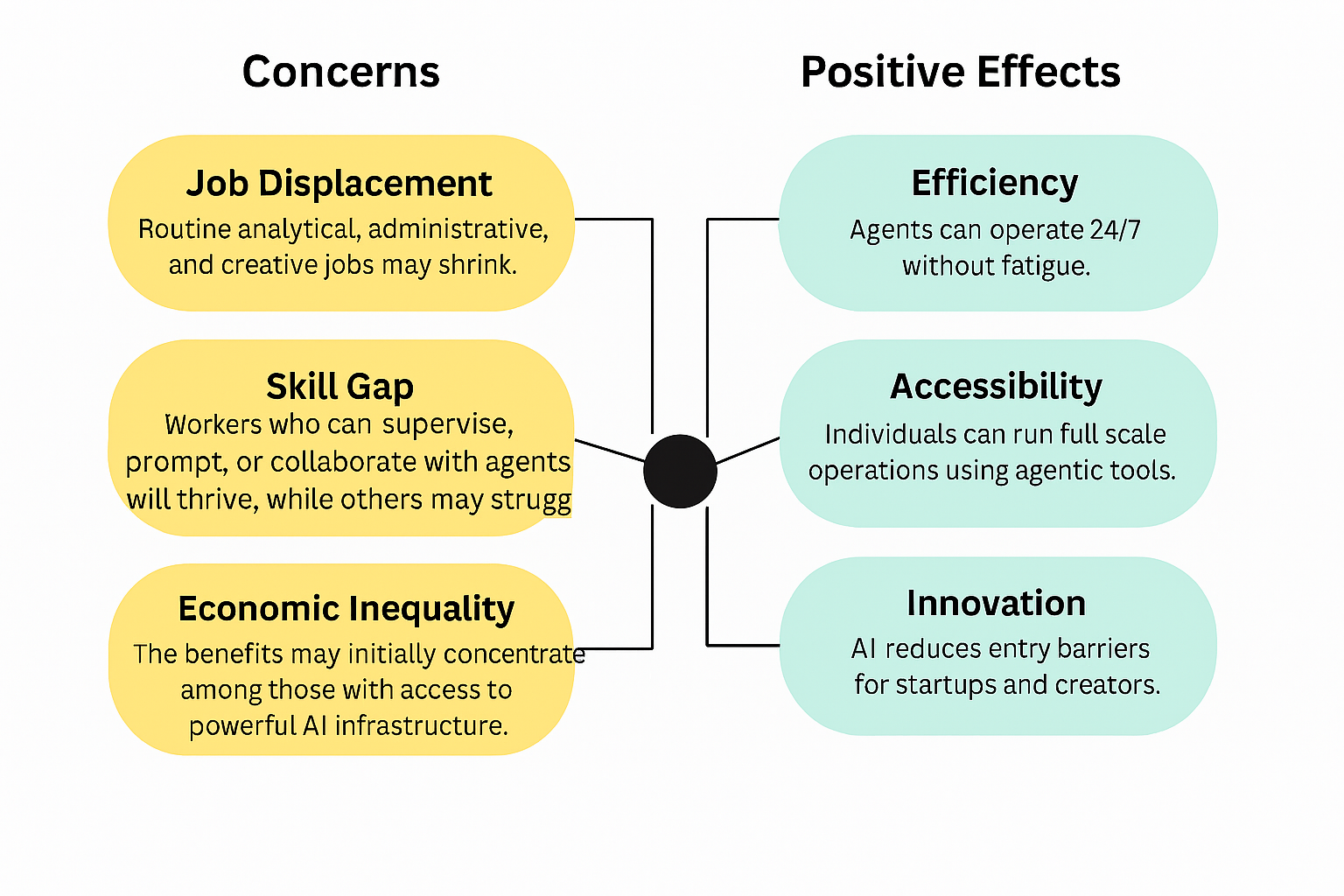
Economic Transformation: Productivity, Jobs, and Inequality
Agentic AI promises huge productivity gains but it also challenges the structure of the economy.
The Human-AI Social Contract
As agentic systems grow more autonomous, humanity faces a new kind of social contract, one between humans and machines that act independently.
It will require:
- Ethical design: Embedding transparency and alignment into agents.
- Shared responsibility: Distributing agency carefully between humans and systems.
- Inclusive progress: Ensuring everyone benefits from AI-driven productivity.
The goal isn’t to compete with AI but to coexist productively, ensuring human values remain central in the age of autonomous intelligence.
From Tools to Partners
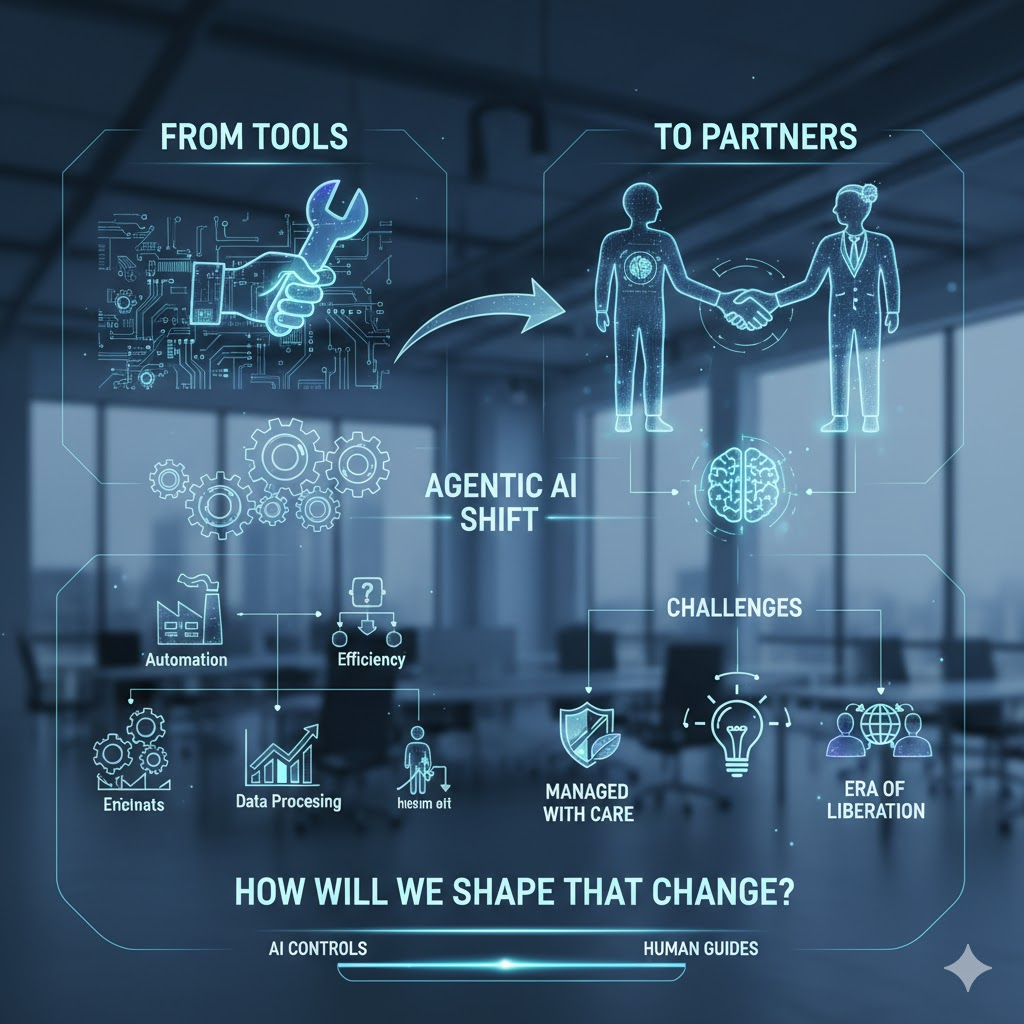
Agentic AI marks a profound shift from AI as a tool to AI as a partner. It challenges industries, economies, and even our sense of purpose. But if managed with care, it could usher in an era where technology liberates humans from routine, enhances creativity, and enables a more intelligent, collaborative society.
The key question isn’t whether AI will change work, it is how we will shape that change.