Imagine watching a car drive itself through a busy city, stopping at signals, avoiding pedestrians, and taking turns all without a human at the wheel. Or picture a tiny robot vacuum cleaner gliding across your floor, dodging furniture and cleaning every corner on its own. These tools are powered by Autonomous Artificial Intelligence (Autonomous AI), the kind of AI that doesn’t just think, but also acts independently in the real world.
What is Autonomous AI?
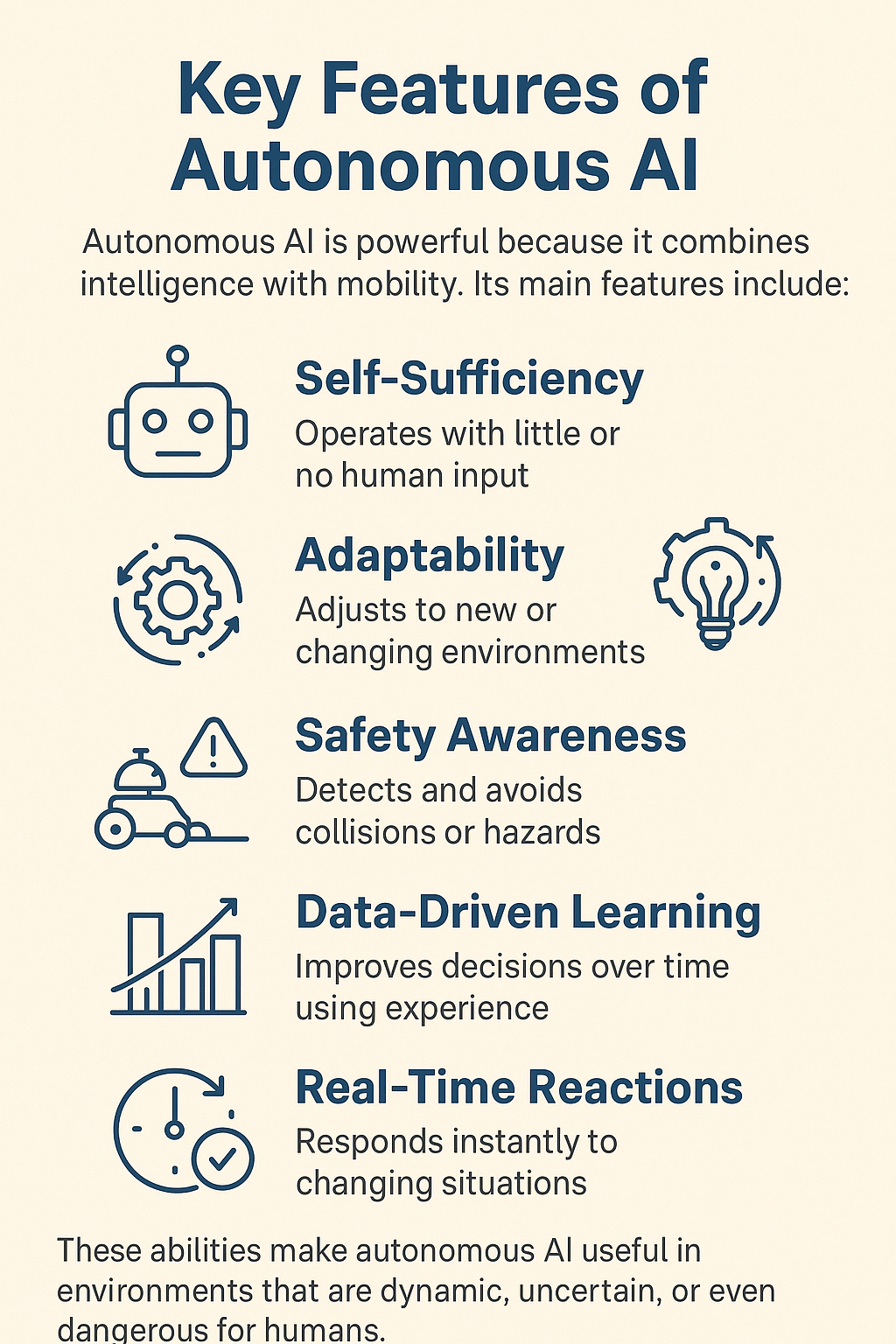
Autonomous AI refers to a system or machine that can sense its surroundings, make decisions, and take actions on its own without continuous human control.
In simple words, it’s the kind of AI that has the ability to move and act in the physical world just like humans or animals do.
Unlike traditional AI, which might only answer questions or analyze data, autonomous AI systems are designed to interact with the environment. They can navigate spaces, pick up objects, avoid obstacles, and even make complex decisions on the go.
You’ll find autonomous AI inside:
- Self-driving cars that navigate traffic.
- Drones that fly and deliver packages.
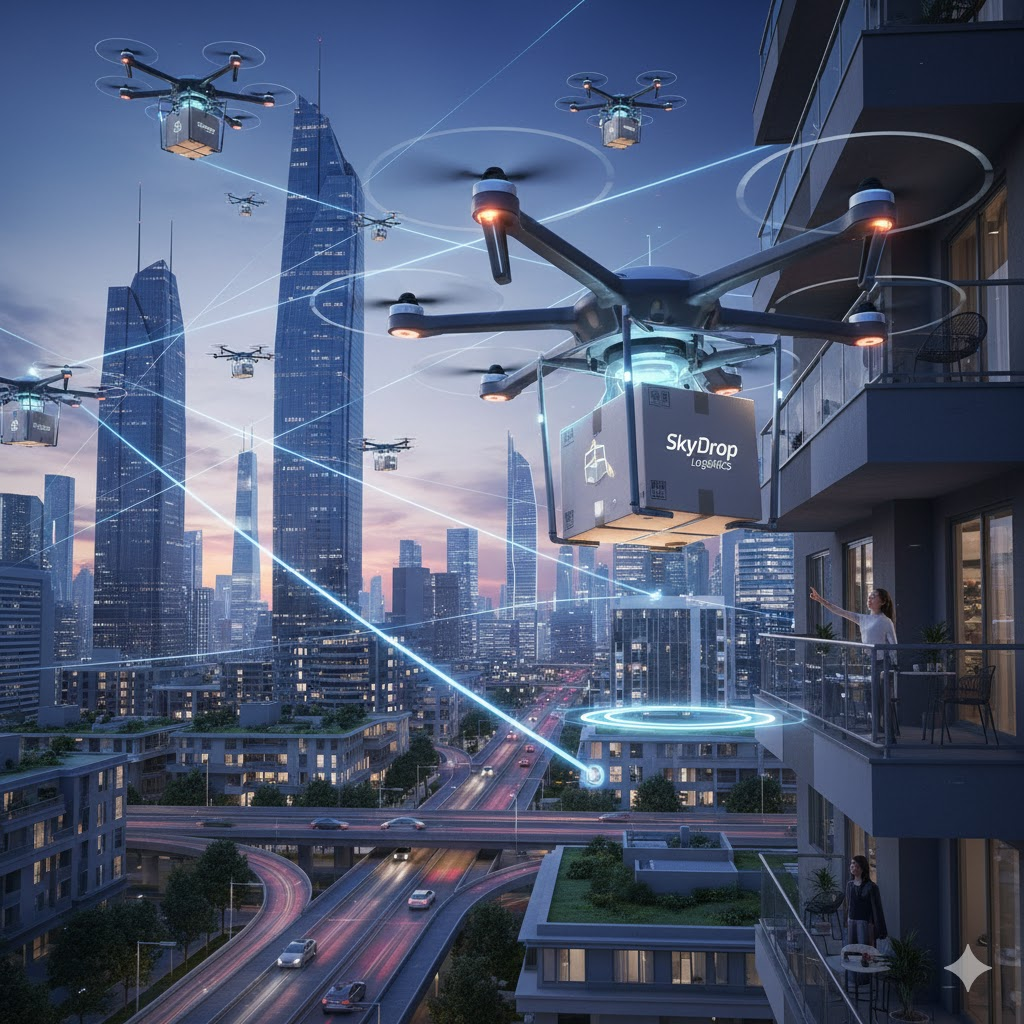
- Robots that clean, assemble, or patrol.
These intelligent machines combine artificial intelligence with mechanical control systems, allowing them to perform tasks that once required human judgment, vision, and coordination.
How Does Autonomous AI Work?
Autonomous AI works through a cycle of perceiving, deciding, and acting. Just like humans use their senses and brain to respond to the world, autonomous systems use sensors, algorithms, and actuators.
Let’s break this process down step by step:
Perception: Sensing the Environment
To act independently, an AI system first needs to see and understand what’s around it. It does this through sensors and cameras, which collect information from the environment, such as:
- Cameras: Capture images and detect lanes, pedestrians, or signs.
- Radar and Lidar: Measure distances to nearby objects using sound or light waves.
- GPS: Helps determine location and direction.
- Infrared sensors: Detect heat or obstacles in dark environments.
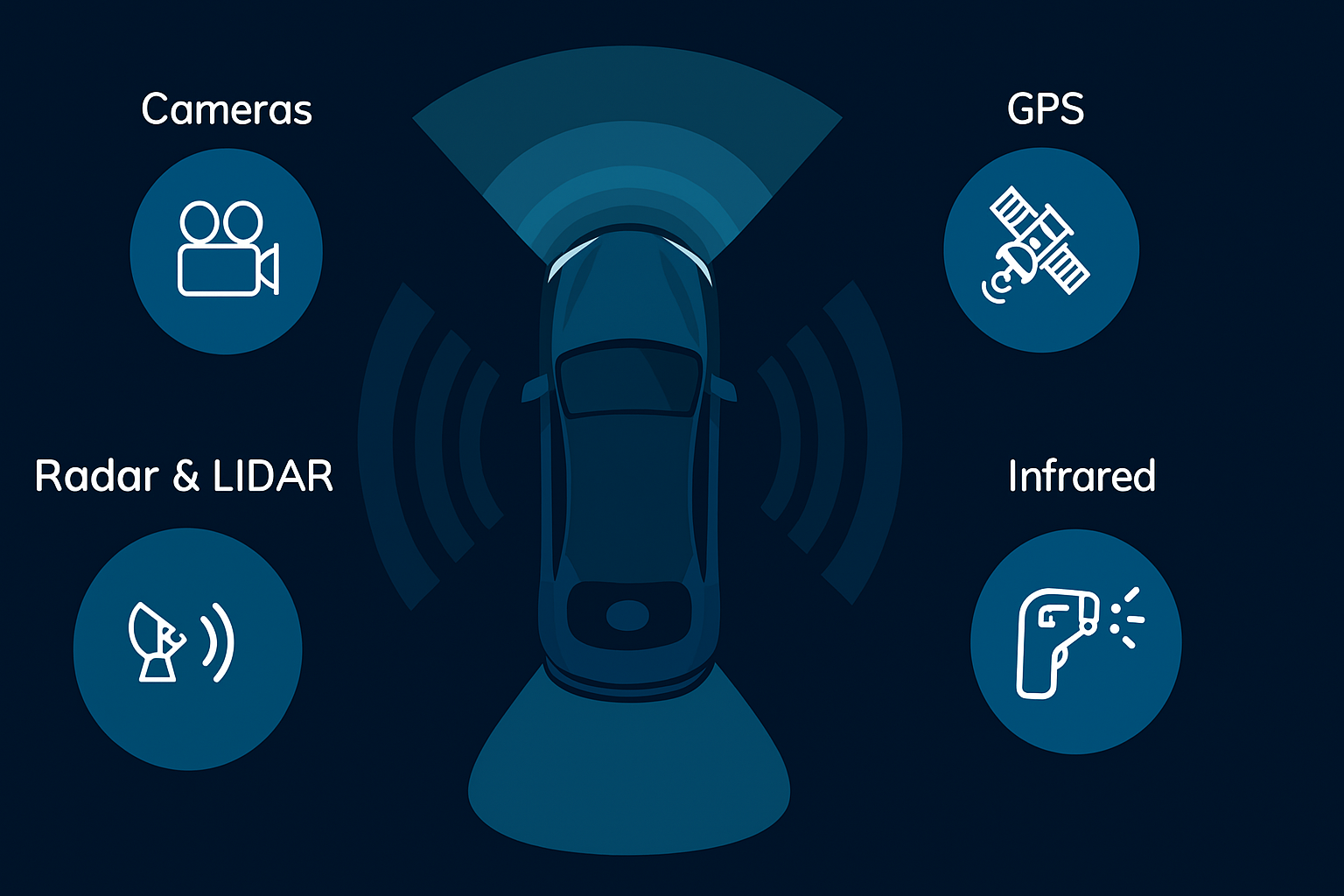
Example: A self-driving car uses lidar to create a 3D map of its surroundings, radar to detect the speed of other vehicles, and cameras to read traffic lights and road signs.
Decision-Making: Thinking and Planning
Once the AI has gathered data, it needs to make sense of it. This is where machine learning, neural networks, and computer vision algorithms come into play.
The system:
- Interprets what it sees (e.g., “This is a stop sign” or “That’s a moving pedestrian”).
- Predicts what might happen next (e.g., “The pedestrian may cross the road”).
- Chooses the safest or most efficient action (e.g., “Stop or slow down”).
These decisions are often made in milliseconds using powerful onboard computers.
Example: A warehouse robot might detect that a worker is in its path and instantly change direction to avoid collision, without waiting for instructions.
Action: Moving and Responding
Once the decision is made, the AI system must act. This happens through actuators or motors, which translate the computer’s instructions into physical motion like turning a wheel, steering, or moving an arm.
Example: After analyzing its environment, a drone may tilt its propellers to change direction or maintain balance in strong wind.
Learning: Improving Over Time
Many autonomous AI systems use reinforcement learning or continuous feedback loops to get better with experience. The system records what worked well and what didn’t, and refines its behavior through trial and error.
Example: An autonomous delivery robot learns better routes by remembering obstacles or shortcuts it has seen before.
Applications of Autonomous AI
Autonomous AI has spread across nearly every field from transportation to healthcare. Let’s explore some of the most exciting real-world uses:
Self-Driving Vehicles
Perhaps the most famous application, autonomous cars use AI to drive safely without human input. They detect lanes, read signs, identify pedestrians, and predict other vehicles’ movements.
Companies like Tesla, Waymo, and Cruise are developing vehicles that can navigate busy roads, park themselves, and even handle traffic jams.
Benefits:
- Reduces human error and accidents.
- Saves time in traffic.
- Enables transportation for people who can’t drive.
Home Robots
Autonomous robots like Roomba or Ecovacs can clean floors without guidance. They sense dirt, avoid obstacles, and return to their charging docks automatically.

Benefits:
- Saves time for homeowners.
- Operates safely around pets and furniture.
Delivery Drones and Robots
Companies like Amazon, FedEx, and Starship Technologies are using autonomous drones and small wheeled robots for last-mile delivery. They use GPS, sensors, and cameras to find addresses and drop packages efficiently.
Benefits:
- Faster, contactless deliveries.
- Reduced traffic and emissions.
Manufacturing and Warehousing
Industrial robots with autonomous AI work in factories to assemble parts, sort goods, or move materials. For example, Amazon’s fulfillment centers use AI-driven robots that navigate aisles, carry packages, and restock shelves with incredible precision.
Benefits:
- Improves productivity and efficiency.
- Reduces human injury in repetitive or risky jobs.
Agriculture
Autonomous tractors and drones monitor fields, plant seeds, and apply fertilizers using precise measurements. They can detect crop health using camera data and act only where needed.
Benefits:
- Saves time and resources.
- Reduces waste and boosts yield.
Healthcare and Assistance
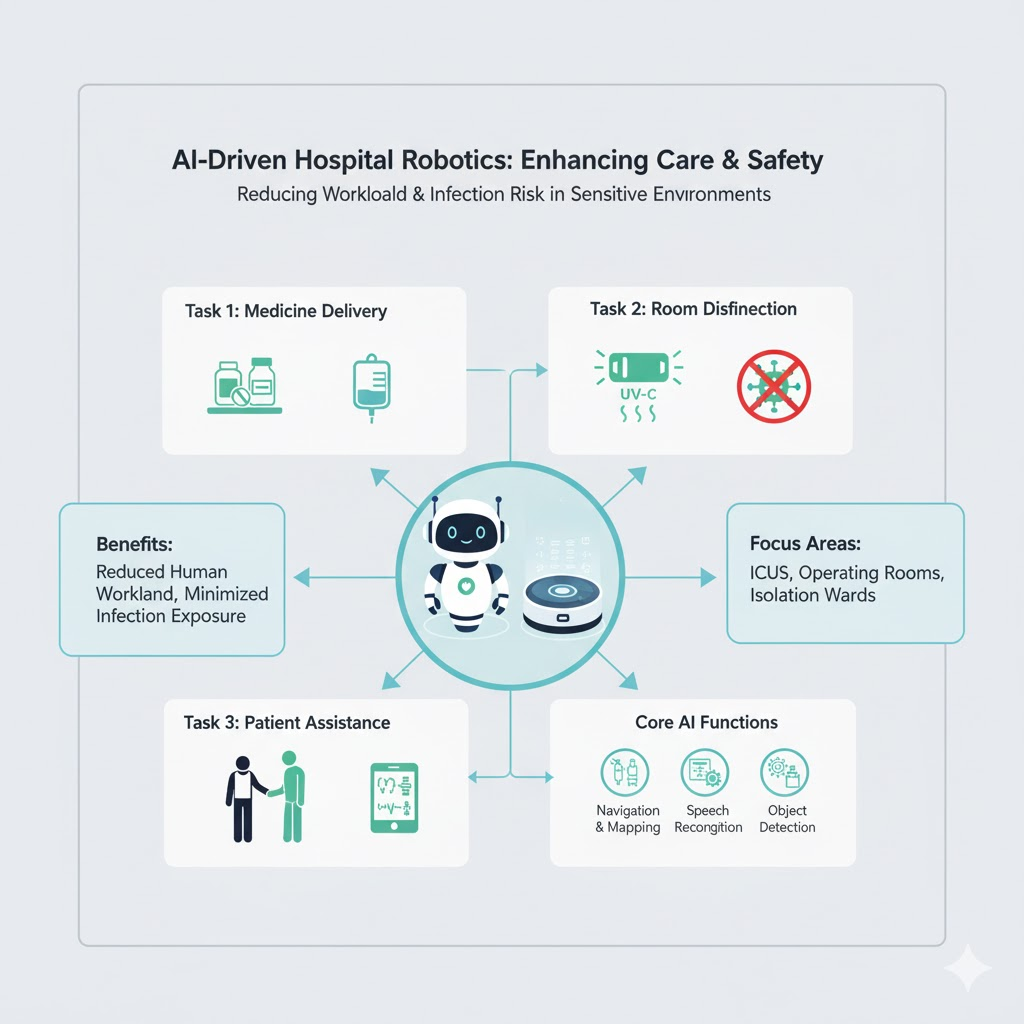
AI-driven robots in hospitals can deliver medicines, disinfect rooms, or assist patients. They help reduce human workload and risk of infection, especially in sensitive environments like ICUs.
Benefits:
- Better hygiene and efficiency.
- Allows healthcare workers to focus on patient care.
Defense and Exploration
Autonomous drones and submarines can explore dangerous or unreachable areas from deep oceans to distant planets. NASA’s Perseverance Rover on Mars, for example, navigates rocky terrain and collects samples using autonomous AI.
Benefits:
- Explores areas unsafe for humans.
- Gathers data with high precision.
Challenges of Autonomous AI
While the progress is remarkable, challenges remain:
- Safety: Machines must react correctly in unpredictable conditions.
- Ethics: Should an autonomous car prioritize passenger safety or pedestrian safety in a crash?
- Data Privacy: Sensors constantly record surroundings, raising privacy questions.
- Regulation: Governments need to create laws for safe AI deployment.
Engineers, scientists, and policymakers are working together to make these systems trustworthy and beneficial for everyone.
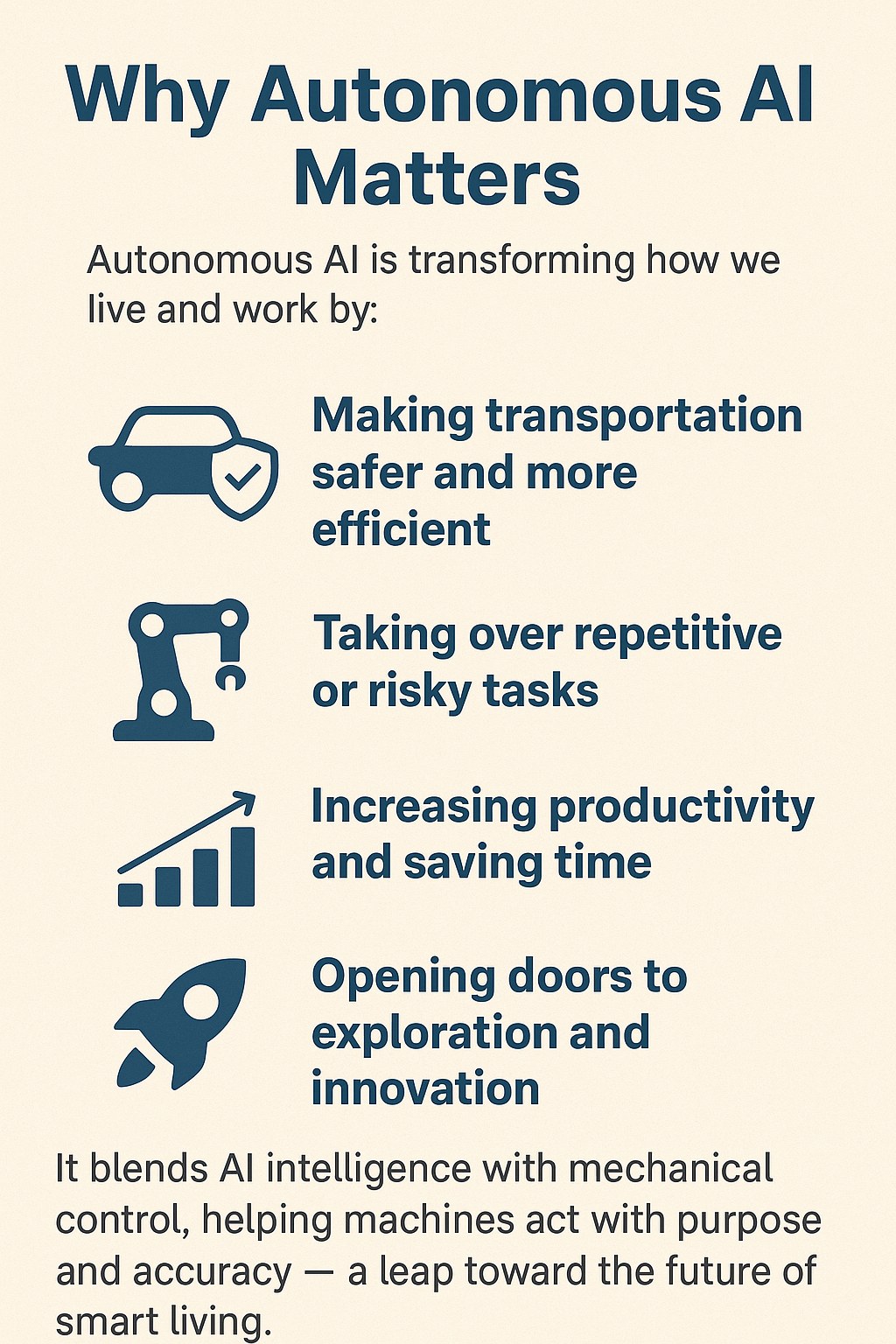
Autonomous AI marks a powerful new chapter in artificial intelligence, one where machines no longer just calculate or respond, but see, decide, and act in the real world. From self-driving cars to space rovers, it’s reshaping industries, redefining work, and reimagining how humans and machines interact.
The road ahead may have challenges, but the destination is clear: a future where intelligent machines act as our partners, moving and working alongside us safely, efficiently, and autonomously.