What is NOT Artificial Intelligence
Artificial Intelligence (AI) refers to computer systems that can perform tasks that normally require human intelligence, such as learning, reasoning, and problem-solving. It is one of the most popular technologies today, but also one of the most misunderstood. A common mistake people make is labelling every automated or “smart” system as AI. Just because a system works on its own or responds to commands does not mean it is intelligent. A truly intelligent system demonstrates learning, adaptation, and decision-making abilities based on the data it processes.
Fun Fact
The First AI Program Was Made in 1951! That is more than 70 years ago! It was a computer that could play a game of checkers
Common Misconceptions
Many assume that any machine performing a task without human input qualifies as AI. However, there is a big difference between automation and intelligence. AI is not just about reducing human intervention, it’s about systems learning from experience and improving over time. Let us look at some common misconceptions related to what is considered artificial intelligence:
Misconception 1: “If something works by itself, it must be intelligent.”
Many machines and gadgets today can work automatically. For example, an automatic fan turns on when the room is hot, and a washing machine starts when you press a button. But these machines follow pre-written instructions. They do not think, learn, or improve. They cannot understand new situations or solve problems on their own.
A system is called intelligent only if it can:
- Learn from data or experience
- Change its actions based on what it learns
- Improve without human help
So, an automatic machine like a washing machine may feel smart because it starts, stops, and washes clothes. But it is not intelligent,it does not learn from how dirty your clothes are or what type of fabric you use.
Misconception 2: “Artificial Intelligence is as smart as human beings.”
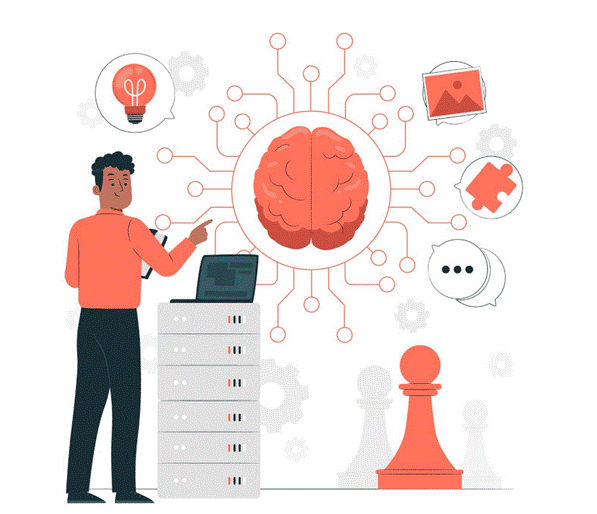
Artificial Intelligence today is still in a very early stage, known as Narrow AI, which means it is designed to perform only specific tasks and cannot think or reason like humans.
For example:
- It can recognise faces in a photo
- It can translate text from one language to another
- It can play games like chess
But if you give it a new problem it was not trained for, it will not know what to do. Artificial Intelligence is not general or human-like. It cannot:
- Understand everything like a human
- Feel happy, sad, or angry
- Make decisions the way humans do in daily life
At present, Artificial Intelligence is specialised, not general.
Misconception 3: “Artificial Intelligence will take away all our jobs.”
It is true that artificial intelligence can do some tasks that humans used to do. For example:
- It can sort files faster
- It can answer simple customer questions
- It can help in factories or farms
But this does not mean that all jobs will disappear. In fact, history shows that every big invention created more new jobs. When the wheel was invented, people worried. When machines came to factories, workers were scared. But in every case, new types of work were created, and people learned new skills.
Artificial Intelligence will change how we work, but it will not replace people. Instead, it will:
- Create new kinds of jobs
- Help people do tasks better and faster
- Allow humans to focus on creative and complex work
The world will always need human ideas, creativity, care, and communication, things Artificial Intelligence cannot replace.
Automation vs. Real AI Examples
One must be able to differentiate between automation and real AI. The key idea is that if a system only follows instructions, it is not AI. But if it learns from data or past actions and improves on its own, it is considered Artificial Intelligence. This is the main difference between simple automation and intelligent behaviour. Let us look at a few examples:
| Technology | How it works | AI? | Why / Why not? |
| Automatic Washing Machine | Follows fixed wash cycles based on buttons pressed | No | It does not learn from usage or adapt to new needs |
| Smart TV | Shows suggestions based on manual settings | No | It follows a rule, but does not understand preferences |
| Air Conditioner | Turns off/on based on timer or room temperature | No | It follows fixed rules; it does not learn from your habits |
| Automatic Car | Needs a human to drive it but can handle gears automatically | No | It helps the human, but does not take decisions or improve |
| Answering Machine | Plays a recorded message when you are unavailable | No | It follows a script; no learning or response generation |
| Self-driving Car | Uses sensors, maps, and past trips to drive safely | Yes | It collects driving data, adapts to traffic, and improves with use |
| Conversational Chatbot (ChatGPT, Gemini) | Understands user messages and replies differently each time | Yes | It learns from each conversation and gives better answers next time |
Clarifying Boundaries: AI vs. Algorithms and Scripted Logic
Just because a system uses algorithms doesn’t make it AI. Algorithms are a fundamental part of computer science. They are used to solve different problems in a fixed manner. Most software systems follow the logic: “If this happens then do that.” These systems don’t grow smarter or improve with experience.
Artificial intelligence, on the other hand, learns from data. It recognizes patterns, makes predictions, and changes based on the new information. It can do this with the help of machine learning, which provides the system the ability to improve automatically through experience without being programmed for every scenario. To understand this better, one must know the difference between Algorithmic thinking (fixed logic) and Artificial Intelligence (adaptive logic)
What is an Algorithm?
An algorithm is a step-by-step method used to solve a problem. It can be very smart, but it never changes unless a human rewrites it.
Example:
- A calculator uses an algorithm to solve maths problems.
- It always follows the same rule and never learns anything.
What is Artificial Intelligence?
Artificial Intelligence uses data, experience, and patterns to make decisions. It learns like a student, not just repeats what it knows.
Example:
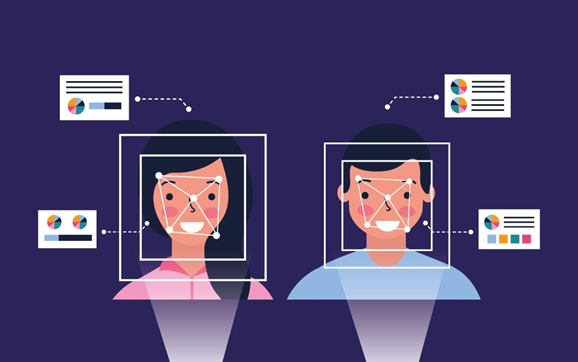
A face recognition system looks at thousands of faces. It slowly learns how to identify new ones, even in poor lighting.
| Feature | Algorithm | Artificial Intelligence |
| Can it make decisions? | Only using fixed rules | Yes, by learning patterns |
| Can it adapt over time? | No | Yes |
| Can it work in new situations? | No | Yes, if trained |
| Does it learn from data? | No | Yes |
| Example | GPS route calculator | Self-driving car choosing safest route during fog |
The key difference is that artificial intelligence grows with experience, just like humans do.
Clarifying Chatbots vs. Intelligent Agents
Many online platforms and websites use chatbots. These are software that answer your questions. However not all chatbots that are used are artificially intelligent. FAQ bots or scripted customer service bots simply deliver fixed answers to common queries. They do not evolve or improve. Conversational AI systems learn from every conversation. They change and adjust their responses, and provide context-aware communication. These systems simulate intelligent conversations by leveraging data, patterns, and continuous training.
| Feature | Simple Chatbot | Conversational AI Agent |
| Works with fixed answers | Yes | No |
| Learns from users | No | Yes |
| Gets better over time | No | Yes |
| Example | Bank’s customer service FAQ bot | Google Assistant, Alexa, or Siri |
In summary, Artificial Intelligence is not just about machines doing work automatically. It is about machines that can learn, change, and make smart decisions on their own. Right now, computers are not as smart as humans. They can only do one job at a time, like recognizing pictures or answering questions. But even with these limits, Artificial Intelligence is very useful. It helps in many areas like health, travel, learning, and games. If we understand the difference between simple machines and truly intelligent systems, we can better see how AI is helping us now and how it can grow in the future.