“Can you believe your eyes anymore?” With artificial intelligence now capable of fabricating videos of world leaders, cloning voices, or recreating a person’s face with uncanny precision, the boundary between real and fake is rapidly vanishing. These hyper-realistic creations are called deepfakes, one of the most fascinating and controversial uses of AI.
Deepfakes are generated using advanced neural networks that learn patterns from vast datasets of images, video, or audio. The result is synthetic media so convincing that it can be nearly impossible to distinguish from reality. While this technology fuels creativity in film, education, and accessibility, it also poses serious risks ranging from misinformation to identity theft.
What Are Deepfakes?
The term “deepfake” combines deep learning (a subset of AI) with fake. These media are created using neural networks, particularly Generative Adversarial Networks (GANs) and transformer-based models, which learn from large datasets of images, videos, or audio recordings. By analyzing patterns, the AI can generate hyper-realistic content such as a video of a person saying or doing something they never actually did.
How Are Deepfakes Made?
The process to make a deepfake is extremely sophisticated and complex. It involves:
- Data Collection: Large amounts of images, videos, or audio samples of a person are gathered.
- Training the Model: AI learns patterns of facial expressions, voice tones, or speech styles.
- Synthesis: The model generates new content, such as swapping one person’s face into another’s video or mimicking their voice.
- Refinement: AI tools enhance realism by adjusting lighting, syncing lip movements, and smoothing out inconsistencies.
Applications of Deepfakes
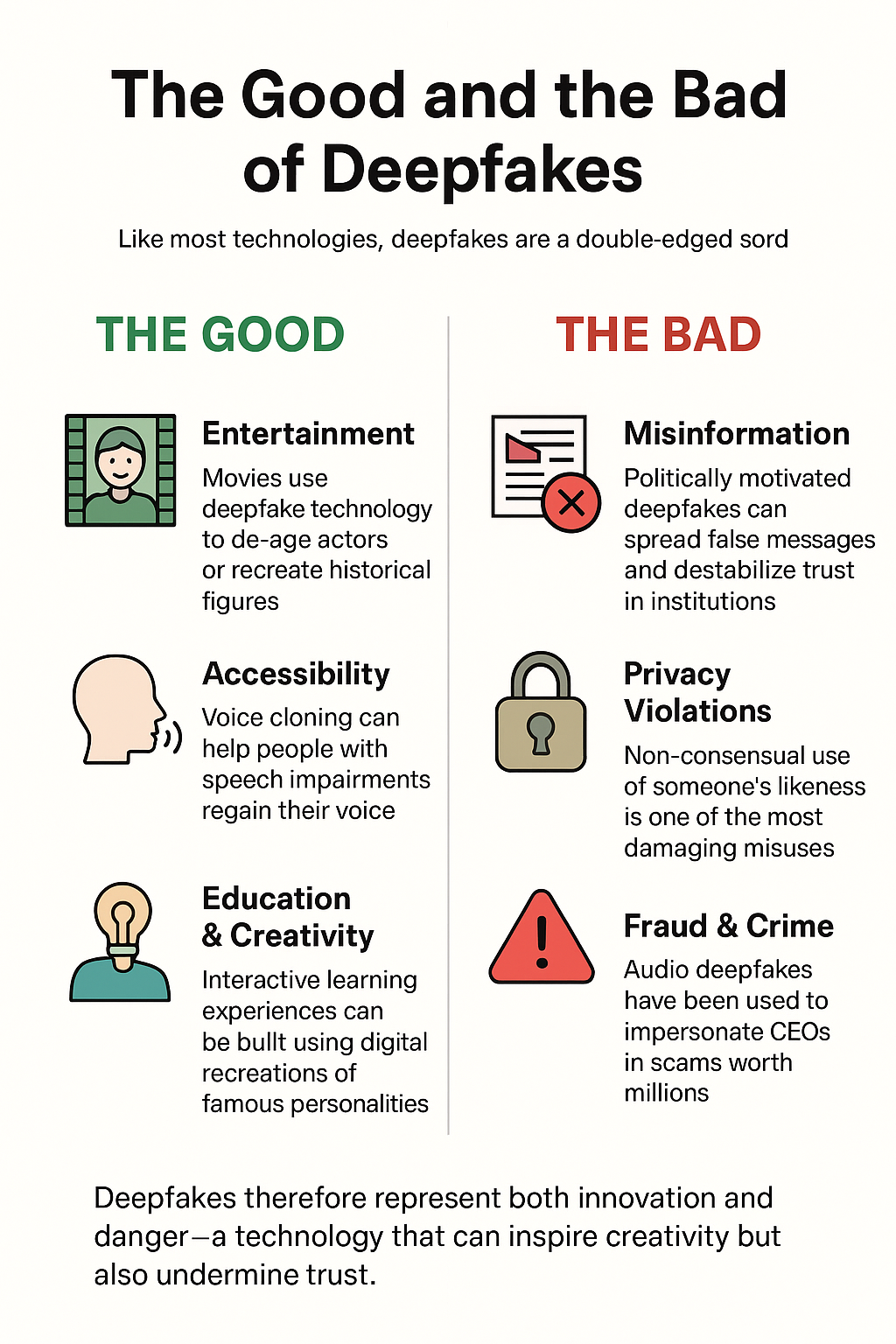
Not all deepfakes are harmful. In fact, the technology has legitimate and innovative applications across industries:
- Entertainment & Film: Deepfakes are often used in movies to make actors look younger, replace faces, or even recreate actors who are no longer alive. For example, in Star Wars: Rogue One, a younger version of Princess Leia was recreated using AI. Deepfakes are also helping reduce the need for expensive CGI (computer-generated imagery) by creating realistic effects at lower costs.
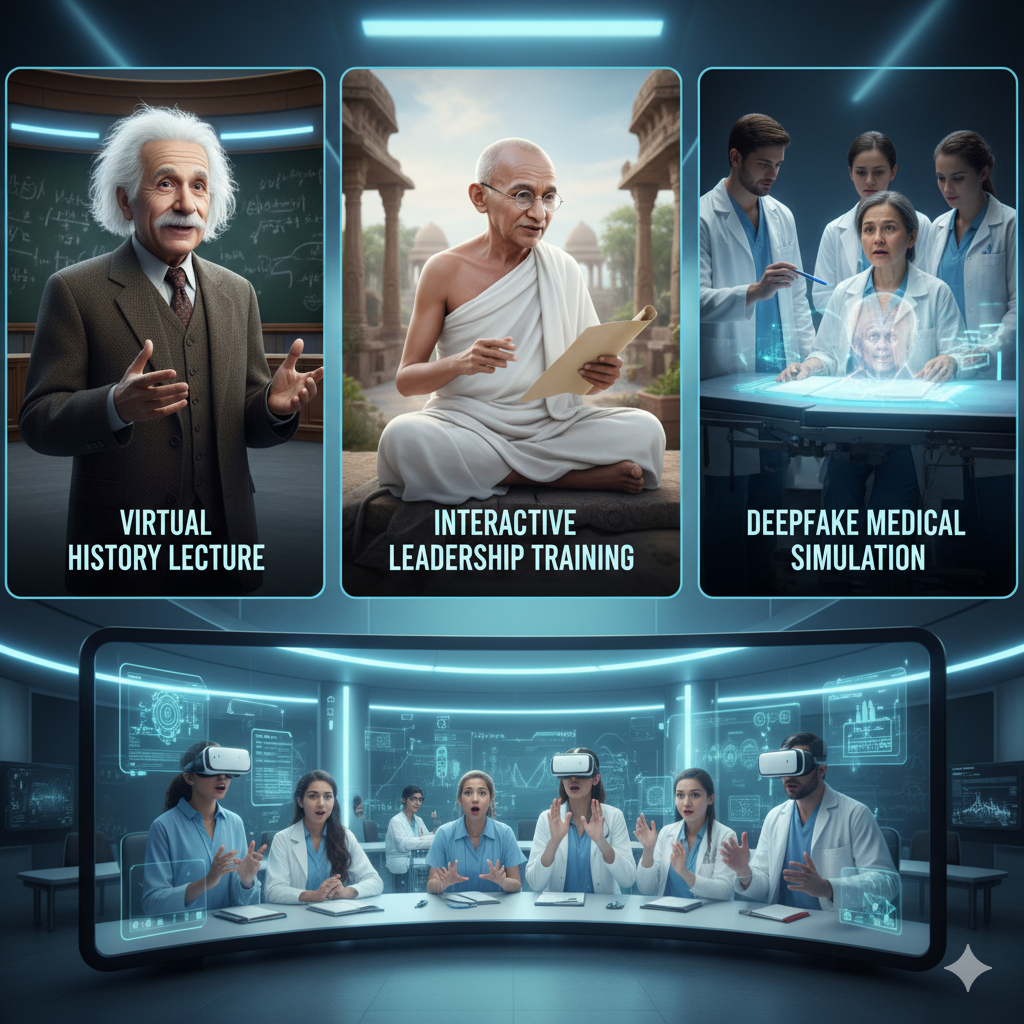
- Education & Training: Teachers and trainers can bring history to life by showing realistic versions of famous figures like Albert Einstein or Mahatma Gandhi giving “virtual lectures.” Medical students can also train with deepfake-based simulations of patients that act and respond like real people. This makes learning more interactive and engaging.
- Accessibility: Deepfake voice technology can give people their voice back. For instance, someone who has lost their ability to speak can use AI to create a digital version of their natural voice, making communication easier and more personal.
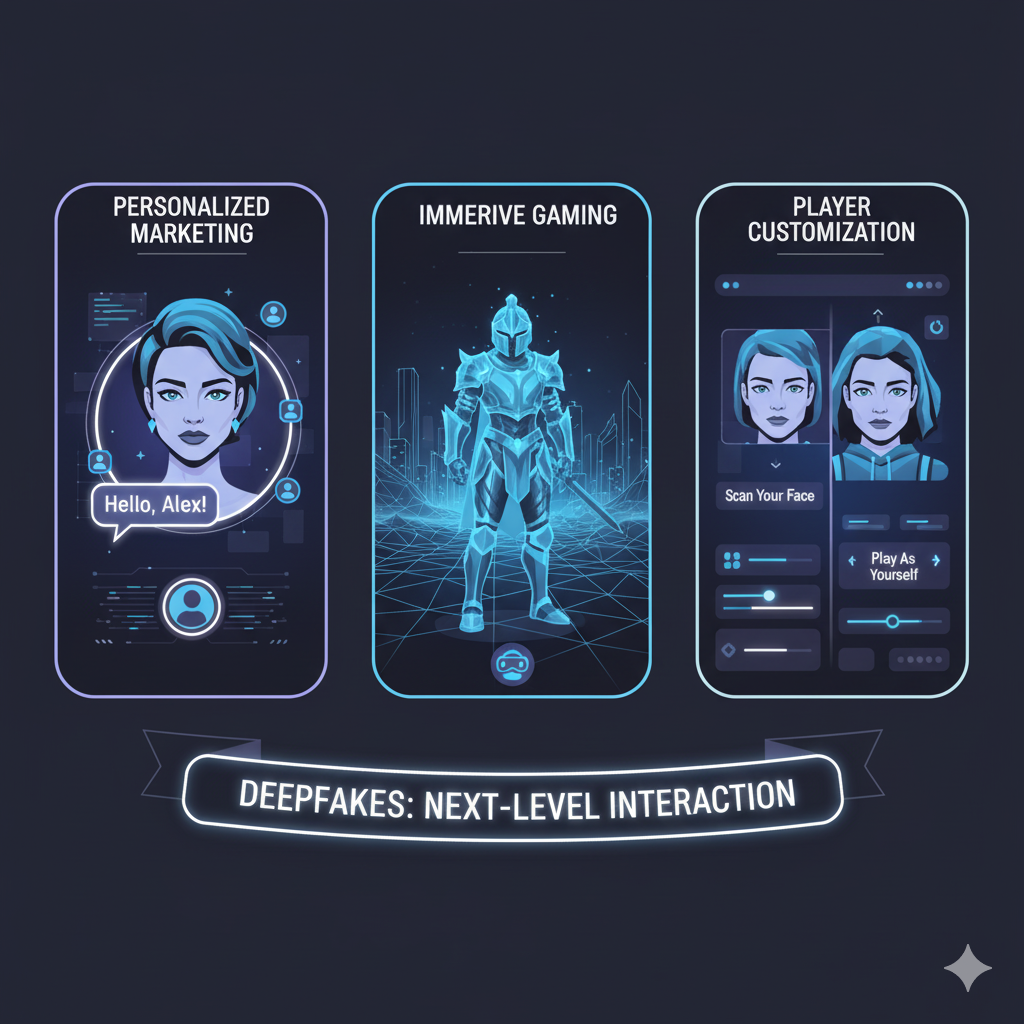
- Marketing & Gaming: Companies use deepfakes to create personalized advertisements where a celebrity “speaks” directly to the customer. In gaming, deepfakes can generate hyper-realistic avatars, making virtual worlds feel more immersive. Players can even design characters that look and sound exactly like themselves.
Did You Know?
A Pune man lost ₹43 lakh after falling for a deepfake video of Narayana Murthy and Sudha Murty promoting a fake stock-trading scheme. Read More.
Risks and Ethical Concerns
While deepfakes have many exciting uses, they have also caused controversy because of how they can be misused. The technology can be powerful, but it also brings serious risks that affect individuals, organizations, and society.
Misinformation & Political Manipulation:
Deepfakes can create realistic fake videos or audio of politicians, leaders, or public figures, making it appear as if they said or did something they never did. These videos can spread quickly online, creating false narratives, influencing public opinion, or even affecting elections.
Example: In 2018, a deepfake video of former U.S. President Barack Obama went viral. It was a fake clip in which he appeared to deliver a warning about fake news, confusing many viewers and showing how deepfakes can be used to manipulate public perception.
Identity Theft & Privacy Violations:
Deepfakes can use a person’s face or voice without their permission, which can harm their reputation or cause emotional distress. People may find their likeness used in misleading videos, advertisements, or social media posts.
Example: There have been cases where public figures’ faces were digitally placed in videos for misleading or fake endorsements, damaging their reputation and causing personal distress.
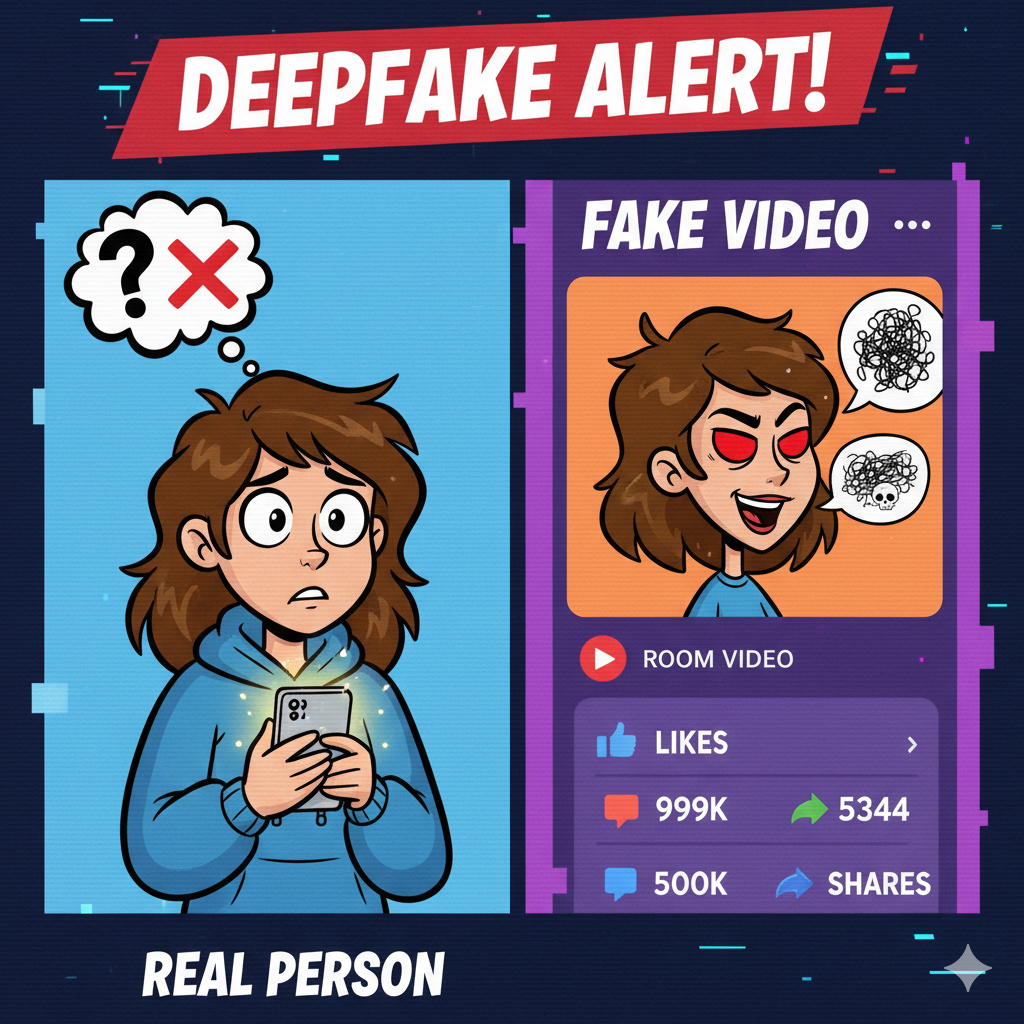
Fraud & Cybercrime:
Criminals can use deepfake technology to trick people into giving money or sensitive information. By mimicking the voice or appearance of trusted individuals, scammers make their attacks more believable.
Example: In 2019, a UK company was tricked into transferring €220,000 after a scammer used AI-generated audio to imitate the CEO’s voice, instructing an employee to make the payment.
Erosion of Trust:
As deepfakes become more common, people may start doubting even real videos or recordings. This “liar’s dividend” makes it harder to distinguish truth from fiction, weakening public trust in media, institutions, and communication.
Example: During the 2020 U.S. elections, concerns about deepfake videos caused some viewers to question authentic news clips from verified sources, showing how the technology can erode trust in society.
The Road Ahead
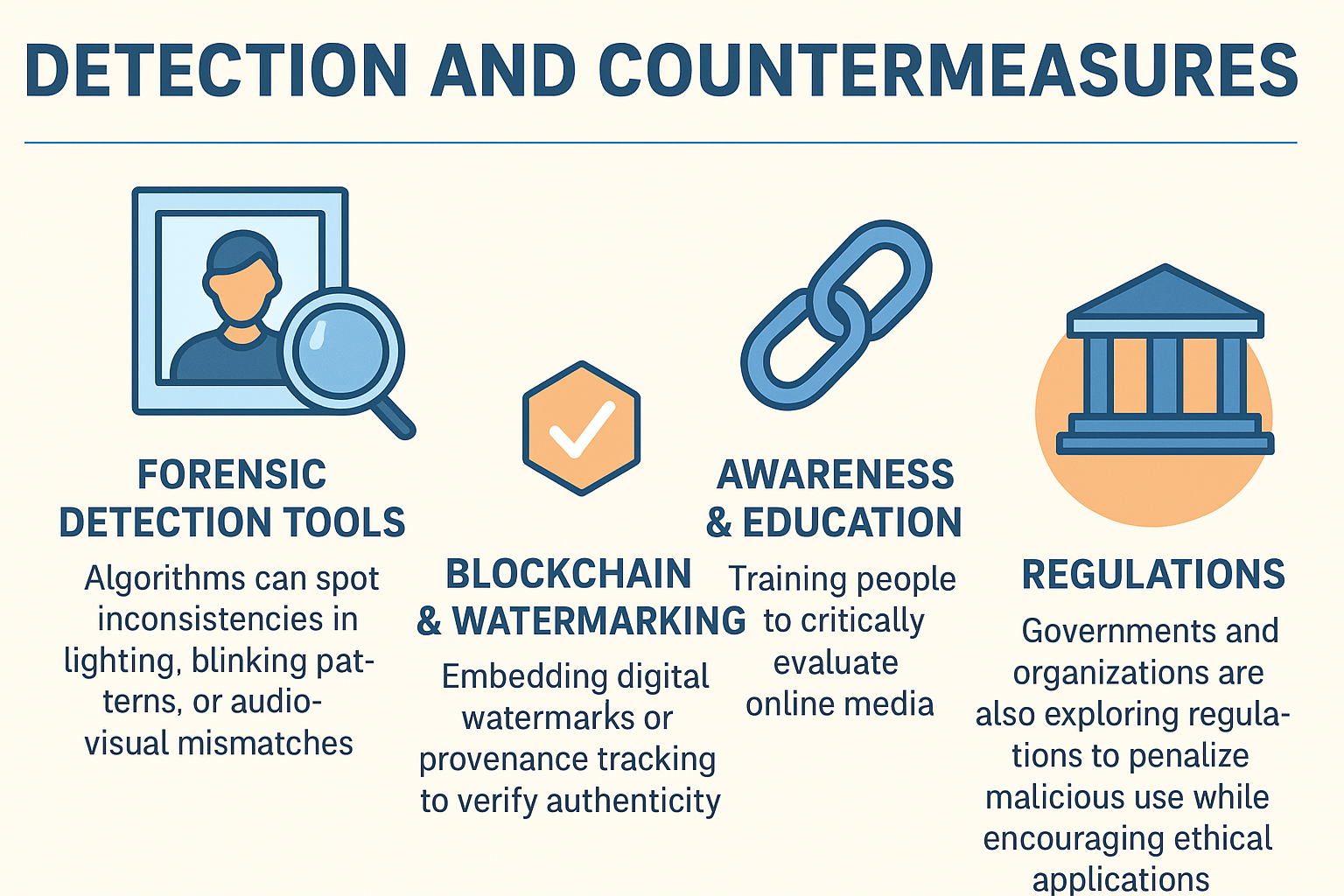
Deepfakes represent both the creative power and ethical dilemma of AI. If used responsibly, they can enhance art, communication, and accessibility. But unchecked, they risk amplifying misinformation, fraud, and privacy violations. The future of deepfakes will depend on a balance between innovation, regulation, and public awareness.
As technology evolves, so must our ability to question what we see and hear, reminding us that in the digital age, seeing is no longer believing.