Agentic AI is no longer just a concept of the future, it is already here, quietly transforming how work happens across industries. These systems can plan, reason, and take independent actions with very little human supervision. Instead of simply following instructions, they understand goals, make decisions, and find the best way to achieve results.
In the past, AI was mostly reactive which waited for a command and then responded. But with agentic AI, that has changed. Now, AI can act as a true collaborator, capable of managing tasks, adapting to new situations, and even improving its own performance over time. From business operations and research to design, content creation, and robotics, agentic AI is reshaping how people and machines work together, making it faster, smarter, and more creative than ever before.
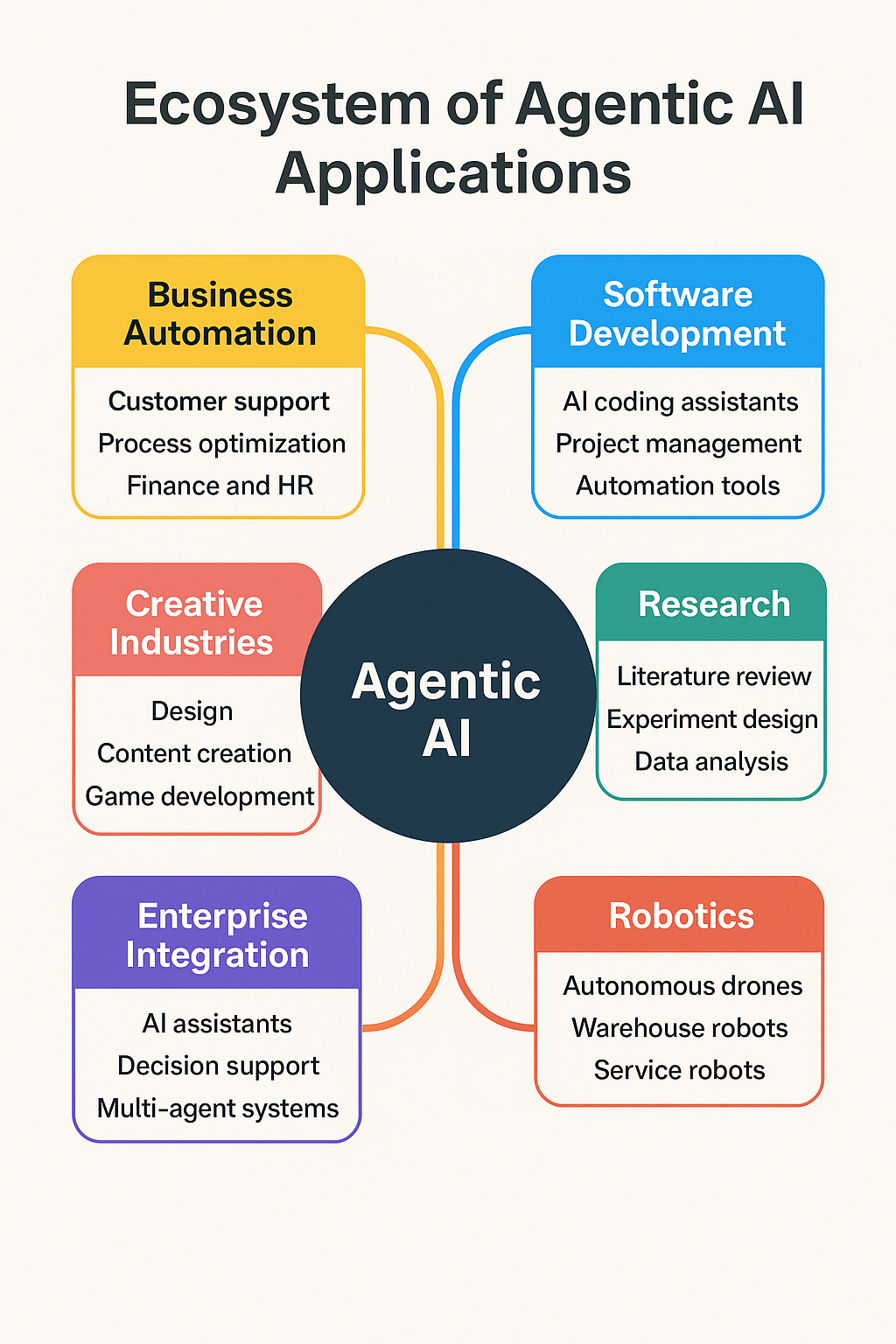
Business Automation: Smarter Operations
In enterprises, agentic AI is automating complex processes that used to require human judgment. Unlike traditional bots that follow fixed rules, agentic systems can make context-based decisions.
Examples:
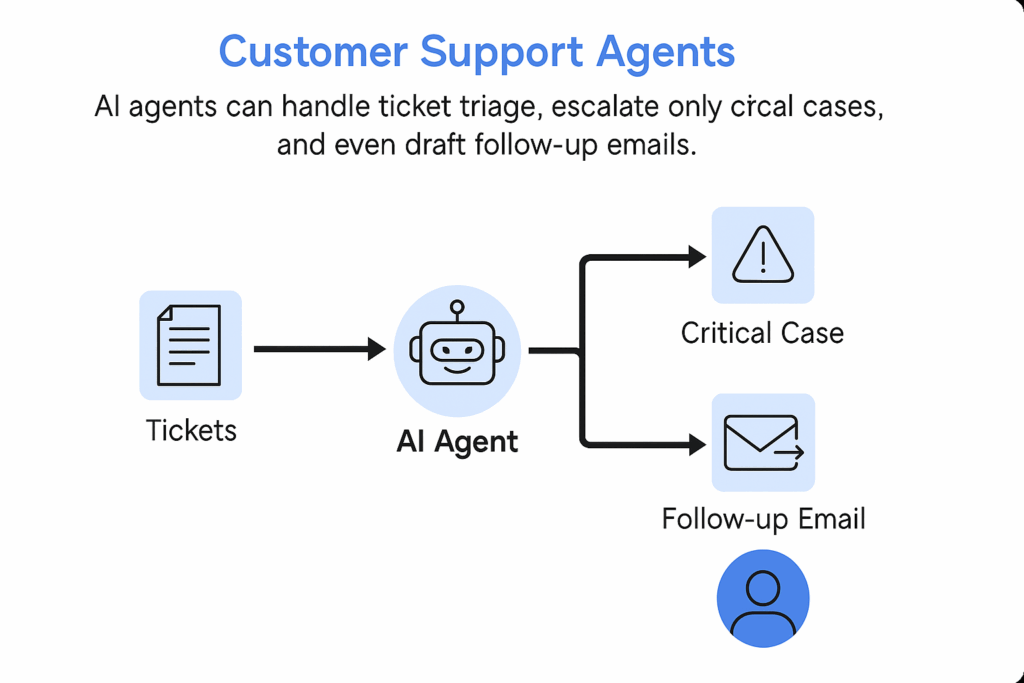
- Customer Support Agents: AI agents can handle ticket triage, escalate only critical cases, and even draft follow-up emails.
- Process Optimization: In manufacturing, agents monitor equipment data in real time, predict failures, and automatically schedule maintenance.
- Finance and HR: They can reconcile invoices, flag anomalies in reports, and onboard new employees through adaptive workflows.
Impact: Businesses gain speed, accuracy, and cost savings while allowing human employees to focus on strategy rather than routine work.
Software Development: The Rise of AI Coders
Agentic AI is changing the way software is created. Instead of merely generating snippets of code, modern systems can plan multi-step projects, debug errors, and even deploy applications.
Case Study: Devin (by Cognition Labs):
Devin is often described as the “first AI software engineer.” It can take high-level instructions like “build a web app for task management”, plan the workflow, code each component, test it, and fix issues, all by itself.
Other Examples:
- GitHub Copilot and Copilot X: Suggests and completes code based on the developer’s intent.
- AutoGPT: Chains multiple tasks autonomously such as researching APIs, coding, and evaluating outputs before final submission.
Fun Fact
AutoGPT, one of the earliest open-source agentic systems, demonstrated that AI could chain tasks together and make decisions without constant human input.
- OpenDevin and SWE-Agent: Research-based frameworks exploring full-cycle software engineering by agents.
Impact: Developers now collaborate with AI as teammates rather than tools, speeding up innovation and reducing development time dramatically.
Research and Knowledge Work
Researchers use agentic systems to automate reasoning-intensive tasks like literature review, experiment design, and data interpretation.
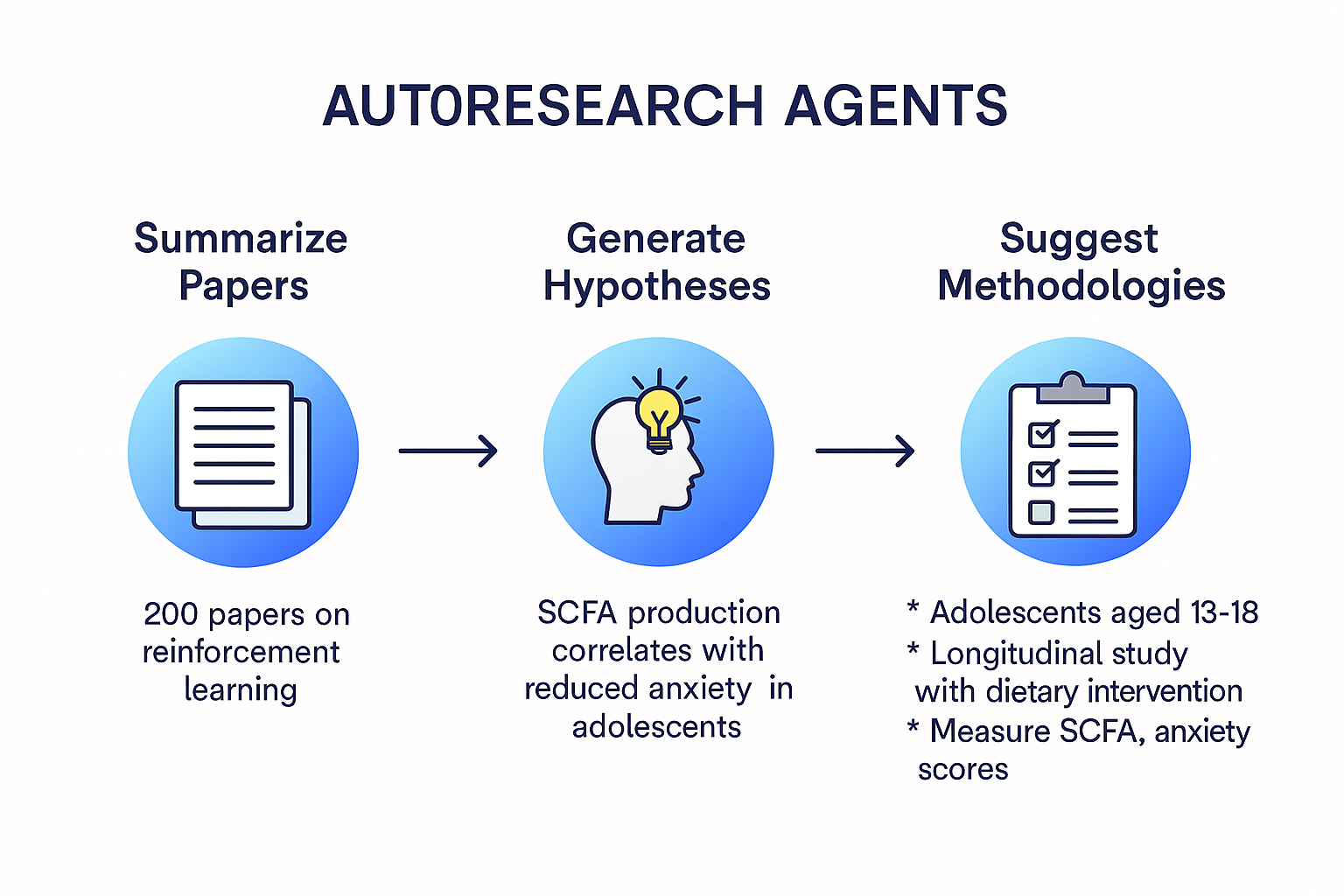
- AutoResearch agents can summarize hundreds of papers, generate hypotheses, and even suggest methodologies.
- In scientific discovery, multi-agent systems simulate lab work: one agent designs an experiment, another interprets data, and a third reports results.
- Corporate teams use knowledge agents to draft white papers, analyze competitors, and maintain continuously updated research dashboards.
Impact: Research cycles are becoming faster, more collaborative, and less prone to human oversight delays.
Robotics and Autonomous Systems
Robotic systems powered by agentic AI can plan, sense, and act intelligently, enabling them to make decisions on the move.
Examples:
- Warehouse robots that coordinate to move goods efficiently.
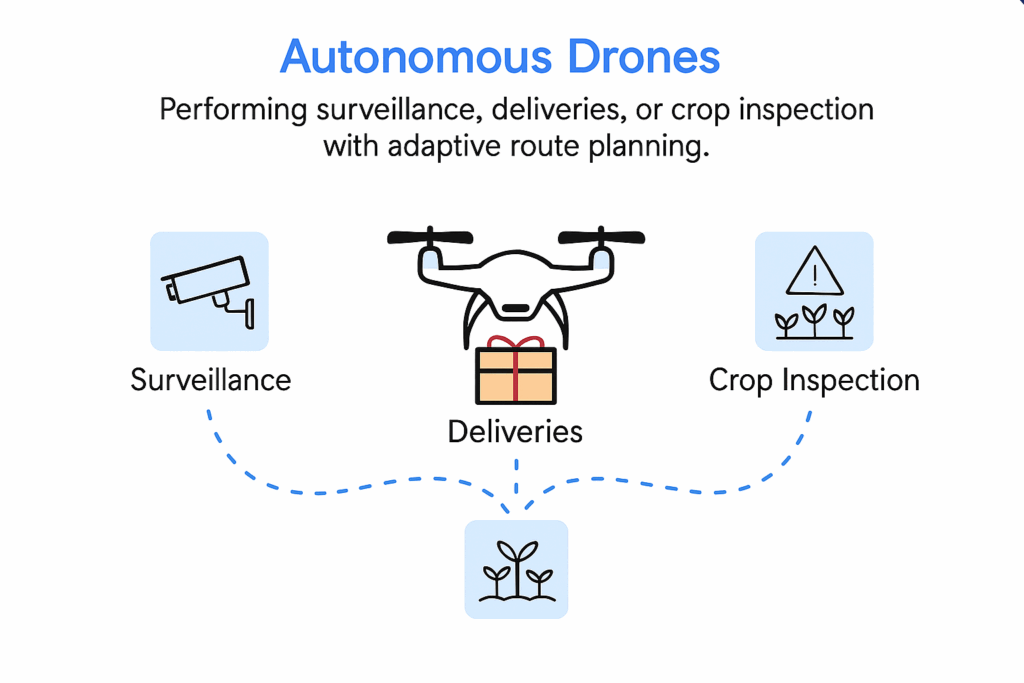
- Autonomous drones performing surveillance, deliveries, or crop inspection with adaptive route planning.
- Service robots in hospitals assisting with medication delivery or sanitation based on contextual awareness.
These agents perceive their environment, reason about it, and take actions that align with real-world goals, essentially acting as physical embodiments of digital agents.
Creative Industries: Design, Content, and Games
Agentic AI is unlocking new creative possibilities where human imagination meets machine autonomy.
Applications:
- Design: Agents create logos, layouts, or 3D assets with minimal direction.
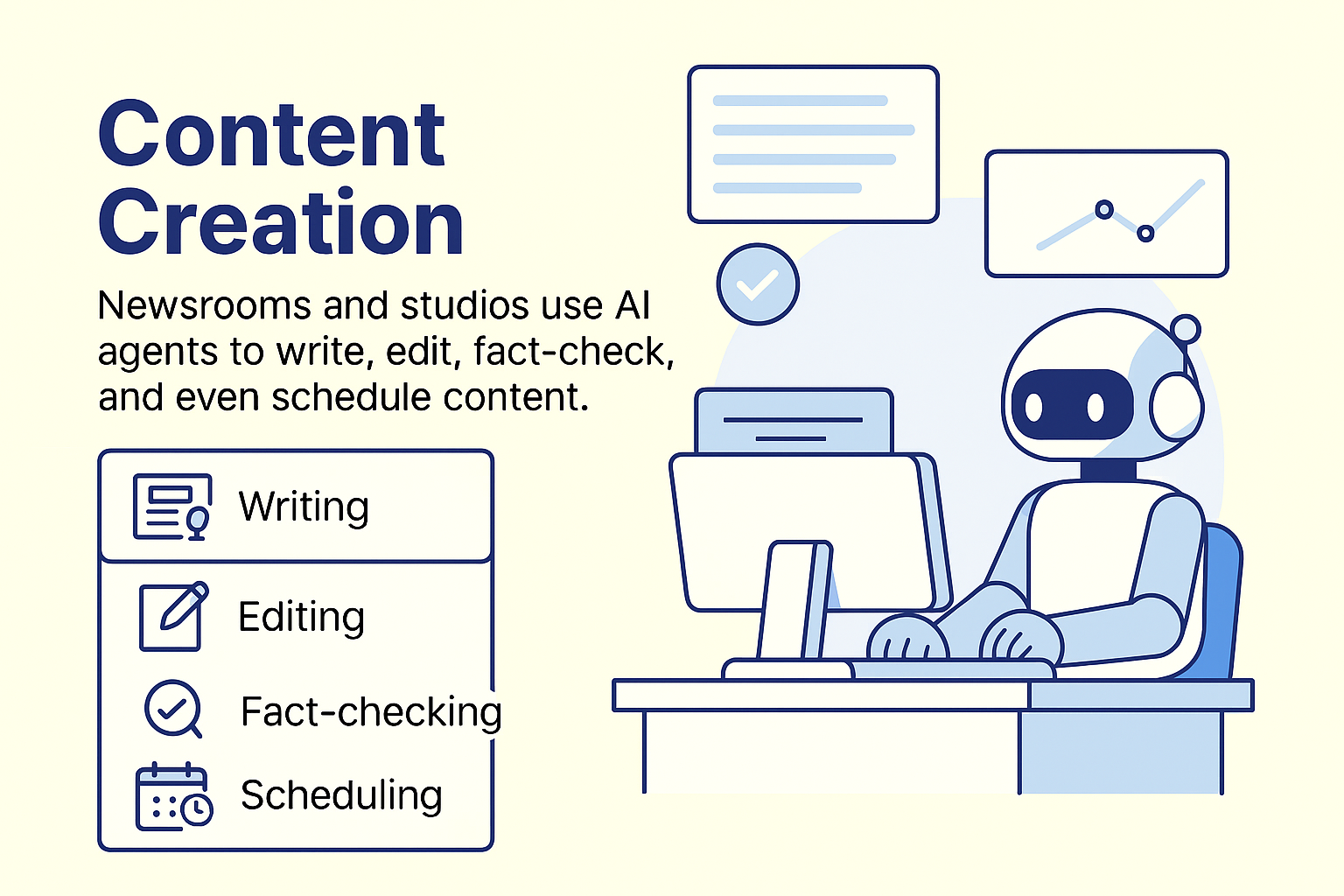
- Content Creation: Newsrooms and studios use AI agents to write, edit, fact-check, and even schedule content.
- Gaming: NPCs (non-player characters) powered by agentic AI can learn, adapt, and generate unscripted interactions, creating more dynamic storytelling.
Case Study – AI Dungeon:
An interactive game powered by AI agents that craft endless storylines based on user prompts, proving that creativity can emerge from autonomous systems.
Impact: Artists and creators are no longer working for AI, they are co-creating with it.
Did you Know?
Agentic AI learns from feedback, meaning each interaction makes it more capable, reliable, and aligned with human goals.
Enterprise Adoption: From Experimentation to Integration
Large organizations are moving from pilot projects to enterprise-level adoption of agentic systems.
Trends:
- AI Assistants for Employees: Internal copilots manage documentation, meetings, and workflows.
- Decision Support Systems: Agents analyze vast datasets and provide actionable business recommendations.
- Multi-Agent Systems: Enterprises deploy networks of agents, each with a specialized function that collaborate across departments.
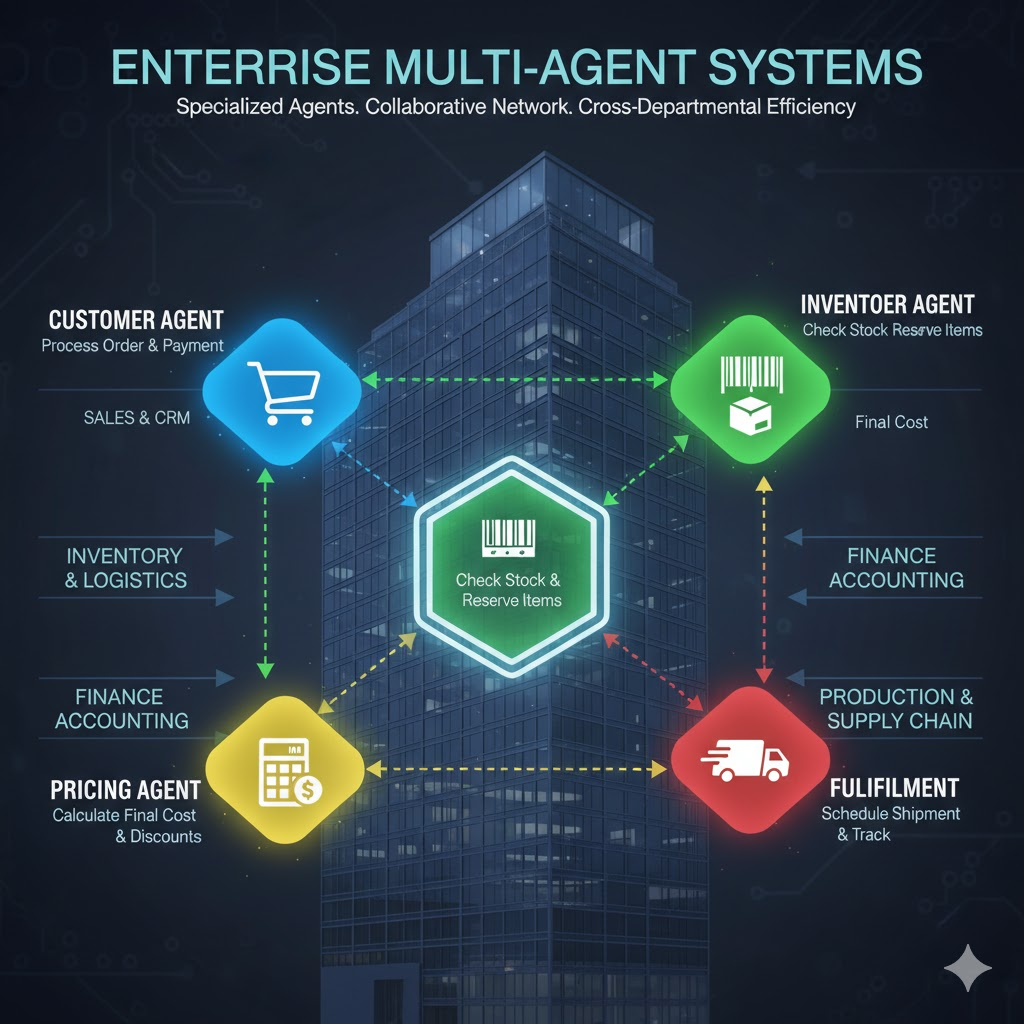
Example:
Microsoft Copilot is embedded across Office 365, helping employees draft emails, summarize documents, and generate presentations. Similarly, Salesforce Einstein GPT and Google Duet AI integrate agentic intelligence into CRM and productivity platforms.
Impact: Agentic AI is becoming the connective tissue of digital enterprises, improving efficiency and reducing decision latency.
The next phase of agentic AI will likely involve self-improving agents that learn from experience, share insights across teams, and evolve capabilities over time. We may see “agent ecosystems” where AI entities collaborate like human organizations which do negotiating, planning, and solving problems together.
Agentic AI is not replacing people. It’s creating a new division of labor, where humans define goals, and AI agents handle the execution, discovery, and adaptation needed to reach them.