Artificial Intelligence projects are not built overnight. They evolve through a structured and thoughtful process that helps translate an abstract idea into a practical and reliable solution. This systematic approach is known as the AI Project Life Cycle.
Just as an architect would never begin construction without a blueprint, AI teams follow this life cycle to ensure that every stage from defining a problem to evaluating the results, is carried out methodically. It ensures clarity, consistency, and collaboration among technical experts, domain specialists, and decision-makers.
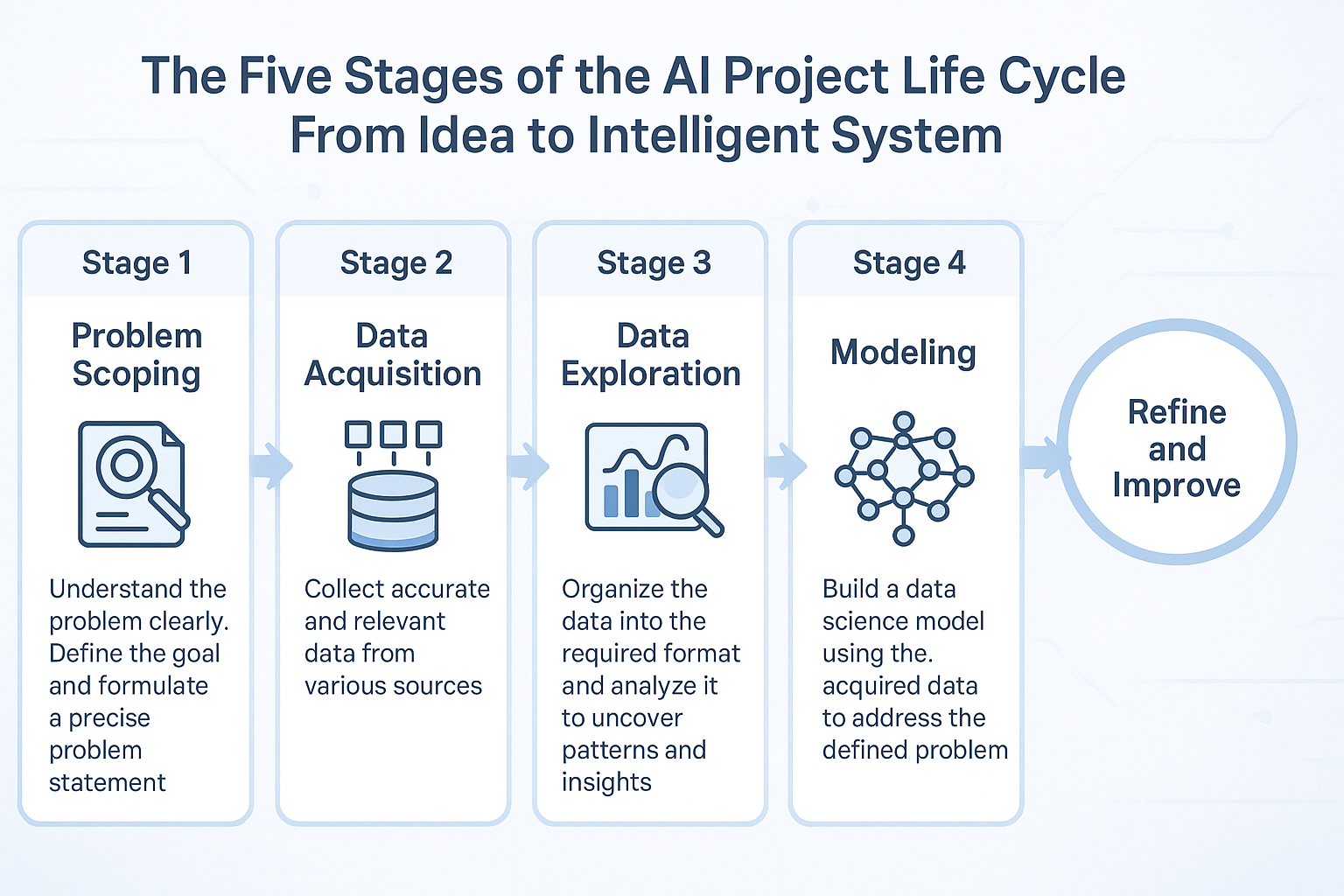
The AI Project Life Cycle generally includes five major stages:
- Problem Scoping
- Data Acquisition
- Data Exploration
- Modeling
- Evaluation
Each stage plays a vital role in creating AI systems that are not only intelligent but also ethical, useful, and aligned with real-world needs.
Stage 1: Problem Scoping
The first and most crucial step in any AI project is Problem Scoping. It lays the foundation for everything that follows. At this stage, the focus is on understanding the problem deeply and translating it into a form that an AI system can solve.
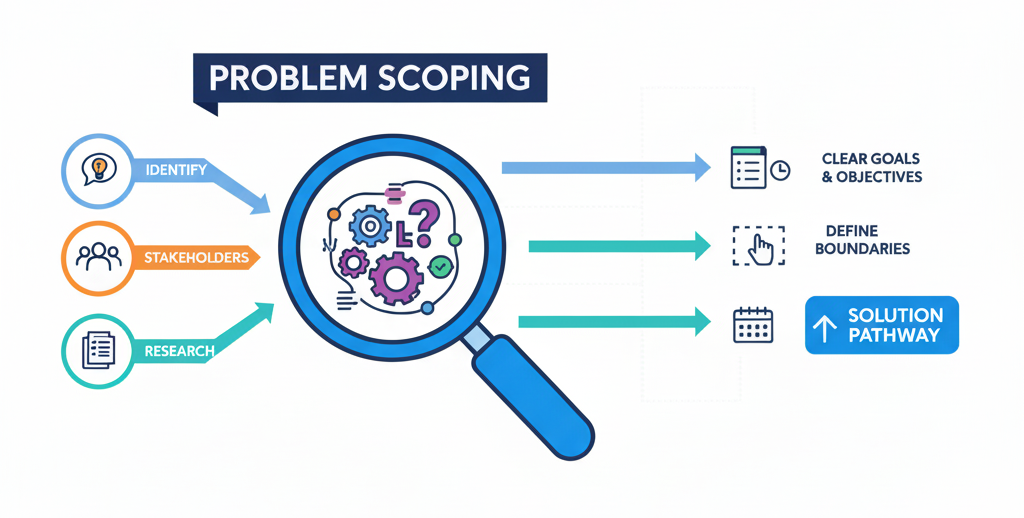
Image Source: Gemini
Understanding the Objective
The team must begin by clearly identifying what needs to be achieved. Is the goal to predict, classify, detect, or recommend something? This step often involves extensive discussions with stakeholders, domain experts, and end-users to capture their expectations and pain points.
For instance, a hospital might want to reduce patient waiting times. However, before building an AI system, the project team needs to ask:
- What factors cause long waiting times?
- What data is available to analyze this issue?
- What would success look like for doctors, staff, and patients?
After this inquiry, the problem can be reframed as:
“Can we predict patient waiting times using historical appointment and resource data to help optimize scheduling?”
Defining the Scope and Constraints
Next, the scope must be realistic. Constraints such as data availability, regulatory restrictions, time, and budget must be identified. The success criteria should be measurable, for example, reducing waiting times by 20 percent or achieving 90 percent prediction accuracy.

Scope and Constraints
Outcome
By the end of this stage, the team should have a clear problem statement, well-defined goals, evaluation metrics, and an understanding of what success looks like. A strong foundation here prevents wasted effort and ensures the project moves in the right direction.
Stage 2: Data Acquisition
Once the problem is defined, the next stage is Data Acquisition. In AI, data is the lifeblood of intelligence. The quality, quantity, and relevance of data directly determine the effectiveness of the final model.
Collecting Relevant Data
This involves gathering accurate and representative data from multiple sources such as databases, sensors, APIs, surveys, or public repositories.
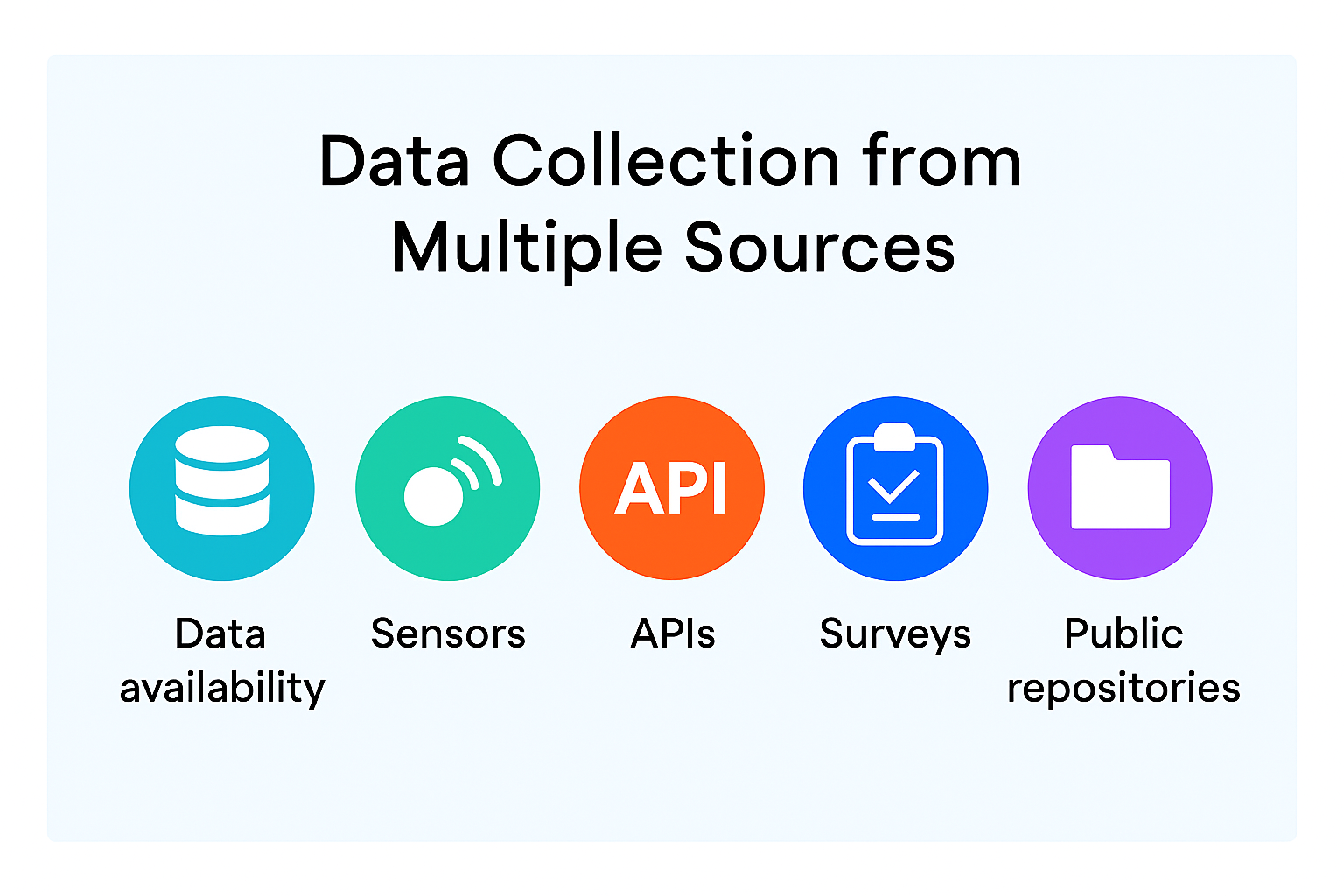
The data should align with the problem’s objective. In our hospital example, useful data might include:
- Patient appointment records
- Doctor availability schedules
- Average consultation duration
- Arrival patterns throughout the day
If sufficient data is not available internally, external data sources may be explored, such as open healthcare datasets or simulated data.
Ensuring Data Quality
It is not enough to simply collect large volumes of data. The data must also be clean, consistent, and trustworthy. Any errors, duplicates, or missing values must be identified and addressed. Ethical considerations also play an essential role at this stage. The data should be collected with appropriate consent and anonymized to protect privacy.
Fun Fact
80% of an AI project’s time is spent in data collection and preparation, not modeling.
Outcome
The result of this stage is a comprehensive, high-quality dataset that truly represents the real-world scenario. This dataset forms the foundation for the next stage: exploration.
Stage 3: Data Exploration
Once data has been gathered, it needs to be understood, organized, and analyzed. This stage, called Data Exploration, involves discovering the patterns, trends, and relationships hidden within the data.
Organizing and Cleaning the Data
The data is first structured into the required format. Missing entries may be filled using statistical methods, outliers may be addressed, and inconsistent entries corrected. Features that are irrelevant to the objective are removed to reduce noise.
Exploring Through Analysis
Exploratory Data Analysis, or EDA, is conducted to understand how different variables relate to each other. Visualizations such as histograms, heat maps, and scatter plots help uncover relationships that are not visible through numbers alone.
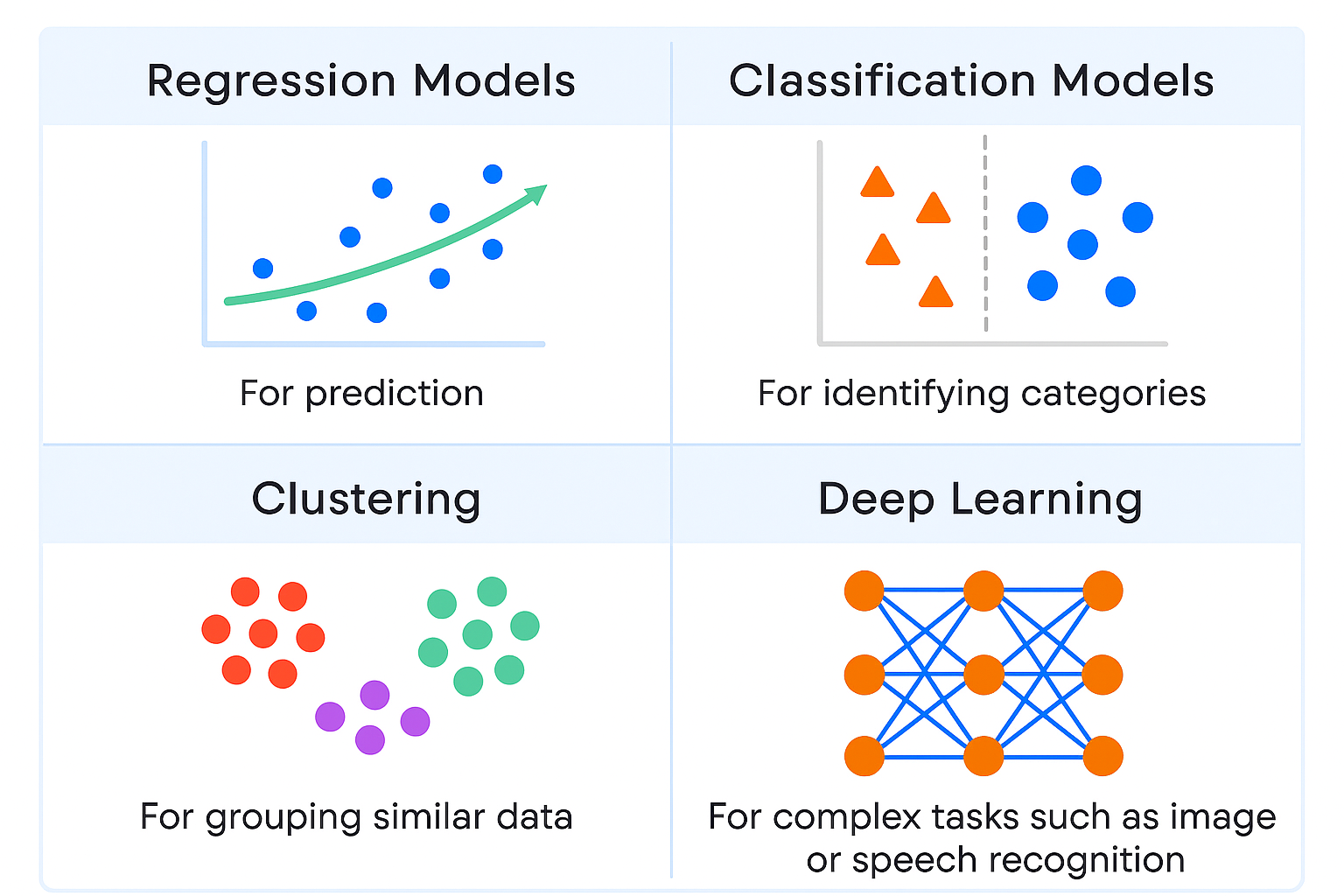
Image Source: Microsoft Copilot
For example, the hospital data might reveal that waiting times increase significantly during the early morning hours or that certain departments have longer queues on specific days. Such insights guide feature selection in the modeling stage.
Generating Insights
The aim of this stage is not just to prepare the data but to understand the story behind it. Analysts document their observations and highlight patterns that could influence the design of the AI model.
Outcome
A clean, structured, and well-understood dataset is ready for model building. The team now has both the data and the insights needed to move ahead with confidence.
Stage 4: Modeling
With the data explored and prepared, the next phase is Modeling, the creative and technical heart of any AI project. This is where the system begins to learn.
Selecting the Right Model
Choosing the correct algorithm depends on the nature of the problem and the data. Regression models are used for prediction, classification models for identifying categories, clustering for grouping similar data, and deep learning models for complex tasks such as image or speech recognition.
In our healthcare example, a regression model may be trained to predict waiting times based on variables such as doctor availability, appointment type, and day of the week.
Training and Testing
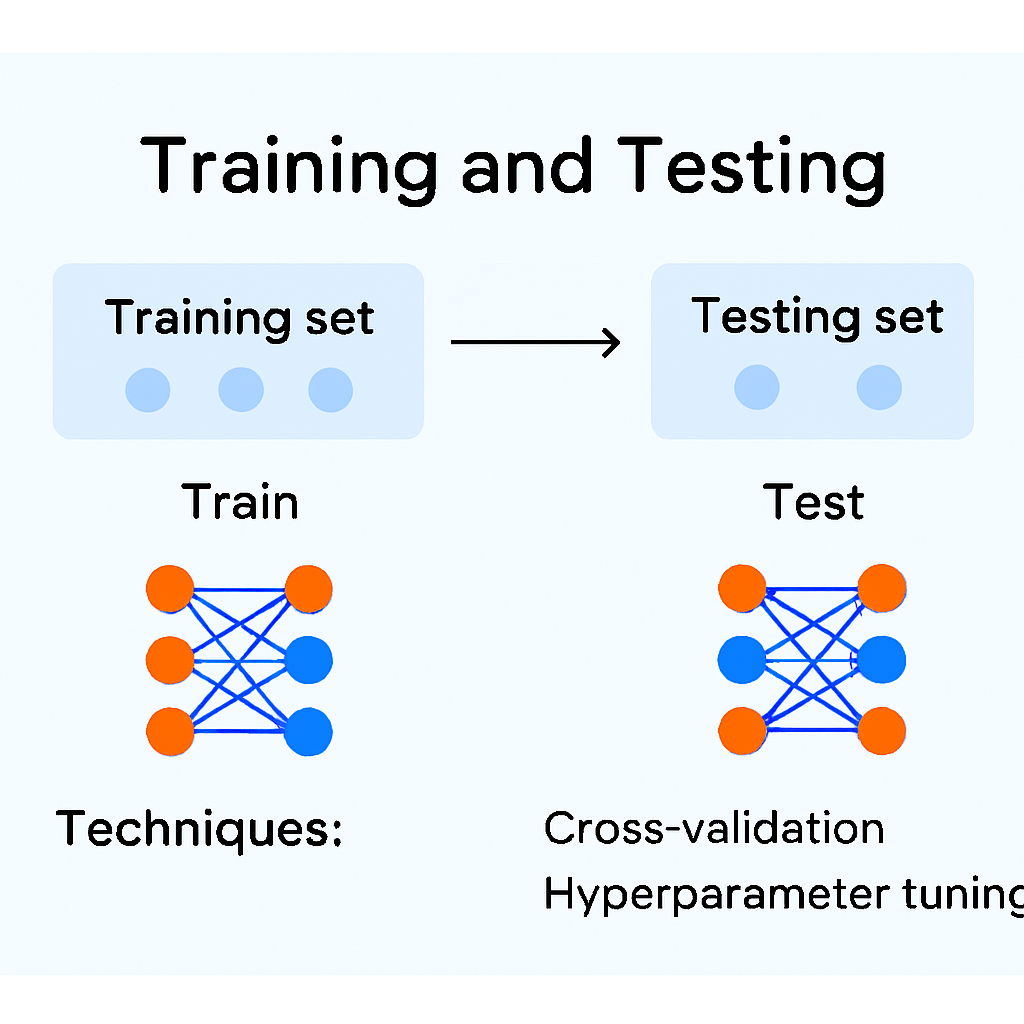
The collected data is divided into training and testing sets. The model is trained on one portion and evaluated on the other to check its ability to generalize to new data. Techniques such as cross-validation and hyperparameter tuning are used to enhance performance.
Improving and Interpreting
Model explainability is a critical aspect of modern AI. Teams often use visualization tools and statistical tests to ensure that the model’s decisions can be understood and trusted. Adjustments are made based on feedback, and multiple models may be compared to find the best performer.
Outcome
The modeling stage ends with one or more trained models that can make accurate predictions or classifications. However, before declaring success, these models must undergo thorough evaluation.
Stage 5: Evaluation
The final stage, Evaluation, determines whether the developed model truly meets the goals defined during problem scoping. It ensures that the AI solution is reliable, accurate, and valuable in the real world.
Testing Model Performance
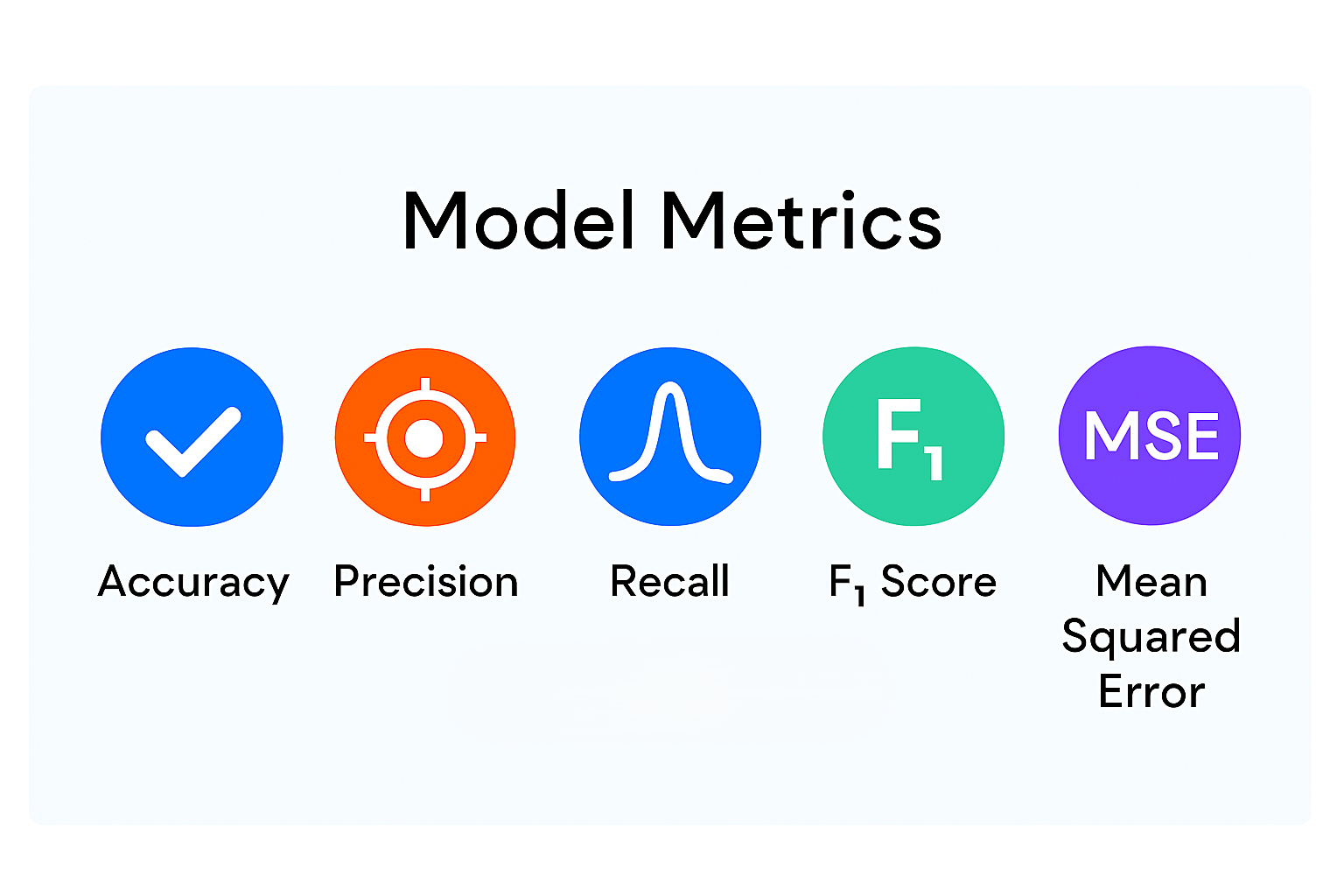
Evaluation involves testing the model on unseen data to measure how well it performs outside the training environment. Depending on the type of problem, various metrics are used: accuracy, precision, recall, F1 score, or mean squared error.
In our healthcare scenario, the model may predict waiting times with an average error of only three minutes. This indicates that the model is both practical and precise enough for real use.
Validating Business Impact
Technical accuracy is not enough. The model must also deliver business value. For example, if the AI predictions allow the hospital to schedule patients more efficiently and reduce complaints, then the system has achieved its true purpose.
Ethical and Fairness Checks
AI systems can sometimes reflect hidden biases present in the data. Therefore, fairness assessments and bias detection are essential. Models must be transparent, explainable, and compliant with ethical standards.
Outcome
After this stage, the model is ready for deployment or further improvement. A well-evaluated model becomes the cornerstone of trustworthy AI.
The AI Project Life Cycle mirrors the broader concept of a traditional project life cycle. It divides the journey into distinct, manageable stages from planning to implementation and finally to evaluation. Each phase contributes to creating AI systems that are not only intelligent but also responsible and purposeful.
Together, these stages form a continuous loop of learning and refinement. The ultimate goal is to use AI not just to automate tasks but to solve problems meaningfully and ethically, improving the way we live, work, and make decisions.