Generative AI tools like ChatGPT, Claude, Gemini, or Perplexity are becoming part of everyday life. Students use them to summarize chapters, professionals use them to draft emails or reports, and creators use them to make art, music, or videos.
But just like any tool, AI can be used in both good and harmful ways. Think about a kitchen knife: it can help you cook a delicious meal, but if used carelessly, it can cause injury. Similarly, AI can help us save time and learn faster, but if used irresponsibly, it can spread false information, invade privacy, or even break school or workplace rules.
That’s why learning to use AI responsibly is so important. Let’s look at some clear practices everyone can follow.
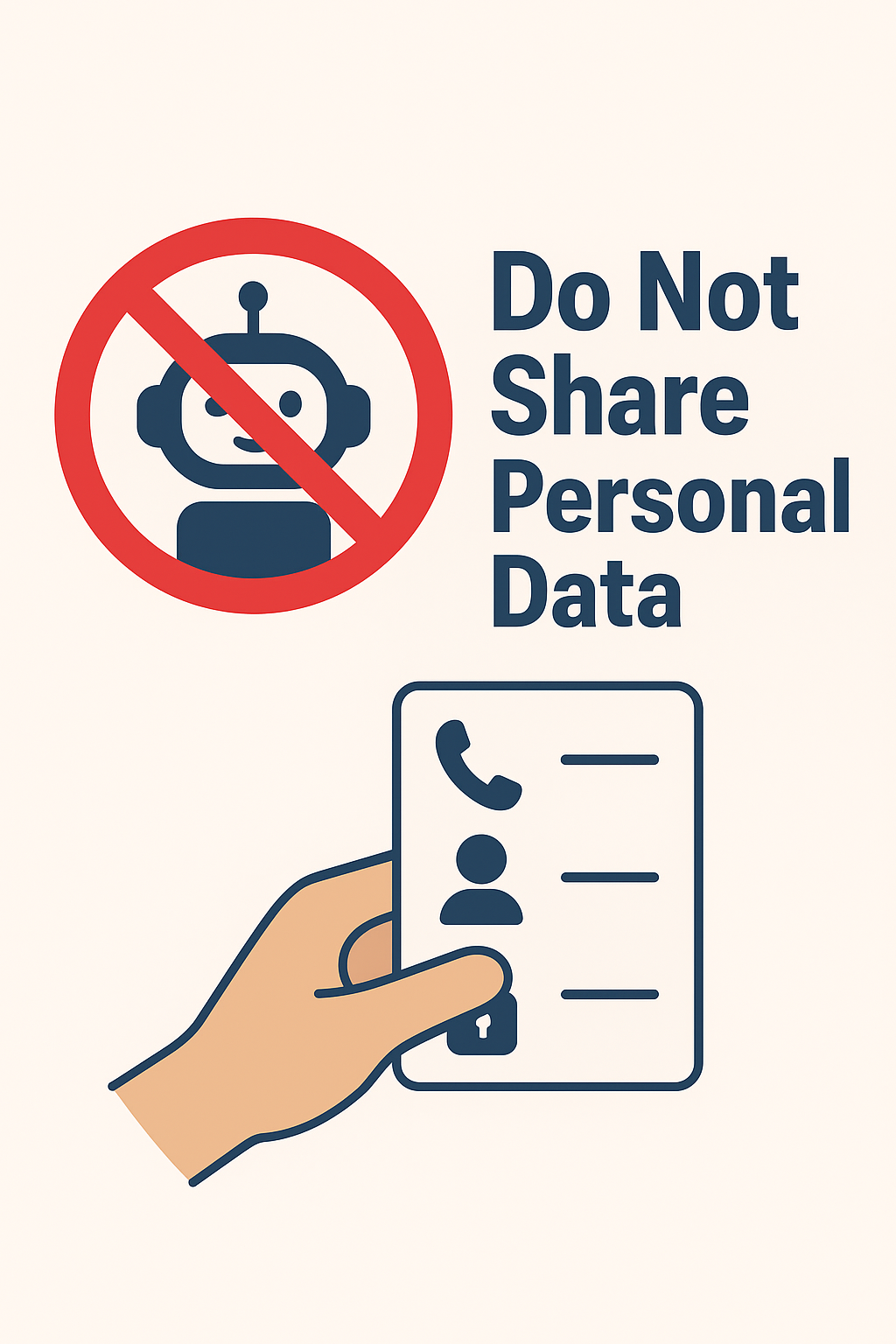
Do Not Share Personal Data
AI systems are not meant to store or protect your sensitive information. If you share personal details like your phone number, home address, passwords, or financial details, you could risk your privacy.
Safe Use Example:
If you’re asking AI to draft a job application, you can say:
“I am applying for a job as a teacher. Please suggest ways to describe my teamwork skills.”
You don’t need to give your full name, address, or ID numbers. Keeping details private protects you.
Tip
Treat AI chats like talking to a stranger on the internet. If you wouldn’t tell a random person the details, don’t tell AI either.
Ask Safe and Respectful Questions
AI responds to the prompts you give it. If you ask questions that are rude, harmful, or unsafe, you may get results that aren’t helpful or appropriate. On the other hand, respectful and safe questions bring useful answers.
Example 1:
Bad prompt: “Give me mean jokes to embarrass my friend.”
Good Prompt: “Suggest fun, lighthearted jokes I can use to make my friend smile.”
Example 2:
Bad Prompt: “Tell me how to break into a computer.”
Good Prompt: “Explain how I can protect my computer from hackers.”
By choosing respectful and positive prompts, you use AI in a way that makes the world a little better instead of worse.
Verify Facts with Trusted Sources
One big challenge with AI is something called hallucination, when the AI makes up answers that sound real but aren’t correct. This happens because AI doesn’t “know” facts the way humans do; it predicts what words should come next based on patterns.
Example: If you ask, “Who won the 2024 Cricket World Cup?” the AI might give you an outdated or wrong answer if its data isn’t current.
That’s why you should double-check important information with trusted sources like:
- Official websites (e.g., government portals, company pages)
- News outlets you trust
- Textbooks or verified research papers
Think of AI as a helpful assistant, not a final authority.
Did you Know?
Most AI tools, like ChatGPT and Gemini, display a warning reminding users that they can sometimes make mistakes. If you look at the bottom of the page when using them, you’ll often see a note saying something like “AI may not always be accurate” or “Check important information.” This is a gentle reminder that while AI is powerful, it isn’t perfect — and double-checking facts is always a smart idea.
Follow School and Workplace Guidelines
Different organizations set their own rules for how AI can be used. These rules are there to make sure AI supports learning and productivity without replacing human effort.
Examples:
- At school, AI may be allowed to help you brainstorm essay ideas but not to write your whole essay.
- At work, AI may be allowed to draft reports or emails, but you may not be allowed to upload confidential company data.
By following these guidelines, you respect the rules and also avoid trouble like plagiarism charges or disciplinary action.
Building a Culture of Ethical AI Use
If we all practice responsible AI use, we can create a future where AI becomes a trusted companion instead of a risky tool. Imagine:
- Students using AI as a study buddy to explain tough topics.
- Writers using AI to overcome creative blocks.
- Doctors using AI to analyze medical scans faster, while still confirming results with their expertise.
But this future depends on responsibility. Misuses like spreading fake news, creating harmful content, or ignoring privacy can damage trust and even cause laws to become stricter.

Generative AI is like a superpower. It can save us time, boost creativity, and make learning or working easier. But superpowers need control. AI can remain a force for good if used responsibly and safely. A tool that supports people, sparks ideas, and helps us grow.