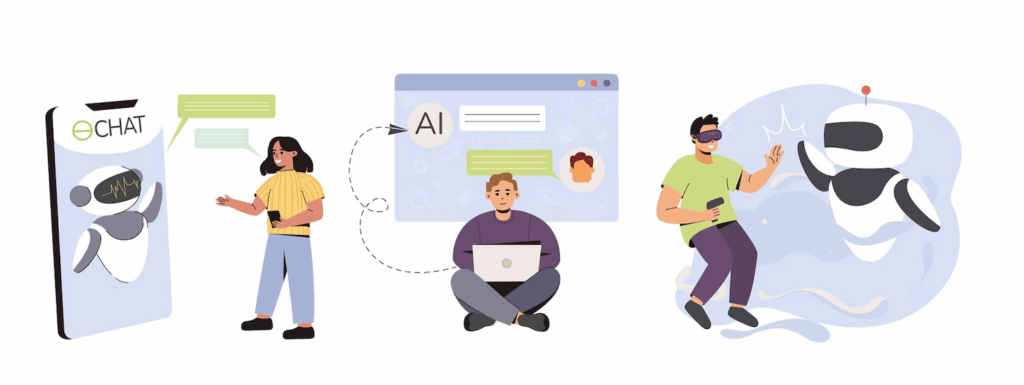
In recent years, Generative AI has moved from being a research curiosity to becoming a powerful everyday tool. People now use platforms like ChatGPT, Perplexity, Claude, and Gemini to carry out a wide variety of tasks related to content creation, research, learning, and even casual conversations. These tools act as intellectual partners, helping individuals save time, improve efficiency, and think more creatively. For example, someone working on a research paper may ask ChatGPT to draft an outline, while another may use Claude to refine their writing.
Generative AI also goes beyond text. The “Ghibli trend” on social media, where people transformed ordinary photos into Studio Ghibli-inspired art using DALL·E, showed how these tools inspire creative expression. Similarly, MidJourney is being used by designers and hobbyists to create imaginative visuals, while GitHub Copilot assists programmers by writing code snippets, reducing repetitive work, and improving productivity. Across industries from healthcare and law to marketing and entertainment. Generative AI is becoming a trusted assistant that supports people in their work.
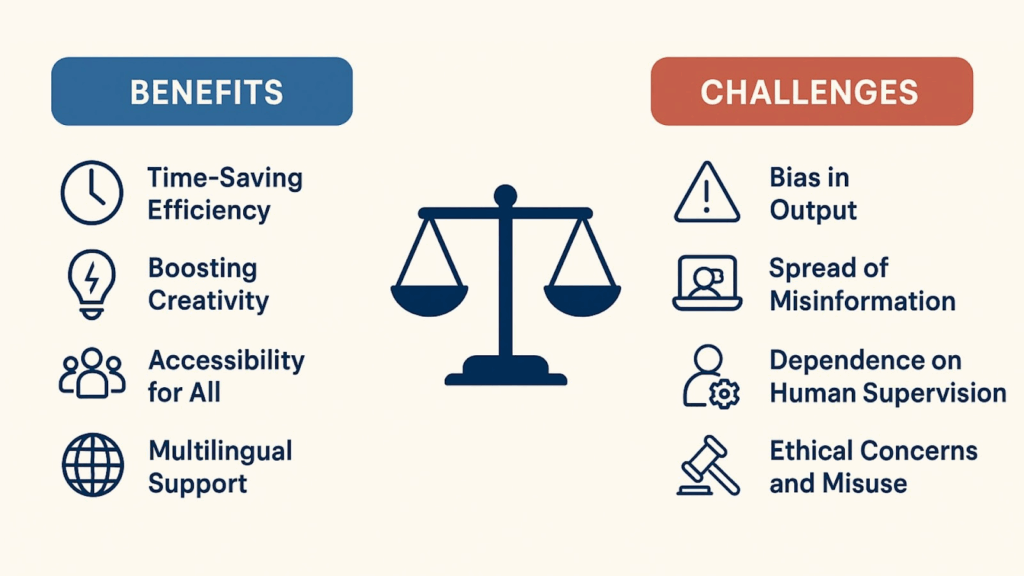
Like any powerful technology, however, there are two sides to the story. To understand it better, let us look at the benefits and challenges of Generative AI in detail.
Benefits of Generative AI
Generative AI brings several important benefits that are transforming the way people work and create.
1. Time-Saving Efficiency
Generative AI reduces the time needed to complete tasks. For example, writers can generate drafts in minutes instead of hours, and software developers can get ready-made code suggestions from Copilot. This frees up time for deeper thinking and creativity.
2. Boosting Creativity
These tools act as a creative partner. Artists and designers using MidJourney or DALL·E can instantly explore different styles, colours, or settings. For example, someone might turn a basic sketch into a detailed painting, sparking new ideas they had not imagined before.
3. Accessibility for All
Generative AI makes advanced skills more accessible. Even people with little experience in art, coding, or writing can create high-quality work. For instance, a small business owner with no graphic design training can use AI tools to design professional-looking logos and posters.
4. Multilingual Support
Language barriers are being reduced with AI that translates, summarises, or rewrites text in multiple languages. For example, Gemini can help an English speaker communicate smoothly with a client in Japan by translating complex text instantly.
5. Personalised Assistance
Generative AI adapts to individual needs. A student can use Perplexity to simplify complex topics, while a professional can ask ChatGPT to draft a formal email. The same tool adjusts its output based on the user’s request, making work more personalised and efficient.
Challenges of Generative AI
While the benefits are significant, it is equally important to recognise the challenges of Generative AI.
1. Bias in Output
Since AI learns from existing data, it can sometimes produce biased or unfair results. For example, an AI writing tool might unintentionally create content that favours one cultural viewpoint over another, leading to misleading impressions.
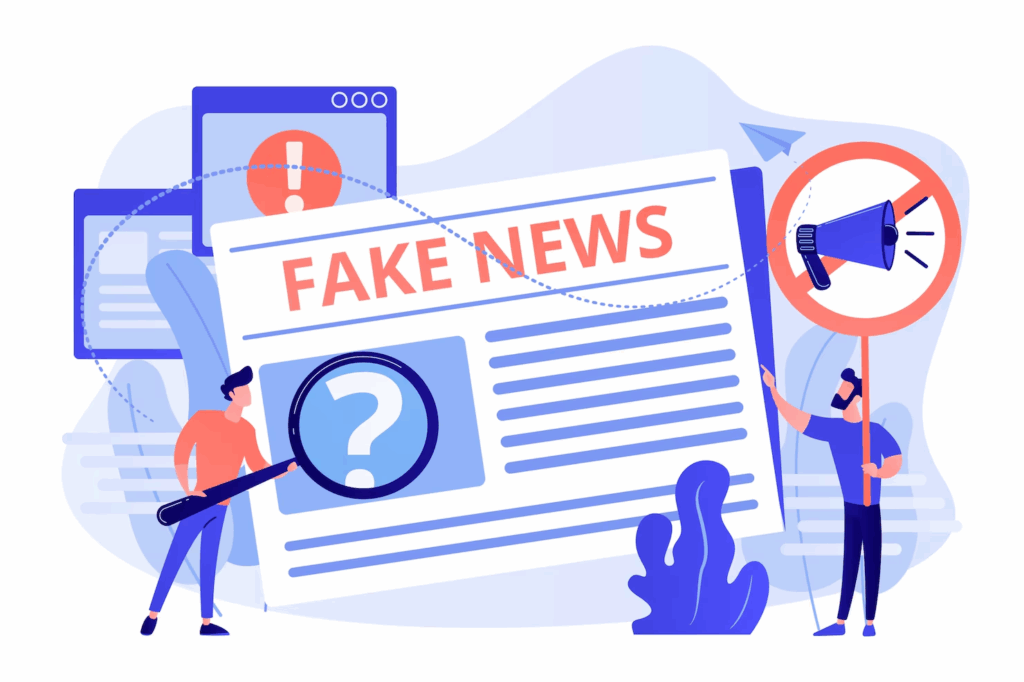
2. Spread of Misinformation
Generative AI can create text, images, or videos that look authentic but are false. For example, deepfake videos made with AI can spread false news about public figures, confusing audiences and damaging trust.
3. Dependence on Human Supervision
These systems are not perfect and need careful checking. For instance, a lawyer using AI to draft legal documents must review every line, because a small error could have serious consequences. Without human oversight, mistakes can easily go unnoticed.
Did you know?
AI systems sometimes generate information that sounds correct but is actually made up. This is called an AI hallucination. For example, a chatbot might confidently give you a fake reference or invent details that don’t exist, showing why human fact-checking is always important.
4. Ethical Concerns and Misuse
There are ongoing debates about originality and copyright. If a painting is generated by MidJourney based on thousands of artworks, who owns the rights? Similarly, criminals may misuse AI to create harmful content such as phishing emails or fake identities.
5. Lack of True Understanding
Generative AI does not “understand” in the way humans do. For example, ChatGPT can write a story about friendship, but it does not actually experience emotions or relationships. This limits the depth of its reasoning and creativity.
The benefits and challenges of Generative AI show that it is a powerful tool, but one that must be used responsibly. On the one hand, it saves time, boosts creativity, breaks down barriers, and helps people in nearly every profession. On the other hand, it carries risks such as misinformation, bias, and ethical dilemmas.
Generative AI should therefore be seen as a partner, not a replacement for human judgment. If used wisely, with proper supervision and ethical awareness, it can make work not only faster and easier but also more inspiring. The balance between benefits and challenges of Generative AI will shape how this technology continues to grow and impact our lives.