What Is Predictive AI?
Predictive AI is a type of artificial intelligence that makes smart guesses about the future by studying patterns in past data. It’s like a digital fortune teller, but instead of using magic, it relies on data, statistics, and machine learning algorithms.
For example, when your phone’s weather app tells you it might rain tomorrow or when Netflix suggests the next show you’ll probably like, that’s predictive AI at work. It learns from what has happened before to estimate what’s likely to happen next.
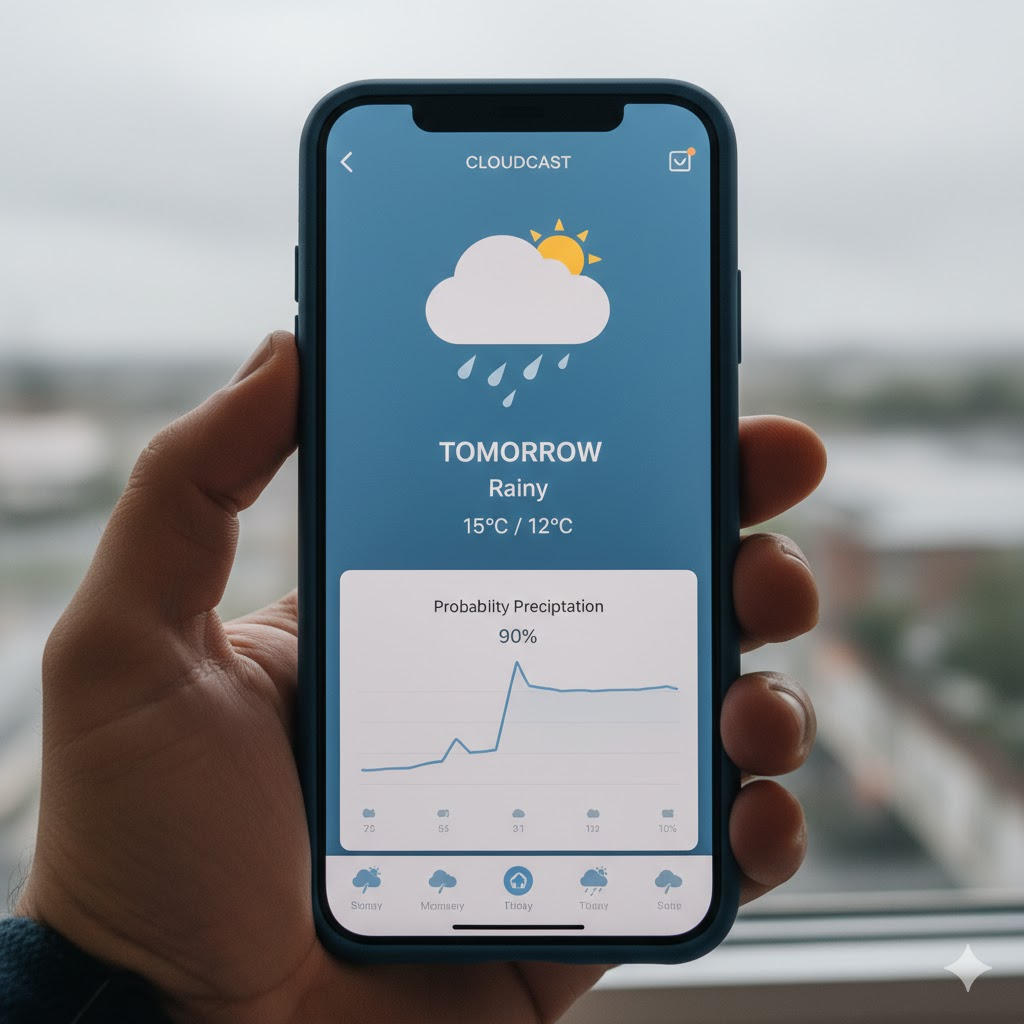
Thus, predictive AI helps people and organizations make informed decisions by turning historical information into future insights.
Fun Fact
Studios use AI models that analyze past ticket sales, actor popularity, release dates, and social media buzz to predict how successful a film will be, often before it even hits theaters!
How Does Predictive AI Work?
Just like how humans use memory and experience to make decisions, predictive AI uses data and algorithms to do the same, only much faster and with far more data than any person could handle. It follows a structured approach that involves gathering data, finding meaningful patterns, and using mathematical models to predict what’s likely to happen next.
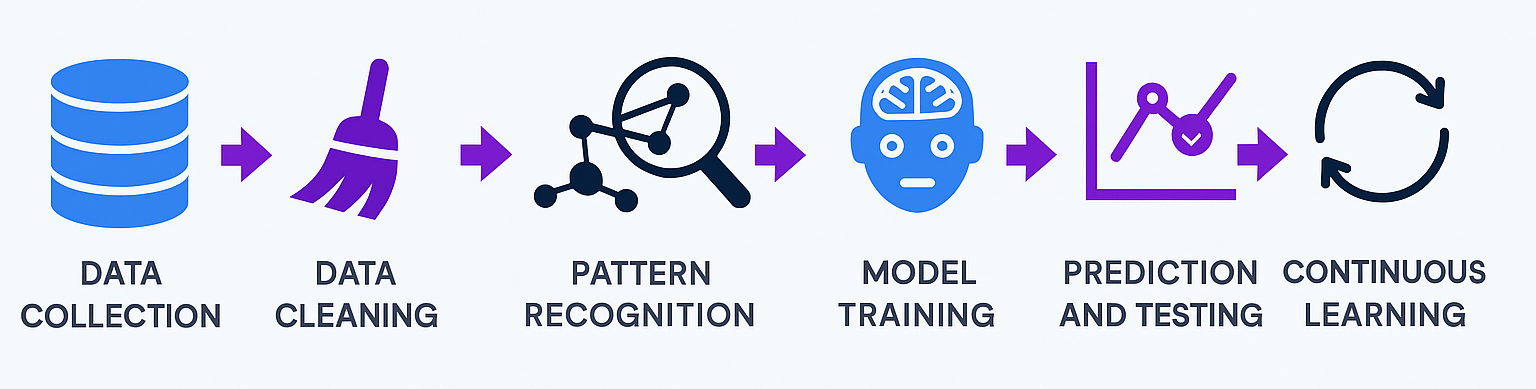
Data Collection:
Predictive AI starts by gathering large amounts of data from various sources, such as sales records, traffic sensors, or medical databases.
Data Cleaning and Preparation:
The data is then cleaned and organized to remove errors, duplicates, or irrelevant information. This step ensures the AI learns from accurate and reliable inputs.
Pattern Recognition:
Machine learning algorithms analyze the data to identify patterns and trends. For instance, it might find that sales go up every December or that certain weather conditions often lead to traffic jams.
Model Training:
The AI system “learns” from the patterns using mathematical models. These models are trained to recognize relationships between different variables, such as how time, price, and demand are connected.
Prediction and Testing:
Once trained, the predictive AI uses these models to forecast future outcomes. Developers then test its predictions against real data to check how accurate it is.
Continuous Learning:
Predictive AI systems keep improving. As they receive new data, they update their models, becoming more accurate over time.
Applications of Predictive AI
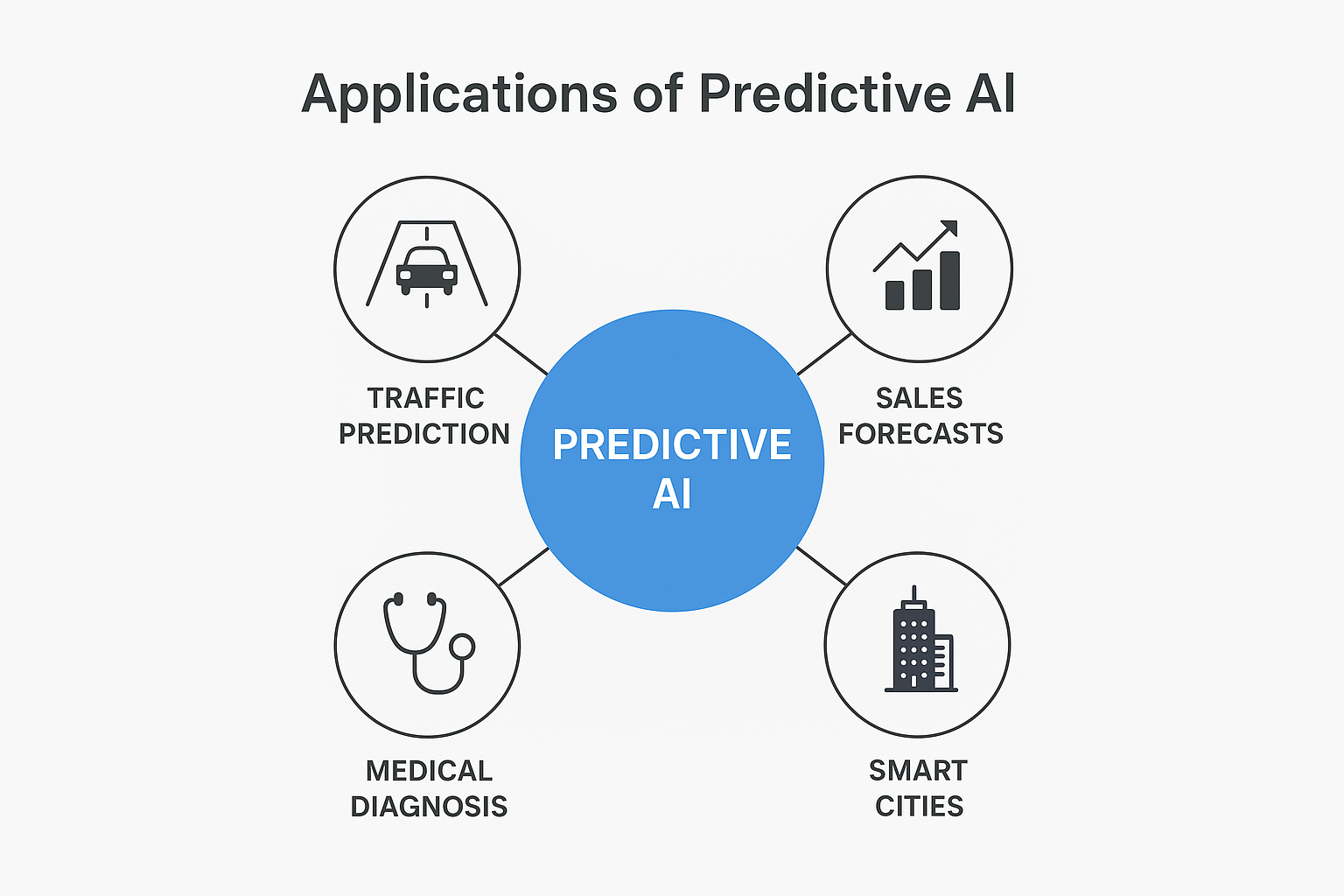
Predictive AI is used in many industries and everyday situations to make forecasts, improve efficiency, and support decision-making. Here are some major areas where it plays a crucial role:
Traffic Prediction
Navigation apps like Google Maps use predictive AI to estimate traffic congestion and travel time. The AI studies past traffic patterns, current road conditions, and live GPS data to suggest the fastest route. This helps drivers save time and avoid jams.
Sales Forecasting
Businesses rely on predictive AI to estimate future sales, customer demand, and inventory needs. By analyzing data from past transactions, holidays, and market trends, it helps companies plan production, marketing, and staffing more efficiently.
Medical Diagnosis
In healthcare, predictive AI can forecast disease risks or patient outcomes. For instance, AI models can study medical histories and lab results to predict who might develop diabetes or heart disease. Doctors can then take preventive steps before the condition worsens.
Financial and Stock Market Analysis
Predictive AI analyzes market data, news trends, and company performance to forecast stock price movements or detect potential fraud. While it doesn’t guarantee success, it gives investors a data-driven edge in making financial decisions.
Smart Cities and Daily Life
Smart city systems use predictive AI to anticipate energy demand, waste management needs, or even crime patterns. In daily life, it powers your email spam filters, voice assistants, and online recommendations, all of which make decisions faster and smarter.
How Predictive AI Helps in Decision-Making
The main strength of predictive AI lies in its ability to turn complex data into actionable insights. Instead of relying on guesswork, organizations can predict trends, avoid risks, and take proactive steps.
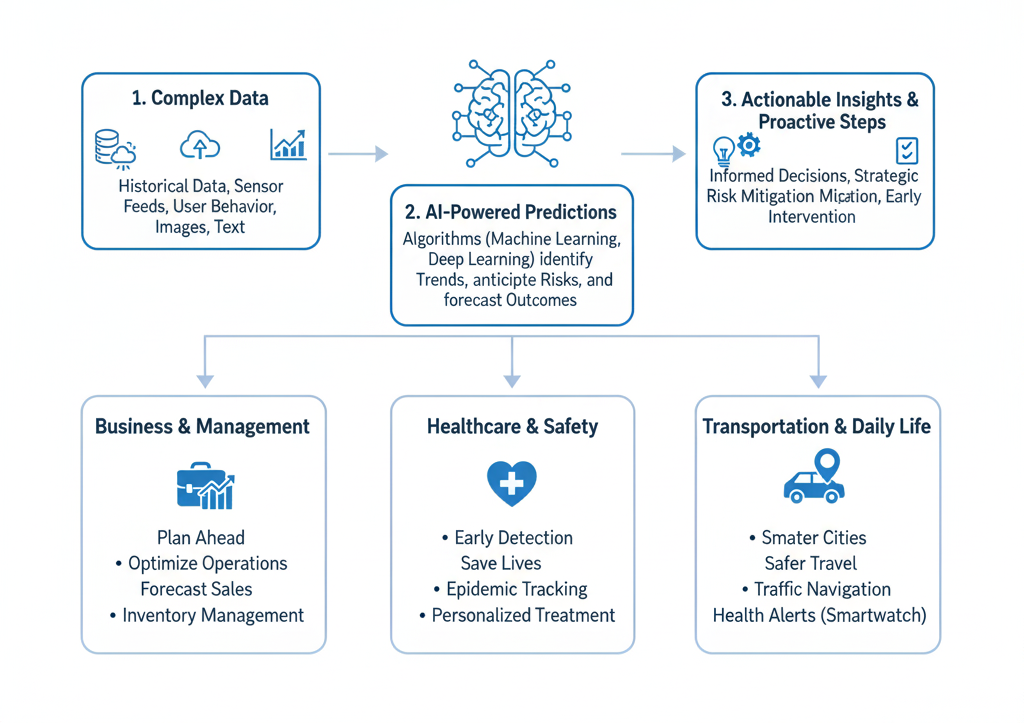
- In business, it helps managers plan ahead.
- In healthcare, it allows doctors to save lives with early detection.
- In transportation, it makes cities run smoother and travel safer.
Even in everyday life, predictive AI assists you when your phone suggests leaving early because of upcoming traffic or when your smartwatch warns you of unusual heart activity.
Predictive AI is shaping the future by giving humans the power to see what’s coming next, not through intuition, but through data-driven intelligence. From predicting the weather to diagnosing diseases and forecasting market trends, it has become an essential tool for smarter living and decision-making.
As data grows and AI continues to learn, predictive AI will only become more accurate, accessible, and powerful, guiding both individuals and industries toward a more informed future. It can be used with other types of AI like conversational AI and recommender AI to create robust tools.