Imagine if you could build your own app just by describing what you want by texting a really smart friend. No complicated code, no confusing computer languages, no years of studying. Just… talking.
That is vibe coding, and it is one of the most exciting things happening in technology right now. In 2025, it went from a viral tweet to being used by millions of people worldwide. And it is changing who gets to call themselves a builder.
THE BASICS
What Exactly IS Vibe Coding?
Normally, if you wanted to build an app or a website, you would have to learn a programming language, like Java, C++ or JavaScript. These are special languages that computers understand. Learning them can take months or even years of practice.
Vibe coding flips all of that on its head. Instead of learning computer language, you just describe what you want in regular everyday words to an AI. The AI then writes all the actual code for you.
Simple Analogy
Think of it like ordering food at a restaurant. You do not need to know how to cook, you just say “I would like a burger with extra cheese, please.” Vibe coding is the same idea. You describe what you want, and the AI cooks up the code for you.
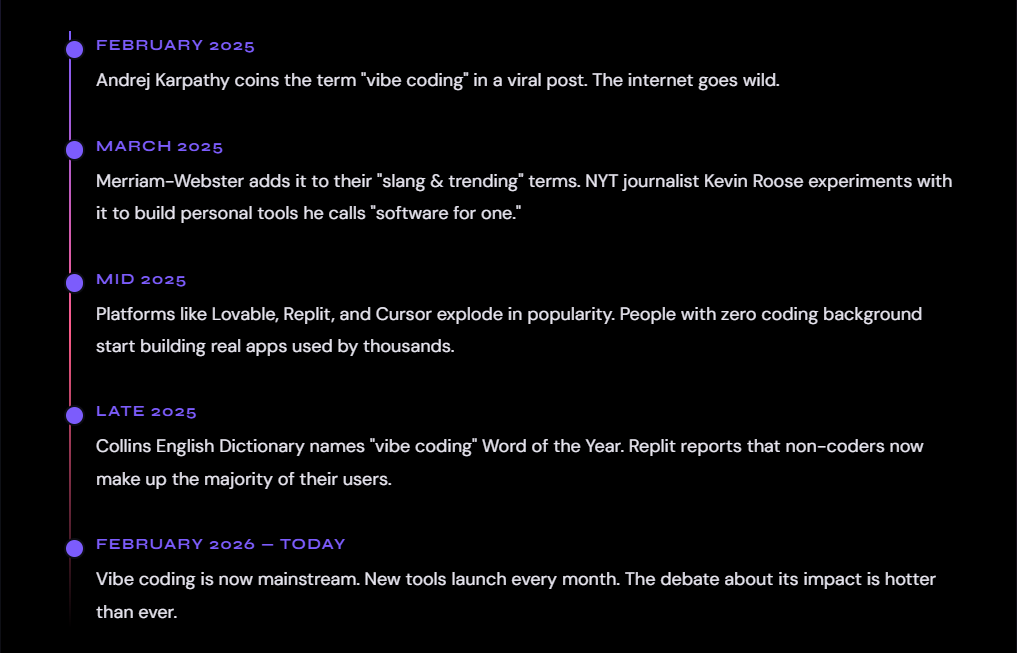
The term was invented by a computer scientist named Andrej Karpathy, one of the people who helped found OpenAI back in February 2025. He posted about a new way he was coding where he basically just told the AI what he wanted and let it do all the work. He said he ‘gave in to the vibes’ and the name stuck!
Fun Fact
The word “vibe coding” got so popular that it was named Collins English Dictionary’s Word of the Year for 2025 and added to Merriam-Webster’s trending slang list. It went from a tweet to the dictionary in less than a year!
THE PROCESS
How Does It Actually Work?
The process is surprisingly simple. There is no secret trick, no hidden skill level required. Here is what it looks like, step by step:
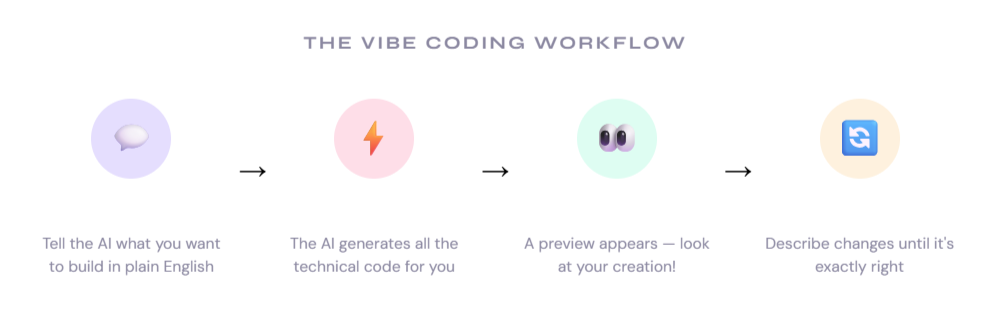
If something breaks or does not look right, you just describe the problem and ask the AI to fix it. ‘The button is in the wrong place.’ ‘The colours look ugly.’ ‘It crashes when I click here.’ Back-and-forth, like a conversation, until you love what you see.
The key thing that makes vibe coding different from just using AI to help you code is that you do not check every single line. You trust the AI, see if the result works, and adjust as needed. You are steering the ship while the AI is doing the rowing by using prompts and prompt engineering.
A BRIEF HISTORY
From One Tweet to a Global Trend
REAL STORIES
Real People, Real Things They Built
One of the coolest parts of vibe coding is seeing what regular, everyday people have built, people who had zero coding skills before. Here are some of the best stories:
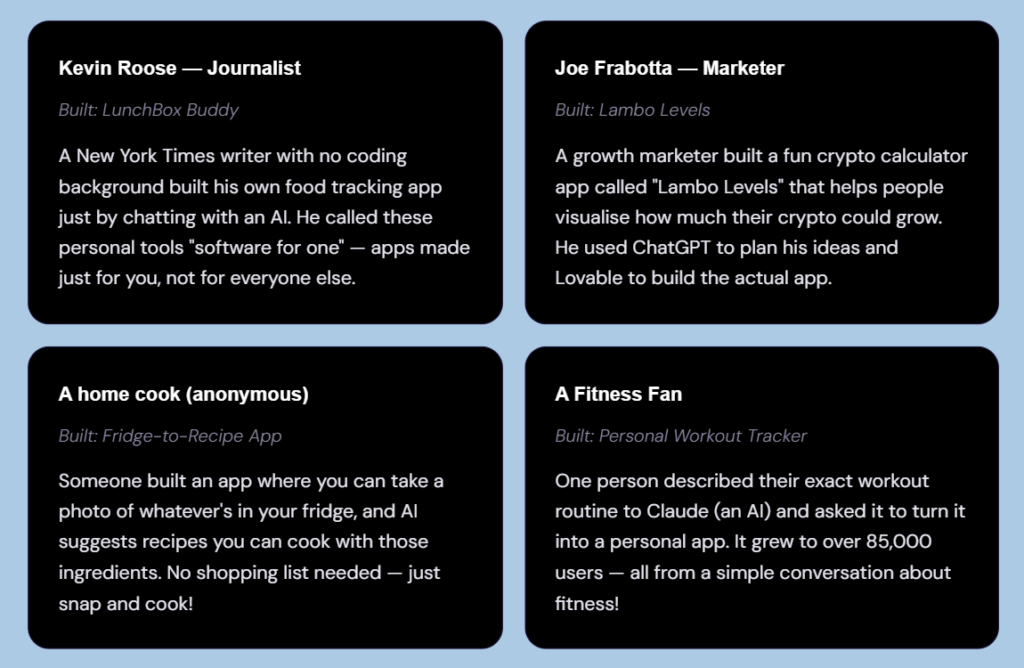
And it goes even further. One writer built a plywood cutting calculator just because they needed it for a home project. A teacher built a reading game for their young child. A sales professional built an internal company tool that would have taken their tech team months in just a few hours.
Did You Know?
When a newsletter writer asked people what they’d built with vibe coding, they received over 1,000 enthusiastic replies in just 24 hours. Projects ranged from buzzer systems that answer apartment doors automatically to personalised greeting card generators.
THE TOOLBOX
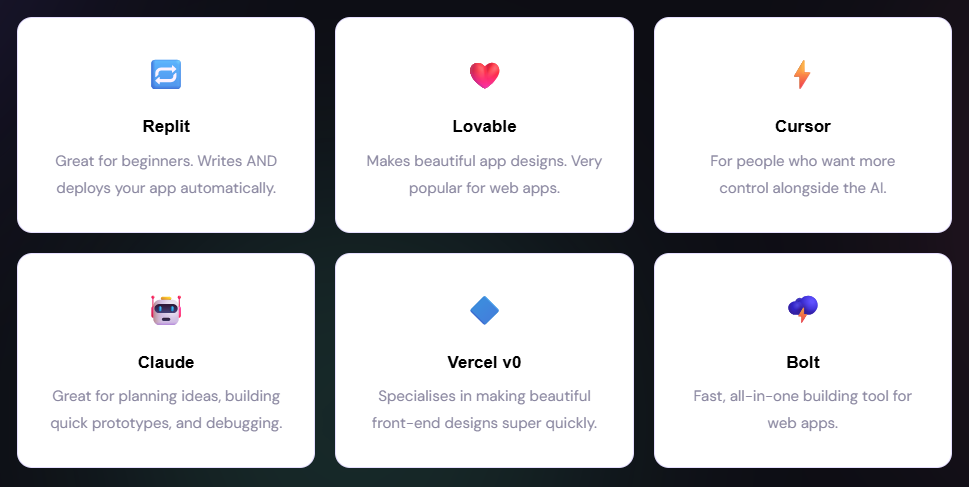
The Most Popular Vibe Coding Tools
Just like there are different apps for different things on your phone, there are different vibe coding tools for different needs. Some of these tools are:
THE BIG PICTURE
How It is Changing the Tech World
Before vibe coding, building software was a bit like an exclusive club. You needed years of training to get in. Companies would wait months and spend large amounts of money just to build a simple tool.
Now, something major is shifting. People from sales, human resources, marketing departments that had nothing to do with code are building their own tools without waiting for the tech team. One platform reported that people with no coding background now make up the majority of their users.
This means ideas can become real apps faster than ever. A good idea does not have to wait for a programmer to be available. Anyone with a laptop and an idea can start building today by prompting AI.
“People from sales, HR, and operations teams are using AI to build tools their companies need without waiting months for engineering resources.”
— TechRadar, 2026
Big companies have taken notice too. Platforms like Vercel raised hundreds of millions of dollars specifically to invest in vibe coding tools. The industry is betting that this is how software will be built in the future.
Did You Know?
One major study found that a huge portion of US developers now use AI coding tools every single day, showing just how quickly these tools have gone from “new and exciting” to a normal part of the working day.
MIXED REACTIONS
What People Actually Think About Vibe Coding
Vibe coding is exciting, but not everyone agrees on how to feel about it. Here’s how different groups see it:
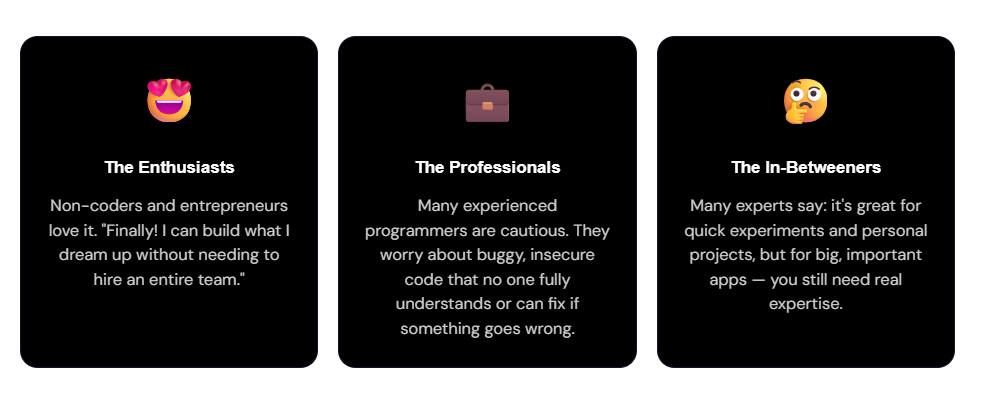
One programmer put it really well: if you use AI to write all your code but carefully check, test, and understand every line of it, that is not vibe coding, that’s just using a really good assistant. True vibe coding is more about trusting the process and focusing on the end result.
Fun Fact
When one tech journalist used an AI to build a 3D web browser format from 1994, he described the AI like a “massive dump truck,” incredibly powerful, but it needs a human driver watching carefully so it does not tumble into a mineshaft.
THE TRADE-OFFS
The Strengths and Limitations of Vibe Coding
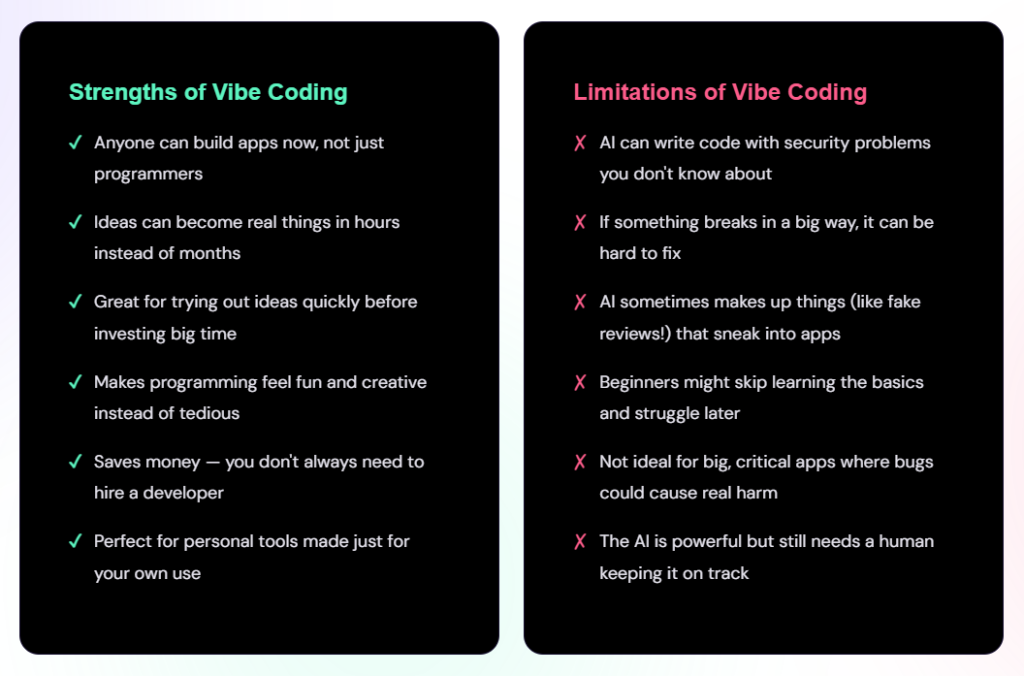
A Note on Security
The security stuff is worth highlighting. One vibe coding platform was found to have security issues in many of the apps people had built with it. This does not mean vibe coding is dangerous, but it is a reminder that AI-made code still needs a careful human eye, especially for apps that handle personal information.
STARTING YOUNG
Can Kids and Young People Try It?
Absolutely! In fact, some of the most creative vibe coding projects have come from younger people who grew up thinking outside the box. If you have an idea for an app you wish existed such as a game, a tool, something fun, vibe coding is one of the easiest ways to start turning that into something real.
You will not always know exactly why the code works. And that is okay at first. The important thing is starting, experimenting, and building your confidence. Lots of amazing programmers started by just playing around with tools and that is exactly what vibe coding lets you do.
Fun Fact
One person vibe coded a reading game for their young child to help them learn to read and the kid played it for days! You do not need to be a tech genius to make something that brings joy to someone you love.
What Comes Next?
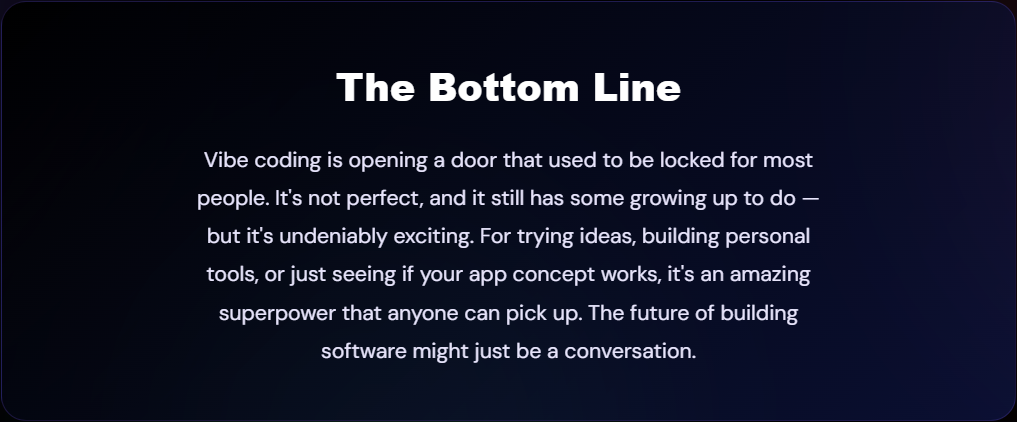
Vibe coding is still very young. Every few months, the tools get smarter, the results get better, and more people jump in. Right now, debates are swirling about whether it is good or bad for the software industry in the long run, but one thing is clear: it is here, it is growing, and it is real.
Whether you are a curious kid, a professional with an idea, or someone who just really wants their own personalised app, vibe coding is worth exploring. The only thing you really need to start is an idea. And the ability to describe it.